Golden Teacher Spores
Golden Teacher spores are a classic Psilocybe cubensis strain, widely recognised for their consistent morphology and role as a benchmark in microscopy study.
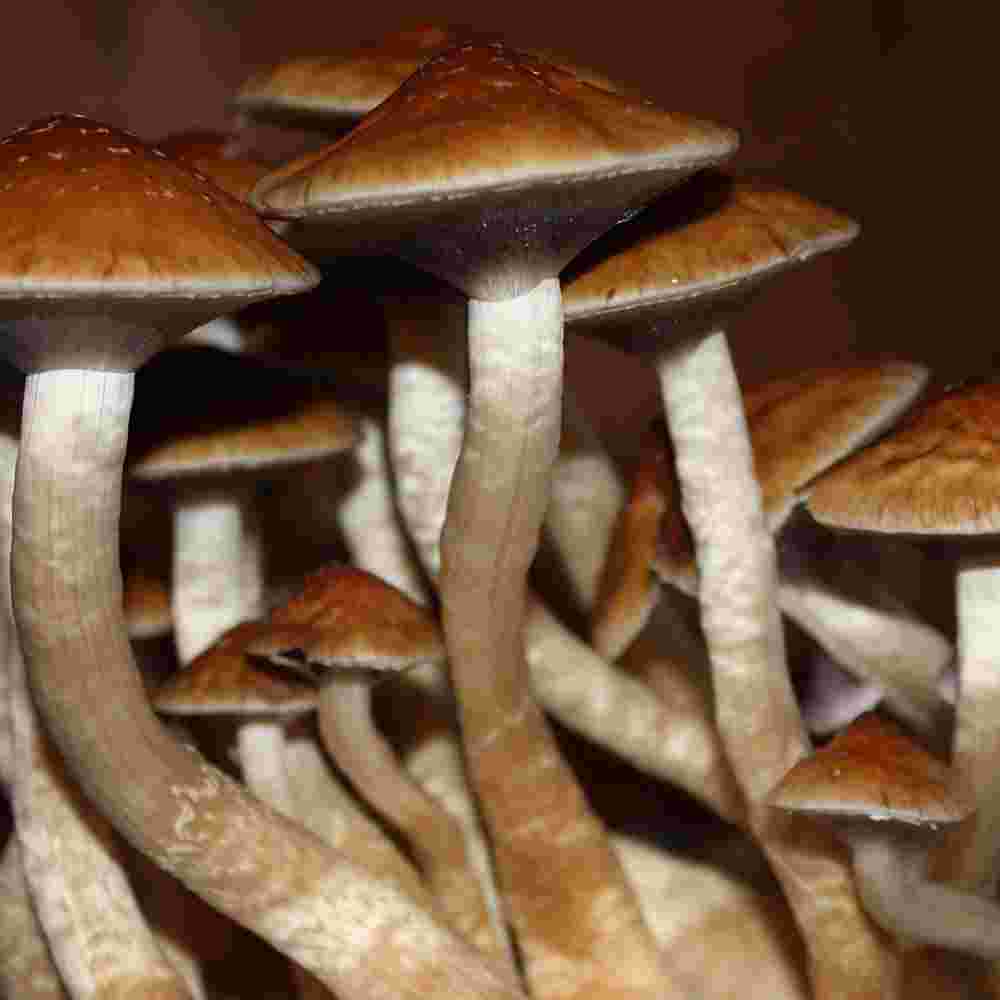
Golden Teacher spores are one of the most recognisable and widely studied varieties of Psilocybe cubensis. Known for their strong association with this species, they are often used as a reference point when comparing different cubensis strains. In this guide, we’ll explore the defining characteristics of Golden Teacher spores, their role in microscopy, and why they remain one of the most popular choices among collectors and researchers.
What Are Golden Teacher Spores?
Golden Teacher spores are microscopic reproductive cells produced by the Golden Teacher strain of Psilocybe cubensis. Like all cubensis spores, they contain the genetic material required for fungal reproduction and are typically observed under a microscope for study and identification. They are popular due to their strong association with one of the most well-known cubensis strains, making them a common starting point for beginners and a reliable reference for comparing spore characteristics across different varieties.
Understanding Golden Teacher Spores
Golden Teacher spores are part of the broader category of Psilocybe cubensis spores, which are widely studied in mycology due to their consistent structure and ease of observation. At a basic level, spores are microscopic reproductive units produced by fungi. They function similarly to seeds in plants, carrying the genetic information needed for the organism to reproduce and continue its lifecycle.
In the fungal lifecycle, spores are released from mature fruiting bodies and dispersed into the environment. When conditions are suitable, they can develop further, continuing the biological cycle. While this process is central to fungal biology, spores are most commonly collected for microscopy, where their structure and characteristics can be observed in detail.
Under a microscope, Golden Teacher spores display the typical features associated with cubensis spores, including their elliptical shape, smooth surface, and dark pigmentation. These traits make them particularly suitable for study, especially for those who are new to microscopy. Because of their consistency and clarity, they are often used as a baseline for learning how to identify spore structures and compare them with other strains.
If you’re looking to build a deeper understanding of how these spores fit into the wider species, it’s worth exploring a full cubensis spores guide such as our Ultimate Guide To Psilocybe Cubensis Spores. For practical techniques on how to observe spores effectively, including slide preparation and magnification, you can also refer to a dedicated microscopy guide such as our Mushroom Spore Microscopy Basics.
Origin and Name: Why “Golden Teacher”?
The exact origin of the Golden Teacher strain of Psilocybe cubensis is not clearly documented, which is typical for many cubensis varieties. Unlike formally classified species, most strain names have emerged informally within mycology and spore-collecting communities, rather than through strict scientific naming conventions. As a result, the history of Golden Teacher is based more on collective usage and recognition than on a defined point of origin.
The name “Golden Teacher” is widely believed to be inspired by the appearance of the mushroom itself, particularly its distinctive golden-coloured caps. These warm, golden tones make the strain visually recognisable and likely contributed to the first part of its name. The “Teacher” aspect is more symbolic, reflecting the way this strain has been perceived within the community—as a foundational or introductory variety that helps people learn about Psilocybe cubensis.
Over time, Golden Teacher has become one of the most well-known strain names in the cubensis category. Its popularity has grown through consistent use in spore collections, educational content, and microscopy study. Because of this, it is often treated as a reference point when discussing other strains, making it one of the most recognisable names in the field.
Culturally, Golden Teacher has achieved a level of familiarity that few other cubensis strains have reached. Even outside of specialist circles, the name is frequently encountered, which reinforces its role as a “standard” strain. While the name itself is not based on scientific classification, it has become firmly established within the shared language of mycology enthusiasts and collectors.
Spore Characteristics and Microscopy Profile
Golden Teacher spores display the classic characteristics associated with Psilocybe cubensis, making them particularly well suited for microscopy study. One of the reasons this strain is so widely used—especially by beginners—is the clarity and consistency of its spore morphology, which allows key features to be observed with relative ease.
In terms of colour, Golden Teacher spores typically appear as a dark purple-brown, a defining trait of cubensis spores. This pigmentation is most clearly seen in spore prints, where large numbers of spores accumulate to form a visible deposit. Under a microscope, the colour becomes more subtle but still contributes to the overall identification of the sample.
The size of cubensis spores generally falls within a range of approximately 11–17 micrometres in length and 7–12 micrometres in width. Golden Teacher spores are consistent with this range, providing a reliable reference point when comparing spores from other strains. Their shape is typically elliptical to oval, with smooth outer walls that allow for clear visualisation.
One of the most important features visible under higher magnification is the germ pore. This small structural opening can often be observed at around 1000x magnification and is a key identifying characteristic of cubensis spores. At lower magnifications, such as 400x, the overall shape and size are easy to distinguish, making this a comfortable starting point for beginners.
Because of their consistent morphology and ease of observation, Golden Teacher spores are often used as a baseline for learning microscopy techniques. They provide a clear and reliable example of what cubensis spores look like, helping build confidence when examining more complex or less familiar samples.
Spore Formats: Prints vs Syringes Explained
Golden Teacher spores are typically available in two main formats: spore prints and spore syringes. Both contain the same spores, but they differ in how they are handled and prepared for microscopy, making each format suitable for different preferences and experience levels.
Spore prints are created by allowing a mature mushroom cap to release spores onto a clean surface, resulting in a dense deposit that reflects the natural spore pattern. For microscopy, a small portion of this print can be transferred onto a slide. This format offers a high concentration of spores, which can be useful for detailed observation, but it may require a slightly more careful approach when preparing samples.
Spore syringes contain spores suspended in sterile water, allowing for easy and controlled application. A single drop can be placed directly onto a microscope slide, making this format particularly beginner-friendly. Because the spores are already evenly distributed in liquid, syringes simplify the process of preparing a clear and balanced slide.
When choosing between the two, it often comes down to ease of use versus control. Spore syringes are generally preferred by those new to microscopy due to their convenience, while spore prints may appeal to collectors who want a more traditional format or greater flexibility in sample preparation.
If you’re deciding which format to use, you can explore our spore syringes for convenience and ease of use, or browse our spore prints to see a more traditional presentation of Golden Teacher spores.
Golden Teacher Strain Overview
The Golden Teacher strain of Psilocybe cubensis is widely regarded as one of the most consistent and recognisable varieties within the species. Rather than being defined by extreme or unusual traits, it is valued for its reliability and its role as a “baseline” strain against which others are often compared. This consistency is one of the key reasons it has remained so prominent within microscopy and spore-collecting communities.
As part of the Psilocybe cubensis species, Golden Teacher shares the core biological and morphological characteristics associated with cubensis fungi. Its spores exhibit the standard features expected of the species, including their colour, shape, and structural properties. Because these traits are so consistent, Golden Teacher is frequently used as a reference point when studying or comparing other strains.
In broader discussions of cubensis genetics, Golden Teacher often appears as a benchmark example. It represents what many consider to be a “typical” cubensis strain, making it particularly useful for establishing a foundational understanding of spore morphology. This makes it especially valuable for those who are beginning to explore microscopy, as well as for more experienced collectors looking to compare subtle differences across strains.
The widespread recognition of Golden Teacher also contributes to its importance. It is one of the most commonly referenced strain names in educational content, online discussions, and spore collections. This familiarity reinforces its position as a central point of reference within the cubensis category, allowing it to serve as a reliable standard for observation and comparison.
Why Golden Teacher Is Popular Among Collectors
Golden Teacher spores have become one of the most popular choices among collectors, largely due to their accessibility, consistency, and widespread recognition. For many people entering the field of microscopy, this strain is often one of the first they encounter, making it a natural starting point for building a collection.
One of the main reasons for its popularity is its beginner-friendly nature. Golden Teacher spores are easy to observe under a microscope, with clear and consistent features that make them ideal for learning basic identification techniques. This simplicity reduces the barrier to entry and helps new enthusiasts develop confidence when working with spore samples.
In addition to being accessible, Golden Teacher is also one of the most widely recognised cubensis strains. Its name appears frequently across educational resources, strain comparisons, and spore listings, which reinforces its role as a standard within the community. Because of this, collectors often include it in their collections as a point of reference when studying other strains.
Another key factor is its usefulness in comparison. Since Golden Teacher represents a “typical” cubensis profile, it provides a reliable baseline for identifying similarities and differences across other varieties. Whether comparing spore size, colour, or structure, having a well-known reference strain makes it easier to interpret observations and draw meaningful conclusions.
For these reasons, Golden Teacher is often considered an essential addition to any cubensis spore collection. It combines familiarity with practicality, making it both a starting point for beginners and a valuable reference for more experienced collectors.
Comparing Golden Teacher to Other Cubensis Strains
Golden Teacher spores are often used as a benchmark when comparing different Psilocybe cubensis strains. While all cubensis spores share the same fundamental structure, subtle variations and naming distinctions make comparative study both interesting and informative. By using Golden Teacher as a reference point, it becomes easier to understand how other strains fit within the broader species.
For example, B+ is another widely known cubensis strain that shares many similarities with Golden Teacher. Both produce spores with the same characteristic purple-brown colour, elliptical shape, and visible germ pore. Differences between them are generally minimal at the microscopic level, making them closely comparable in terms of structure and appearance.
Mazatapec, often included in collections for its historical associations, also produces spores that align closely with the standard cubensis profile. When compared to Golden Teacher, the differences are subtle and typically only noticeable through careful observation. This reinforces the idea that strain distinctions are often more about classification and naming than dramatic structural variation.
PE6 offers a slightly different perspective, as it is a hybrid strain derived from Penis Envy lineage and Texas cubensis genetics. While traditional Penis Envy strains are known for limited spore production, PE6 produces spores more reliably, making it easier to compare with Golden Teacher in a microscopy setting. Structurally, however, the spores remain consistent with cubensis characteristics.
Blue Meanie, another popular cubensis strain, also fits within this comparative framework. Like Golden Teacher, it produces spores that are nearly identical in structure, with differences that are subtle rather than pronounced. This highlights the importance of using a well-known strain as a baseline when studying multiple samples.
By comparing Golden Teacher spores with those from B+, Mazatapec, PE6, and Blue Meanie, collectors can develop a clearer understanding of cubensis diversity. Rather than focusing on major differences, the value lies in recognising consistency across strains while identifying the small variations that make each one unique.
Storage and Longevity of Golden Teacher Spores
Proper storage is essential for maintaining the quality and usability of Golden Teacher spores over time. Like all Psilocybe cubensis spores, they are sensitive to environmental factors such as heat, light, and moisture. To preserve their structure for microscopy, spores should be kept in a cool, dark, and dry environment.
Spore prints are typically stored in sealed packaging at room temperature, away from direct sunlight and humidity. Spore syringes, due to their liquid format, benefit from refrigeration, where stable, low temperatures help maintain clarity and reduce the risk of degradation. Avoid exposing syringes to temperature fluctuations, as this can impact their overall stability.
When handled and stored correctly, cubensis spores can remain suitable for microscopy for extended periods, often lasting months or even years. However, longevity depends heavily on consistent storage conditions and minimal exposure to contaminants.
Contamination is one of the primary risks to consider. Dust, bacteria, or moisture can affect the quality of a sample if it is not properly sealed or handled. Using clean tools and limiting exposure to open air can help preserve sample integrity.
For a more detailed breakdown of storage methods and best practices, you can refer to our full spore storage guide.
Building a Cubensis Collection (Starting with Golden Teacher)
Golden Teacher spores are often considered the ideal starting point for building a Psilocybe cubensis spore collection. Due to their consistency and widespread recognition, they provide a reliable foundation for understanding spore morphology before expanding into other strains.
Starting with a well-known reference strain like Golden Teacher makes it easier to identify the core characteristics shared across cubensis spores. Once these baseline features—such as colour, shape, and structure—are familiar, comparing additional strains becomes far more meaningful.
A simple and effective beginner collection might include:
- Golden Teacher
- B+
- Mazatapec
- PE6
This combination offers a balanced introduction to cubensis diversity. Golden Teacher serves as the benchmark, while B+ provides another widely recognised standard. Mazatapec adds historical context and variation, and PE6 introduces a hybrid strain with slightly different background genetics.
By studying these strains side by side, collectors can begin to recognise both the consistency and subtle variation within the species. This approach not only builds confidence in microscopy but also creates a more structured and engaging learning experience.
As your collection grows, you can expand further into additional strains, using Golden Teacher as a constant reference point. This method ensures that each new addition contributes to a deeper understanding of cubensis spores as a whole.
Microscopy Tips for Observing Golden Teacher Spores
Golden Teacher spores are particularly well suited for microscopy, making them an excellent choice for beginners. Their consistent structure and clear features allow for straightforward observation, helping new users quickly become comfortable with microscope techniques.
When preparing a slide, only a small amount of material is needed. A light sample from a spore print or a single drop from a spore syringe is usually sufficient. Using too much can overcrowd the slide, making it harder to distinguish individual spores. Keeping the sample minimal helps improve clarity and overall visibility.
Cleanliness is an important factor in achieving good results. Slides, coverslips, and tools should be free from dust and residue, as even small particles can interfere with observation. Working in a clean environment makes it easier to focus on the spores themselves without distraction.
Lighting adjustments can make a significant difference. Golden Teacher spores respond well to balanced illumination, where contrast is high enough to define their shape without washing out detail. Adjusting the microscope’s light intensity and condenser can help achieve a clearer image.
Most observations begin at around 400x magnification, where the general shape and size of the spores are easily visible. For more detailed study, increasing magnification to 1000x allows for closer inspection of features such as the germ pore and subtle surface details.
Recording your observations, whether through notes or images, is also highly beneficial. This allows you to track what you’ve seen and compare it with other strains over time, reinforcing your understanding and improving accuracy as you continue to explore microscopy.
Frequently Asked Questions (FAQ)
What are Golden Teacher spores?
Golden Teacher spores are microscopic reproductive cells produced by the Golden Teacher strain of Psilocybe cubensis. They contain the genetic material of the fungus and are commonly studied under a microscope for observation and comparison.
Why are they called Golden Teacher?
The name “Golden Teacher” is thought to be inspired by the golden colour of the mushroom caps and the strain’s reputation as a foundational or “teaching” variety within the cubensis category. It is widely recognised and often used as a reference point for beginners.
Are Golden Teacher spores good for beginners?
Yes, Golden Teacher spores are considered one of the most beginner-friendly cubensis strains. Their consistent structure and clear features make them ideal for learning basic microscopy techniques and understanding spore morphology.
What colour are Golden Teacher spores?
Golden Teacher spores typically appear dark purple-brown, which is characteristic of Psilocybe cubensis. This colour is most visible in spore prints and can also be observed under magnification.
What magnification is best for viewing Golden Teacher spores?
Most observations can be made at around 400x magnification, where the overall shape and size of the spores are clearly visible. Higher magnifications, such as 1000x, can reveal finer details including the germ pore.
How do Golden Teacher spores compare to other strains?
Golden Teacher spores share the same fundamental structure as other cubensis strains, including B+, Mazatapec, PE6, and Blue Meanie. Differences are usually subtle, making Golden Teacher a useful baseline for comparison.
How are Golden Teacher spores stored?
Spores should be stored in a cool, dark, and dry environment. Spore prints are typically kept sealed at room temperature, while spore syringes are best stored in a refrigerator to maintain stability.
How long do Golden Teacher spores last?
When stored properly, cubensis spores can remain suitable for microscopy for extended periods, often lasting months or even years depending on environmental conditions.
Conclusion and Further Resources
Golden Teacher spores remain one of the most important and widely recognised examples of Psilocybe cubensis, offering a clear and consistent introduction to the study of fungal spores. Throughout this guide, we’ve explored their defining characteristics, microscopy features, and how they compare to other strains, as well as practical considerations such as storage and observation techniques.
As a benchmark strain, Golden Teacher provides a strong foundation for understanding cubensis spores as a whole. By starting with a well-known and reliable reference point, it becomes easier to recognise shared traits and build confidence when comparing additional strains. This makes it an ideal choice for both beginners and more experienced collectors looking to expand their knowledge.
If you’re looking to explore further, consider comparing Golden Teacher with other popular strains such as B+, Mazatapec, PE6, and Blue Meanie. Each offers a slightly different perspective within the cubensis species and can help deepen your understanding through side-by-side observation.
You can also browse our spore syringe and spore print categories to discover additional strains and formats, or explore our educational guides covering microscopy techniques, storage methods, and fungal biology. Together, these resources provide everything you need to build a well-rounded and engaging cubensis spore collection.

Written by Mycotown Editorial Team
The Mycotown Editorial Team is responsible for producing and reviewing educational and reference content across the site. Our focus is on accurate, responsible information relating to mushroom spores, microscopy, and lawful research practices. View author profile