Blue Meanie Spores
Blue Meanie spores are a well-known Psilocybe cubensis strain, valued by microscopy enthusiasts for their classic spore characteristics and the unique confusion surrounding their name.
Blue Meanie spores are a popular variety of Psilocybe cubensis, widely studied by microscopy enthusiasts and collectors. Despite the name, they are often confused with the unrelated Panaeolus cyanescens, sometimes referred to as the “true” Blue Meanie. In this guide, we’ll explore the origins, characteristics, and microscopy features of Blue Meanie cubensis spores, helping you understand how they compare to other strains and where they fit within a broader spore collection.
Quick Overview
Blue Meanie spores are microscopic reproductive cells produced by the Blue Meanie strain of Psilocybe cubensis. Like other cubensis spores, they typically display a dark purple-brown colour and can be observed under a microscope at magnifications of around 400x to 1000x. This strain is popular among collectors due to its recognisable name, its place within cubensis genetics, and the common confusion with Panaeolus cyanescens, making it an interesting subject for comparison and study.
What Are Blue Meanie Spores?
Blue Meanie spores are the reproductive units produced by the Blue Meanie strain of Psilocybe cubensis, a widely studied species within the field of mycology. These spores contain the genetic material required for fungal reproduction and are typically collected for microscopy and research purposes. Under magnification, cubensis spores reveal distinct structural features such as their elliptical shape, smooth surface, and visible germ pore, all of which can be used for identification and comparison.
As with other cubensis varieties, Blue Meanie spores are most commonly examined using standard light microscopy. At magnifications of around 400x, the general shape and size of the spores can be clearly observed, while higher magnifications such as 1000x allow for more detailed study of fine structures. These characteristics make them a valuable addition to any microscopy collection, particularly for those interested in comparing spore morphology across different strains.
If you’re new to the subject, it’s worth exploring a broader overview of cubensis spores to understand how strains like Blue Meanie fit into the wider species. You can read our complete guide to psilocybe cubensis spores for a full breakdown of spore structure, genetics, and collection methods. For those focusing specifically on observation techniques, our microscopy guide provides practical insight into slide preparation, magnification, and best practices for studying spores effectively.
Blue Meanie (Cubensis) vs “True” Blue Meanie
One of the most common points of confusion surrounding Blue Meanie spores is the distinction between the Psilocybe cubensis strain and the unrelated species Panaeolus cyanescens, which is often referred to as the “true” Blue Meanie. Despite sharing a similar nickname, these two fungi belong to entirely different genera and display clear differences in taxonomy, morphology, and spore characteristics.
The Blue Meanie strain discussed on this page is a variety of Psilocybe cubensis, a species known for its relatively large spores, purple-brown spore prints, and widespread study in microscopy. In contrast, Panaeolus cyanescens belongs to a different genus altogether and produces spores that are typically darker—often described as black or very dark brown—and smaller in size. These differences become particularly apparent under microscopic examination, where variations in spore size, shape, and pigmentation can be observed.
Taxonomically, the distinction is significant. Psilocybe cubensis and Panaeolus cyanescens are separate species with different evolutionary lineages, meaning that their spores, growth characteristics, and biological traits differ in meaningful ways. For microscopy enthusiasts, this makes the comparison especially interesting, as it highlights how spore morphology can vary across genera.
The confusion largely arises from naming conventions rather than scientific classification. The term “Blue Meanie” has been used informally in different contexts, leading to overlap between the cubensis strain name and the common name for Panaeolus cyanescens. As a result, it’s important to clarify which organism is being referenced when discussing spores. In most spore collections and commercial listings, Blue Meanie spores refer specifically to the Psilocybe cubensis strain.
Understanding this distinction not only helps avoid confusion but also provides a useful framework for comparing spore characteristics across different species, making Blue Meanie an especially interesting subject for microscopy study.
Origin and Background of the Blue Meanie Strain
The exact origin of the Blue Meanie strain of Psilocybe cubensis is not well documented, which is common for many cubensis varieties. Unlike formally classified species, most cubensis strains have emerged through informal naming conventions within mycology and spore-collecting communities rather than through strict scientific classification. As a result, historical records are often limited, and much of the strain’s background is based on general observations rather than detailed documentation.
The name “Blue Meanie” is believed to reference the characteristic blue bruising that can occur in certain mushroom species, although this trait is not unique to this particular strain. The term has also been used more broadly in mycological and popular culture contexts, which has contributed to the naming overlap with Panaeolus cyanescens. In the case of the cubensis strain, the name is primarily used as an identifier rather than a scientifically defined classification.
In terms of development, Blue Meanie is considered part of the wider Psilocybe cubensis species group, meaning it shares the core genetic and morphological traits associated with cubensis fungi. Like other strains, it represents a variation within the species rather than a distinct taxonomic category. These variations can include differences in growth patterns, appearance, and spore production, although the spores themselves remain broadly consistent with cubensis characteristics.
For collectors and researchers, the significance of the Blue Meanie strain lies less in its documented origin and more in its place within the broader landscape of cubensis genetics. It serves as one of many examples of how strain names are used to categorise and compare subtle variations within a single species, making it a useful reference point when studying fungal diversity.
Spore Characteristics and Microscopy Features
Blue Meanie spores share the defining characteristics of Psilocybe cubensis spores, making them well suited for microscopic observation and comparison. One of the most recognisable features is their colour, which typically appears as a dark purple-brown. This pigmentation is most easily observed in spore prints, where large numbers of spores accumulate, but it can also be seen under higher magnification during microscopy.
In terms of size, cubensis spores generally fall within a range of approximately 11–17 micrometres in length and 7–12 micrometres in width. While slight variations can occur between strains, Blue Meanie spores remain consistent with this general size range. Their shape is typically elliptical to oval, with smooth outer walls that allow for clear visualisation under a microscope.
A key structural feature of cubensis spores is the presence of a germ pore, which can often be observed at higher magnifications. This small opening plays a role in the germination process and is an important identifying characteristic when examining spores in detail. At around 400x magnification, the overall shape and size of the spores can be clearly seen, while magnifications of 1000x allow for more detailed observation of features such as the germ pore and surface texture.
These microscopy features make Blue Meanie spores a useful subject for both beginners and more experienced observers. By studying their structure, it becomes easier to understand how cubensis spores are identified and how they compare to spores from other species. This is particularly valuable when exploring differences between strains or examining broader patterns in fungal morphology.
Spore Prints vs Spore Syringes (Blue Meanie)
Blue Meanie spores are commonly available in two primary formats: spore prints and spore syringes. While both contain the same microscopic spores, they differ in presentation, handling, and suitability for microscopy.
Spore prints are created by allowing mature mushroom caps to release spores onto a sterile surface, typically forming a dense, visible deposit. These prints are valued by collectors for their clarity and concentration, making them particularly useful for detailed microscopic study. Because the spores are densely packed, it is easy to transfer a small sample onto a microscope slide for observation.
Spore syringes, on the other hand, contain spores suspended in sterile water. This format allows for convenient handling and even distribution when preparing slides. A single drop can be placed directly onto a slide, making syringes a practical option for those new to microscopy or looking for a more controlled application method.
In terms of microscopy suitability, both formats are effective. Spore prints may offer slightly greater control over sample density, while syringes provide ease of use and consistency. The choice often comes down to personal preference rather than scientific limitation.
Storage considerations also differ slightly between the two. Spore prints are typically stored in cool, dry conditions and can remain viable for extended periods when kept away from light and moisture. Spore syringes should be stored in a cool environment, such as a refrigerator, to help maintain stability over time.
If you’re exploring different formats, you can browse our full range of spore syringes or view our selection of spore prints to compare options and find what best suits your microscopy setup. For further reading see the article Spore Syringes vs Spore Prints vs Spore Swabs: What’s the Difference?.
Blue Meanie Strain Characteristics
The Blue Meanie strain of Psilocybe cubensis is known for exhibiting the general characteristics associated with cubensis fungi, while also maintaining its own identity within the broader group of named strains. As with most cubensis varieties, differences between strains are often subtle and are typically observed in overall appearance and growth tendencies rather than in fundamental biological structure.
In terms of general traits, Blue Meanie is often described as a standard cubensis strain, meaning it shares the typical lifecycle and morphological features expected within the species. Like other cubensis varieties, it produces spores with consistent colouration and structure, and its classification remains firmly within the Psilocybe cubensis species.
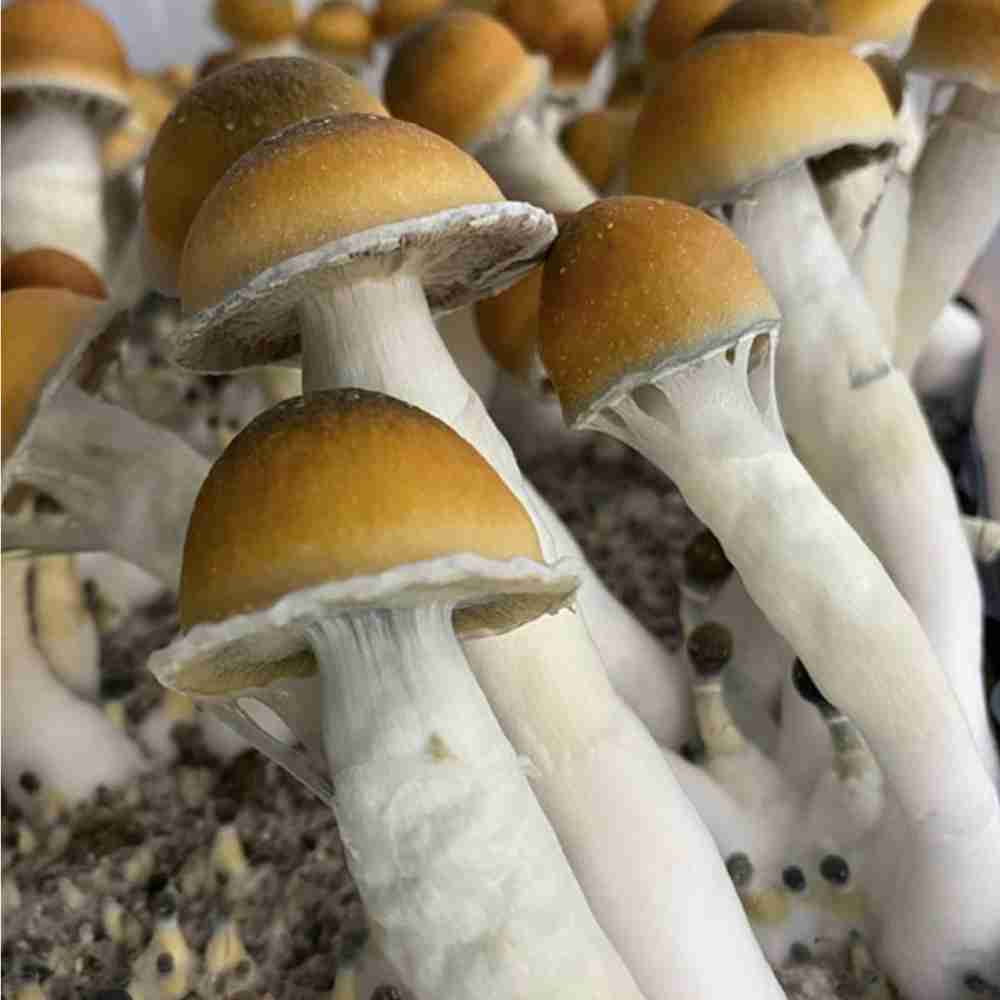
Visually, fruiting bodies associated with cubensis strains tend to display caramel to golden-brown caps, pale stems, and the potential for blue bruising when handled. While these features are not unique to Blue Meanie, they contribute to the naming and identification of strains within informal classification systems. The “blueing” reaction, in particular, is often referenced when discussing strain names, even though it is a common trait across many cubensis varieties.
The overall reputation of Blue Meanie within spore collecting communities is largely tied to its recognisable name and its position within the wider cubensis landscape. It is frequently included alongside other well-known strains, making it a familiar reference point for collectors building a diverse microscopy collection. Rather than being defined by extreme or unusual traits, Blue Meanie is typically appreciated as part of the broader spectrum of cubensis genetics.
Comparison With Other Cubensis Strains
Blue Meanie spores are often compared with other well-known Psilocybe cubensis strains to better understand their place within a microscopy collection. While the fundamental structure of cubensis spores remains consistent across strains, subtle variations and naming distinctions make these comparisons valuable for collectors and researchers.
For example, strains such as Golden Teacher and B+ are among the most widely recognised cubensis varieties and are frequently used as reference points for beginners. Their spores share the same general characteristics—dark purple-brown colouration, elliptical shape, and visible germ pore—making them broadly comparable to Blue Meanie spores under the microscope.
Mazatapec is another commonly studied strain, often included in collections due to its historical and cultural associations. Like Blue Meanie, it falls within the same species and therefore produces spores that are nearly identical in structure, with only minor variations that may be observed under detailed examination.
PE6 , a hybrid strain derived from Penis Envy lineage and Texas cubensis genetics, offers an interesting point of comparison. While traditional Penis Envy strains are known for reduced spore production, PE6 typically produces spores more reliably, making it more directly comparable to standard cubensis strains like Blue Meanie in terms of microscopy study.
From a collector’s perspective, the value of comparing these strains lies less in dramatic differences and more in building a broader understanding of cubensis diversity. By examining spores from multiple strains side by side, it becomes easier to recognise consistent features and identify subtle variations, enhancing overall microscopy skills.
If you’re expanding your collection, consider exploring our pages on Golden Teacher spores, B+ spores, Mazatapec spores, and PE6 spores to see how these strains compare and to build a well-rounded cubensis spore set.
Storage and Longevity of Blue Meanie Spores
Proper storage plays an important role in maintaining the quality and longevity of Blue Meanie spores. Like all Psilocybe cubensis spores, they are sensitive to environmental conditions, particularly heat, light, and moisture. To preserve their integrity for microscopy study, spores should be stored in a cool, dark, and dry environment.
Spore prints are typically kept in sealed packaging and stored at room temperature or in a cool cupboard, away from direct sunlight. Spore syringes, due to their liquid format, are best stored in a refrigerator at stable, low temperatures. This helps to slow down any potential degradation and maintain clarity when preparing microscope slides.
When stored correctly, cubensis spores can remain suitable for study for extended periods, often lasting months or even years. However, longevity can vary depending on storage conditions and handling practices. Exposure to heat or fluctuating temperatures can reduce stability over time, while excess moisture may increase the risk of contamination.
Contamination is one of the main risks to be aware of. Although spores themselves are microscopic, they can be affected by bacteria or other unwanted particles if not handled carefully. Keeping samples sealed, using clean tools, and minimising exposure to open air can all help maintain sample quality.
For a more detailed breakdown of best practices, including storage methods and handling tips, you can refer to our full spore storage guide: Handling & Storage
Building a Cubensis Spore Collection
For many microscopy enthusiasts, studying a single strain is only the starting point. Building a broader Psilocybe cubensis spore collection allows for more meaningful comparisons and a deeper understanding of fungal morphology. While individual strains like Blue Meanie share many core characteristics, examining multiple samples side by side helps highlight subtle variations and reinforces key identification features.
One of the main reasons collectors expand their collection is to observe consistency across strains. By comparing spores from different cubensis varieties, it becomes easier to recognise standard traits such as colour, आकार, and structural features like the germ pore. At the same time, small differences in size, density, or presentation can be noted, adding depth to the study.
For those just starting out, a simple and well-rounded collection might include:
- Golden Teacher
- B+
- Mazatapec
- Blue Meanie
These strains are widely recognised, making them ideal reference points for beginners. Together, they provide a solid foundation for understanding cubensis spores and how strain names relate to broader species characteristics.
As your collection grows, you may choose to include additional strains to expand your comparative studies. This approach not only improves microscopy skills but also creates a more engaging and structured way to explore fungal diversity.
If you’re looking to build or expand your collection, browsing different strain pages and product categories can help you identify which spores to add next and how they complement your existing set.
Microscopy Tips for Blue Meanie Spores
Studying Blue Meanie spores under the microscope can be both straightforward and highly informative when the correct techniques are used. Preparing a clean and well-balanced slide is the first step. A small sample from a spore print or a single drop from a spore syringe is typically sufficient. Using minimal material helps prevent overcrowding on the slide, allowing individual spores to be observed more clearly.
Cleanliness is essential throughout the process. Slides, coverslips, and tools should be free from dust or residue to avoid interference with observation. Even small particles can make it more difficult to distinguish spore structures, particularly at higher magnifications.
Lighting also plays a key role in visibility. Adjusting the microscope’s light source and condenser can significantly improve contrast, making features such as spore shape and pigmentation easier to identify. Too much light can wash out detail, while too little can make the image appear unclear, so finding the right balance is important.
In terms of magnification, most observations begin at around 400x, where the general shape and size of Blue Meanie spores can be clearly seen. For more detailed study, magnifications of up to 1000x can reveal finer structures, including the germ pore and subtle surface features.
Finally, recording observations is a valuable habit to develop. Taking notes or capturing images allows you to compare samples over time and across different strains. This not only improves accuracy but also helps build a more structured and rewarding microscopy practice.
To learn more about microscopy basics please read our guide Mushroom Spore Microscopy Basics
Frequently Asked Questions (FAQ)
What are Blue Meanie spores?
Blue Meanie spores are microscopic reproductive cells produced by the Blue Meanie strain of Psilocybe cubensis. They contain the genetic material of the fungus and are commonly studied under a microscope for research and educational purposes.
Are Blue Meanie spores cubensis?
Yes, the Blue Meanie strain discussed here belongs to the species Psilocybe cubensis. However, the name “Blue Meanie” is sometimes also used to refer to Panaeolus cyanescens, which is a completely different species.
What colour are Blue Meanie spores?
Like most cubensis spores, Blue Meanie spores typically appear dark purple-brown. This colour is most visible in spore prints and can also be observed under higher magnification during microscopy.
What magnification is best for viewing Blue Meanie spores?
Most observations can be made at around 400x magnification, where the overall shape and size of the spores are clearly visible. For more detailed study, magnifications of up to 1000x can reveal finer structures such as the germ pore.
Are Blue Meanie spores the same as Panaeolus cyanescens?
No. While the name can cause confusion, Psilocybe cubensis Blue Meanie and Panaeolus cyanescens are different species. They belong to separate genera and have distinct spore characteristics and biological traits.
How are Blue Meanie spores stored?
Spores should be stored in a cool, dark, and dry environment. Spore prints are typically kept sealed at room temperature, while spore syringes are best stored in a refrigerator to maintain stability.
How long do Blue Meanie spores last?
When stored properly, cubensis spores can remain suitable for microscopy for extended periods, often lasting months or even years. Longevity depends on storage conditions and handling practices.
Are Blue Meanie spores good for beginners?
Yes, as a standard Psilocybe cubensis strain, Blue Meanie spores are suitable for beginners interested in microscopy. They share the same core characteristics as other common cubensis strains, making them easy to study and compare.
Do Blue Meanie spores differ from other cubensis strains?
Structurally, cubensis spores are very similar across strains. Differences are usually subtle and may include slight variations in size, density, or presentation rather than major morphological changes.
Conclusion and Further Resources
Blue Meanie spores offer an excellent introduction to the study of Psilocybe cubensis, combining recognisable strain identity with the consistent characteristics that define the species. Throughout this guide, we’ve explored their origins, key microscopy features, and how they compare to other cubensis strains, as well as practical considerations such as storage and observation techniques.
Understanding spores at this level provides a strong foundation for anyone interested in fungal microscopy. By examining multiple strains and learning to recognise shared traits such as colour, shape, and structure, it becomes easier to build confidence in identifying and comparing samples. Blue Meanie serves as just one example within a much broader and fascinating field of study.
If you’re looking to expand your knowledge further, consider exploring other strain pages such as Golden Teacher, B+, Mazatapec, and PE6. Each offers its own perspective within the cubensis species and can help deepen your understanding through comparison.
You can also browse our spore syringe and spore print categories to discover additional strains and formats, or explore our educational guides covering microscopy techniques, storage methods, and fungal biology. Together, these resources provide everything you need to build a well-rounded and engaging spore collection.
To understand how strains like Blue Meanie fit into the wider picture, see our complete guide to psilocybe cubensis spores.

Written by Mycotown Editorial Team
The Mycotown Editorial Team is responsible for producing and reviewing educational and reference content across the site. Our focus is on accurate, responsible information relating to mushroom spores, microscopy, and lawful research practices. View author profile