Albino A+ Psilocybe Cubensis Strain
Albino A+ is a distinctive Psilocybe cubensis strain recognised for its pale, leucistic appearance and reliable spore production
Introduction to the Albino A+ Strain
Albino A+ is a distinctive and widely recognised variety of Psilocybe cubensis, notable for its unusually pale pigmentation and unique morphological features. Despite its name, Albino A+ is not a true albino strain but instead exhibits leucistic traits, meaning reduced pigmentation while still producing viable dark spores.
This strain has attracted significant interest among microscopy researchers and taxonomy enthusiasts due to its visual uniqueness, stable spore characteristics, and consistent classification within the Psilocybe cubensis species complex.
Albino A+ continues to be studied for comparative morphology, genetic variation, and spore development patterns across cubensis varieties.
Taxonomy and Classification
| Classification Level | Albino A+ |
|---|---|
| Kingdom | Fungi |
| Division | Basidiomycota |
| Class | Agaricomycetes |
| Order | Agaricales |
| Family | Hymenogastraceae |
| Genus | Psilocybe |
| Species | Psilocybe cubensis |
| Variety | Albino A+ |
Albino A+ belongs to the globally distributed Psilocybe cubensis species group, a well-documented mushroom species frequently studied in mycological taxonomy and microscopy research.
Origin and Development History
The precise origin of Albino A+ remains debated within mycological communities. The strain is widely believed to have been stabilised through selective isolation processes aimed at preserving its unique pale phenotype while maintaining spore viability.
Unlike many traditional cubensis strains named after geographic origins, Albino A+ is thought to have emerged through controlled selection rather than direct wild collection. The “A+” designation historically refers to strain line classification rather than geographic location.
Albino A+ is now considered a stable cultivated lineage frequently included in taxonomy comparisons of pigmentation mutations within Psilocybe cubensis.
Albino A+ Morphological Characteristics
Albino A+ is notable for several visually distinct features that differentiate it from standard cubensis varieties.
Cap Characteristics
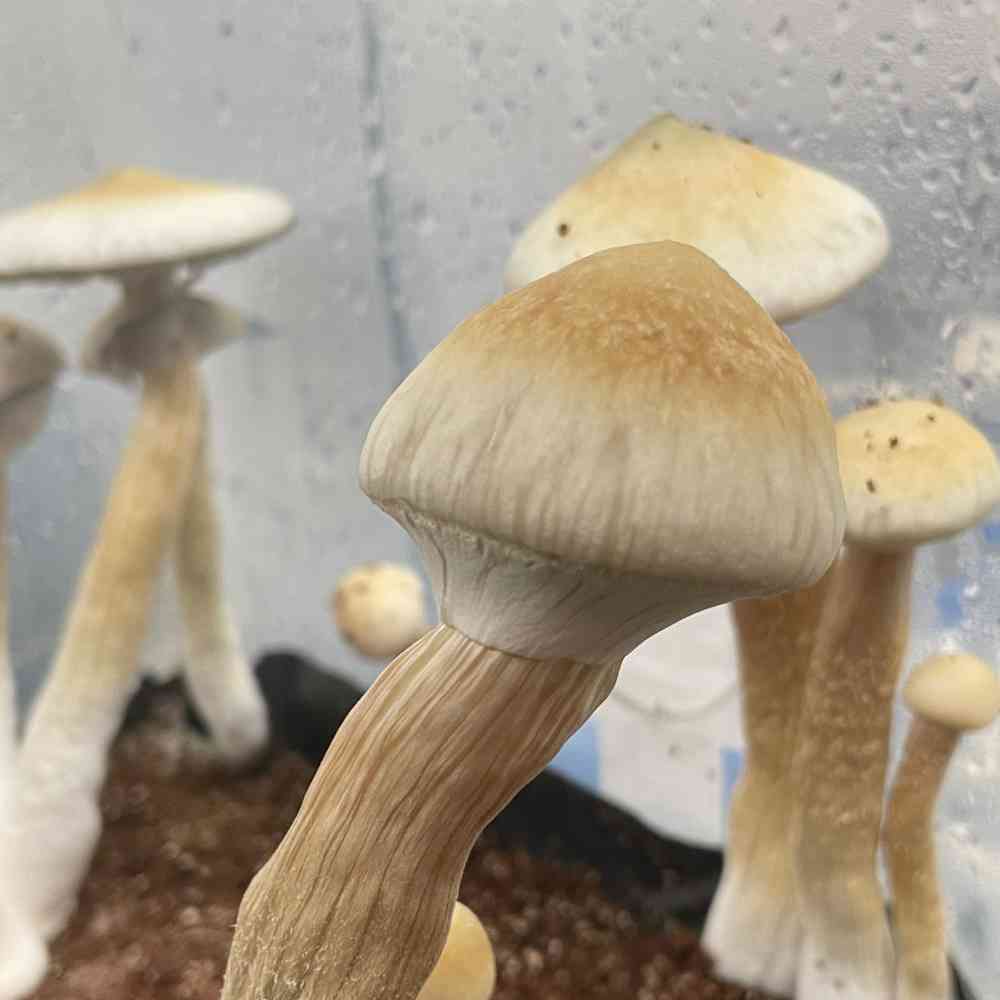
Albino A+ typically displays pale white to cream coloured caps. Caps often retain a smooth surface texture with subtle translucency under certain lighting conditions. Cap shapes generally follow typical cubensis development patterns, ranging from convex during early growth stages to flattened at maturity.
Stem Structure
The strain typically exhibits elongated stems with pale white pigmentation. Stem fibres may appear slightly denser compared to standard cubensis phenotypes, making Albino A+ of particular interest in comparative morphological microscopy.
Spore Production
Despite reduced pigmentation in the fruiting body, Albino A+ reliably produces viable spores. Spores maintain the characteristic dark purple-brown spore print colour associated with Psilocybe cubensis.
Albino A+ Spore Characteristics
Albino A+ spores are commonly studied due to their strong contrast under microscopy despite the strain’s pale fruiting body.
Typical spore characteristics include:
- Elliptical to ovoid shape
- Smooth outer spore walls
- Dark purple-brown pigmentation
- Clear germ pore visibility under magnification
These consistent microscopic features make Albino A+ a popular specimen for taxonomy reference and morphological comparison studies.
Pigmentation and Leucistic Traits
Albino A+ is frequently described as leucistic rather than albino. True albino fungal strains lack pigment production entirely, often producing colourless spores. Albino A+ retains functional pigment production in its spores while displaying reduced pigmentation in macroscopic structures.
This leucistic presentation is of particular interest in mycological studies exploring pigmentation pathways and phenotype variation within fungal species.
To read more about leucistic and albino traits read our guide:
👉 Leucistic vs Albino Mushrooms
Growth Pattern Observations in Research Literature
Albino A+ has been observed in cultivation and microscopy contexts to demonstrate:
- Consistent structural morphology
- Stable spore formation
- Predictable taxonomic characteristics
These qualities have contributed to the strain’s inclusion in comparative research examining phenotypic diversity within Psilocybe cubensis.
Albino A+ in Comparative Cubensis Research
Albino A+ is frequently compared with other well-documented cubensis strains.
| Feature | Albino A+ | Golden Teacher | B+ |
|---|---|---|---|
| Pigmentation | Pale leucistic | Golden-brown | Light brown |
| Spore Colour | Dark purple-brown | Dark purple | Dark purple |
| Classification Stability | High | High | High |
| Research Interest | Pigmentation variation | Morphology & taxonomy | Hybrid lineage studies |
Comparative analysis across these strains supports broader understanding of genetic and phenotypic diversity within the species.
Microscopy Research Interest
Albino A+ spores are widely selected for microscopy due to their clearly defined spore structures and reliable pigmentation contrast.
Researchers often study Albino A+ for:
- Spore morphology identification
- Germ pore analysis
- Comparative taxonomy
- Phenotype pigmentation research
Distribution and Cultural History
While Albino A+ is not directly tied to a documented wild collection site, it has become widely distributed across microscopy research communities and fungal taxonomy collections.
Its unusual appearance has contributed to its sustained popularity among researchers studying morphological variation.
Legal and Ethical Considerations
The legal status of Psilocybe cubensis spores varies by jurisdiction and intended research use. Individuals should familiarise themselves with applicable laws before acquiring or studying fungal specimens.
For UK-specific guidance, readers can consult the Mycotown legality resource:
👉 UK Mushroom Spore Legality Guide
Storage and Preservation for Research Specimens
Maintaining spore specimen integrity is essential for microscopy research. Environmental conditions such as temperature, moisture exposure, and contamination risks may affect spore viability over time.
Detailed long-term preservation guidance is available in the Mycotown storage resource:
Frequently Asked Questions
Is Albino A+ a true albino strain?
Albino A+ is typically classified as leucistic rather than a true albino strain because it produces pigmented spores.
Does Albino A+ produce viable spores?
Yes. Albino A+ reliably produces viable spores suitable for microscopy research.
Why is Albino A+ studied in taxonomy?
Its reduced pigmentation combined with stable spore characteristics makes it valuable in comparative morphological research.
Related Research Resources
Readers interested in broader Psilocybe cubensis classification can explore:
Psilocybe cubensis Species Hub
Master Strain Index
Spore FAQ and Research Guidance
Conclusion
Albino A+ represents a visually unique and scientifically interesting member of the Psilocybe cubensis species. Its leucistic pigmentation, stable spore production, and consistent morphology make it an important specimen in fungal taxonomy and microscopy study. Continued research into Albino A+ contributes to the broader understanding of phenotype variation within cubensis strains.

Written by Mycotown Editorial Team
The Mycotown Editorial Team is responsible for producing and reviewing educational and reference content across the site. Our focus is on accurate, responsible information relating to mushroom spores, microscopy, and lawful research practices. View author profile