PE6 Spores
PE6 spores are a unique Psilocybe cubensis hybrid, combining the genetics of Penis Envy and Texas cubensis to produce a distinctive lineage popular among microscopy collectors.
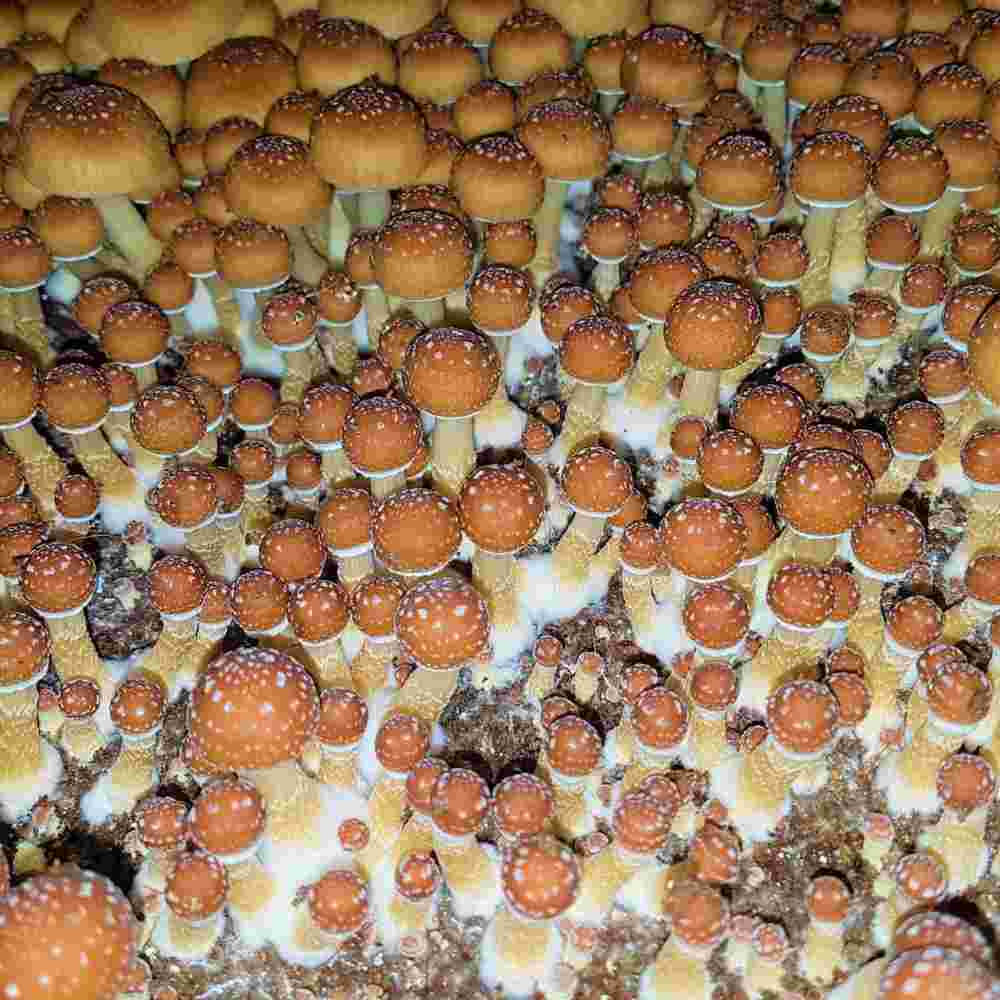
PE6 Microscopy Overview
PE6 spores belong to the species Psilocybe cubensis and originate from a well-known hybrid strain created by combining genetics from the Penis Envy lineage and the classic Texas cubensis strain. The resulting strain, commonly referred to as PE6, was developed to combine desirable traits from both parent lines while maintaining reliable spore production for microscopic study.
Among cubensis strains, PE6 has gained attention in the microscopy community because it represents a deliberate hybridisation between two genetically distinct varieties. The Penis Envy lineage is famous for its unusual morphology and relatively low spore production, while the Texas strain is known for its stability and abundant spores. By crossing these two lines, the PE6 strain retains characteristics from both genetic backgrounds, making it an interesting subject for microscopic examination.
Under a microscope, PE6 spores display the typical cubensis spore characteristics that researchers expect from this species, including dark purple-brown pigmentation and smooth elliptical spore morphology. When prepared on a slide and viewed under magnification, these spores can be examined to observe structures such as the germ pore, spore wall thickness, and pigmentation patterns.
Because of their hybrid origin, PE6 spores are often studied to observe how genetic traits from different cubensis strains manifest in spore morphology and development. For those studying fungal spores for educational or research purposes, hybrid strains such as PE6 can provide useful insight into the diversity that exists within the Psilocybe cubensis species.
PE6 spores are commonly available in several microscopy formats, including spore syringes, spore prints, and sterile swabs. Each format allows researchers and hobby microscopists to prepare slides and observe spore characteristics using standard laboratory or hobbyist microscopy techniques.
For those interested in studying cubensis spores under magnification, PE6 offers a well-documented strain with an interesting genetic background, making it a popular addition to microscopy collections.
Quick Strain Profile
Below is a quick overview of the key characteristics associated with the PE6 cubensis strain.
| Attribute | Details |
|---|---|
| Species | Psilocybe cubensis |
| Strain Name | PE6 |
| Genetic Lineage | Penis Envy × Texas cubensis |
| Strain Type | Hybrid cubensis strain |
| Spore Colour | Dark purple-brown |
| Spore Shape | Smooth elliptical spores with visible germ pore |
| Microscopy Difficulty | Intermediate |
| Common Microscopy Uses | Spore morphology observation, cubensis strain comparison |
| Typical Formats Available | Spore syringes, spore prints, spore swabs |
PE6 spores share the typical microscopic characteristics expected from Psilocybe cubensis, including a dark spore deposit and smooth spore surface. When mounted on a slide and viewed under magnification, researchers can clearly observe the germ pore and the distinctive pigmentation that gives cubensis spores their dark purple-brown colour.
Because PE6 is derived from a hybrid lineage, the strain is often included in microscopy collections for comparative study alongside other cubensis strains. By examining spores from different strains, microscopists can observe subtle differences in pigmentation, shape, and structural features that may arise from variations in genetic lineage.
For educational microscopy purposes, PE6 represents a useful example of how hybridisation can influence strain characteristics within the Psilocybe cubensis species.
The Origin of the PE6 Strain
The PE6 strain was developed through a hybridisation process that combined genetics from two well-known cubensis strains: the Penis Envy strain and a Texas cubensis variety. This hybridisation aimed to create a strain that maintained some of the distinctive characteristics associated with the Penis Envy lineage while improving spore production through the inclusion of Texas genetics.
The Penis Envy lineage is widely recognised within the cubensis community for its unusual characteristics. Unlike many cubensis strains, Penis Envy varieties often produce relatively small amounts of spores due to their distinctive morphology. This reduced spore production can make them less practical for certain types of microscopy study where abundant spores are preferred.
The Texas cubensis strain, on the other hand, is known for its reliability and consistent spore production. Texas cubensis has long been considered a classic cubensis variety and has been widely distributed in spore collections for decades. Its strong spore production makes it an ideal candidate for hybridisation when the goal is to create a strain with more stable spore characteristics.
By crossing these two strains, the resulting PE6 hybrid inherited genetic material from both parental lines. The inclusion of Texas genetics allowed the strain to produce spores more reliably than traditional Penis Envy varieties, while still retaining aspects of the original lineage that make it distinctive.
Hybrid strains such as PE6 are of particular interest to microscopists because they demonstrate how genetic traits can combine across cubensis lineages. When spores from hybrid strains are examined under the microscope, researchers may observe characteristics that reflect the combined genetic background of the strain.
For those interested in studying the diversity of Psilocybe cubensis spores, PE6 represents a notable example of deliberate strain hybridisation within the species.
Microscopic Characteristics of PE6 Spores
Like most members of the Psilocybe cubensis species, PE6 spores display several identifiable characteristics that can be observed under standard microscopy. These traits allow researchers and hobby microscopists to recognise cubensis spores and differentiate them from spores produced by other fungal species.
When mounted on a prepared slide and viewed at higher magnifications (typically between 400x and 1000x), PE6 spores reveal the smooth, elliptical structure typical of cubensis spores. Their pigmentation is usually a deep purple-brown colour, which becomes clearly visible when spores are suspended in a liquid medium or placed on a slide for examination.
Because PE6 originates from a hybrid lineage, microscopists often include it in comparative studies with other cubensis strains. Observing spores from different strains side by side can help highlight the subtle variations that exist within the species.
Spore Morphology
PE6 spores typically exhibit the classic cubensis shape: smooth, elongated ellipsoids with a slightly flattened side where the germ pore is located. The germ pore is the small circular opening through which a spore may eventually germinate under suitable conditions.
Under high magnification, the outer spore wall appears smooth and uniform. The spores generally measure within the typical cubensis size range, which makes them visually similar to spores from other cubensis strains when viewed under the microscope.
However, hybrid strains like PE6 can still provide interesting points of comparison when examining spore populations. Researchers sometimes observe slight variations in size distribution, pigmentation intensity, or spore density depending on the genetic background of the strain being studied.
Spore Pigmentation
One of the most distinctive features of cubensis spores is their dark pigmentation. PE6 spores produce a deep purple-brown colour that becomes visible both in spore prints and under microscopic examination.
When viewed under bright-field microscopy, the pigmentation can appear almost opaque in dense clusters of spores. In more sparsely distributed samples, individual spores may show subtle gradients of colour across their surface.
This pigmentation is produced by compounds within the spore wall and contributes to the characteristic dark colour seen in cubensis spore prints.
Microscopic Identification
For researchers learning to identify cubensis spores, PE6 provides a good reference example. The strain displays the standard identifying features expected within the species, including:
- Smooth spore surface
- Elliptical spore shape
- Prominent germ pore
- Dark purple-brown pigmentation
These features make PE6 spores suitable for microscopy practice, particularly when studying the morphological traits that define the Psilocybe cubensis species.
PE6 Compared to Its Parent Strains
Because PE6 is derived from a cross between the Penis Envy lineage and the Texas cubensis strain, it is often compared to its parent varieties. Understanding these differences helps explain why PE6 became a widely distributed hybrid within cubensis spore collections.
Each parent strain contributes different characteristics that influence the overall genetics of the hybrid.
PE6 vs Penis Envy
The Penis Envy strain is one of the most recognisable cubensis lineages due to its unusual morphology and distinctive characteristics. However, one of the defining features of many Penis Envy varieties is their limited spore production.
This reduced spore production can make it more difficult to obtain large quantities of spores from traditional Penis Envy mushrooms. As a result, spores from these strains are sometimes less common than those from other cubensis varieties.
PE6 differs in this regard because the hybridisation process introduced genetics from the Texas cubensis strain, which is known for reliable spore production. As a result, PE6 spores tend to be more readily available for microscopy study compared to many traditional Penis Envy varieties.
PE6 vs Texas Cubensis
Texas cubensis is considered one of the classic cubensis strains and has been widely circulated in microscopy collections for many years. The strain is valued for its stability and abundant spore production.
When compared with the Texas strain, PE6 shares many of the same basic spore characteristics, including pigmentation and overall morphology. However, the hybrid nature of PE6 makes it genetically distinct from pure Texas cubensis.
For microscopists studying different cubensis strains, comparing PE6 spores with those from Texas cubensis can help highlight the subtle variations that exist between hybrid strains and more traditional cubensis varieties.
Parent Strain Comparison
| Strain | Spore Production | Genetic Background | Microscopy Notes |
|---|---|---|---|
| PE6 | High | Hybrid (Penis Envy × Texas) | Hybrid cubensis strain with reliable spores |
| Penis Envy | Low | Mutated cubensis lineage | Often produces fewer spores |
| Texas Cubensis | High | Classic cubensis strain | Stable strain with abundant spores |
Examining spores from these strains together can help researchers understand how hybridisation influences strain characteristics within the Psilocybe cubensis species.
Why PE6 Spores Are Popular for Microscopy
PE6 spores have become popular among microscopy enthusiasts for several reasons, primarily due to their hybrid genetic background and reliable spore production. These characteristics make them an appealing choice for those building a diverse cubensis spore collection.
Hybrid strains such as PE6 are particularly interesting because they combine genetic material from two different cubensis lineages. For researchers and hobby microscopists, this provides an opportunity to observe how traits from different strains may appear within a single hybrid.
Another reason PE6 spores are widely studied is the accessibility of the strain. Because it produces spores more reliably than some varieties derived from the Penis Envy lineage, PE6 has become a commonly available strain in microscopy collections.
From a microscopy perspective, the spores themselves display the typical features that define Psilocybe cubensis, including smooth elliptical spores and a clearly visible germ pore. These characteristics make the strain suitable for educational observation and for learning how cubensis spores appear under magnification.
In addition, many microscopy enthusiasts enjoy comparing spores from multiple cubensis strains. Including PE6 in a collection allows for comparisons with both of its parent strains as well as with other popular cubensis varieties.
By examining these spores under magnification, researchers can gain a better understanding of the structural characteristics that define the species and observe the diversity that exists within cubensis genetics.
Available PE6 Spore Formats
For microscopy purposes, PE6 spores are typically available in several different formats. Each format provides a different method for preparing slides and examining spores under the microscope.
PE6 Spore Syringes
Spore syringes are one of the most common formats used for microscopy. In this format, spores are suspended in sterile water within a syringe. A small drop of the solution can be placed onto a microscope slide and covered with a coverslip for observation.
Because the spores are evenly suspended in liquid, spore syringes allow researchers to distribute spores across a slide easily when preparing samples for microscopic study.
PE6 Spore Prints
Spore prints are created when mature mushrooms release spores onto a sterile surface. These spores form a visible deposit that can be transferred to a microscope slide for examination.
Spore prints are often collected by microscopists who prefer working directly with dry spores when preparing slides.
PE6 Spore Swabs
Spore swabs are another format used for collecting and transferring spores. In this case, sterile swabs are used to gather spores from a spore print or other surface. The swab can then be used to deposit spores onto a microscope slide.
Each format allows microscopists to prepare slides and observe PE6 spores under magnification using standard microscopy techniques.
Preparing Microscope Slides from PE6 Spores
For microscopy enthusiasts, preparing a clean and well-mounted slide is an important step in observing the detailed characteristics of cubensis spores. Whether using a spore syringe, spore print, or swab, the goal is to create a thin, evenly distributed layer of spores that can be examined clearly under magnification.
Preparing a Slide Using a Spore Syringe
Spore syringes are one of the most convenient formats for preparing microscopy slides because the spores are already suspended in sterile water.
To prepare a slide using a spore syringe:
- Start with a clean microscope slide and coverslip.
- Shake the syringe gently to distribute spores evenly throughout the liquid.
- Expel a small drop of the spore solution onto the centre of the slide.
- Carefully place a coverslip over the drop to spread the liquid into a thin layer.
- Observe the slide under the microscope at increasing magnification levels.
Under magnification, individual PE6 spores should become visible as small elliptical structures with dark pigmentation.
Preparing a Slide from a Spore Print
When using a spore print, a small amount of the dry spores must first be transferred to a slide.
The process generally involves:
- Using a sterile scalpel or inoculation loop to collect a tiny portion of the spore deposit.
- Placing the spores onto a clean slide.
- Adding a drop of sterile water or mounting solution.
- Applying a coverslip to spread the spores across the viewing area.
This method allows microscopists to examine spores directly from the print.
Using Spore Swabs for Microscopy
Spore swabs provide another simple method for transferring spores to a slide. A sterile swab can be lightly brushed across a spore deposit and then touched against a drop of sterile water on a microscope slide.
This allows the spores to disperse into the liquid, creating a sample suitable for microscopic observation.
Regardless of the preparation method used, careful slide preparation ensures that PE6 spores can be clearly examined without excessive clustering or debris.
Recommended Magnification for Studying Cubensis Spores
Microscopy studies of fungal spores typically involve examining samples at several magnification levels. Each magnification reveals different structural details that help researchers understand spore morphology.
Low Magnification (100x)
At low magnification, spores appear as small dark shapes scattered across the slide. This level is useful for scanning the slide and identifying areas where spores are well distributed.
Low magnification is also helpful when adjusting focus and ensuring the slide is properly centred before moving to higher magnifications.
Medium Magnification (400x)
At around 400x magnification, individual PE6 spores become much clearer. The elliptical shape of the spores can be observed, along with their characteristic dark pigmentation.
This magnification is often sufficient for general observation of cubensis spores and for identifying the typical shape and structure associated with the species.
High Magnification (1000x)
Using oil immersion lenses, some microscopes allow observation at magnifications around 1000x. At this level, the germ pore becomes more visible and the edges of the spore wall can be examined more closely.
High magnification provides the most detailed view of spore morphology and is commonly used in advanced microscopy studies of fungal spores.
To learn more about microscopy basics please read our guide Mushroom Spore Microscopy Basics
Collecting and Preserving Spore Samples
Many microscopy enthusiasts maintain collections of spore samples from different cubensis strains. Proper handling and storage of these samples can help preserve their quality for future study.
Storage Conditions
Spore samples should generally be stored in a cool, dark, and dry environment. Exposure to heat, moisture, or direct sunlight may degrade spore samples over time.
Common storage methods include sealed containers or protective packaging designed to prevent contamination.
Avoiding Contamination
When handling spore samples, it is important to use clean tools and surfaces. Contaminants such as dust or microorganisms can interfere with microscopic observation.
Using sterile equipment when transferring spores to slides can help maintain sample quality.
Long-Term Preservation
For long-term collections, some microscopists store spore prints in protective sleeves or sealed containers. Proper storage helps ensure that spores remain suitable for microscopic examination even after extended periods.
Maintaining a well-organised spore collection allows researchers to revisit and compare strains over time.
To learn more about handling and storage of spores refer to: Handling & Storage
Related Cubensis Strains Worth Studying
PE6 is just one of many strains within the Psilocybe cubensis species that are commonly included in microscopy collections. Studying multiple strains can help highlight the diversity that exists within the species.
Penis Envy
The Penis Envy lineage is one of the most distinctive cubensis strains due to its unusual characteristics and reduced spore production.
Texas Wild
As one of the parent strains of PE6, Texas cubensis is often studied alongside PE6 for comparison.
B+
B+ is another widely known cubensis strain that has become popular within microscopy collections due to its consistent spore production.
Albino Variants
Albino cubensis strains display reduced pigmentation and can produce lighter spore deposits. These strains offer an interesting contrast to the darker spores typically observed in cubensis varieties.
Comparing spores from these strains allows microscopists to observe how different genetic lineages influence spore morphology and pigmentation.
You can learn more about Albino strains in our guide: Leucistic Vs Albino Mushrooms
Frequently Asked Questions
What are PE6 spores?
PE6 spores are fungal spores produced by the PE6 strain of Psilocybe cubensis. This strain originated from a hybridisation between the Penis Envy lineage and the Texas cubensis strain.
Why is the PE6 strain called PE6?
The name PE6 reflects its connection to the Penis Envy lineage. The strain was developed as a hybrid intended to incorporate genetics from both Penis Envy and Texas cubensis.
What colour are PE6 spores?
Like most cubensis spores, PE6 spores typically display a dark purple-brown colour that can be observed in spore prints and under microscopic examination.
Are PE6 spores suitable for microscopy study?
Yes. PE6 spores exhibit the typical morphological features of cubensis spores and are commonly included in microscopy collections for observation and comparison.
How do PE6 spores compare to Penis Envy spores?
Traditional Penis Envy strains are known for producing fewer spores. PE6 differs in that it generally produces spores more reliably due to the inclusion of Texas cubensis genetics.
What magnification is best for viewing PE6 spores?
Most cubensis spores can be observed clearly at around 400x magnification. Higher magnifications such as 1000x can reveal additional structural details such as the germ pore.
Final Thoughts on the PE6 Cubensis Strain
PE6 represents an interesting example of hybridisation within the Psilocybe cubensis species. By combining genetics from the well-known Penis Envy lineage with the reliable Texas cubensis strain, the hybrid produces spores that are both accessible and suitable for microscopic study.
For microscopy enthusiasts interested in studying cubensis spores, PE6 offers a strain with a well-documented genetic background and clear morphological features. Its hybrid origin also makes it useful for comparative studies when examining multiple cubensis strains.
When included as part of a broader spore collection, PE6 provides another opportunity to explore the diversity that exists within cubensis genetics and observe the microscopic characteristics that define the species.
To understand how strains like PE6 fit into the wider picture, see our complete guide to psilocybe cubensis spores.

Written by Mycotown Editorial Team
The Mycotown Editorial Team is responsible for producing and reviewing educational and reference content across the site. Our focus is on accurate, responsible information relating to mushroom spores, microscopy, and lawful research practices. View author profile