What Are Mushroom Spores?
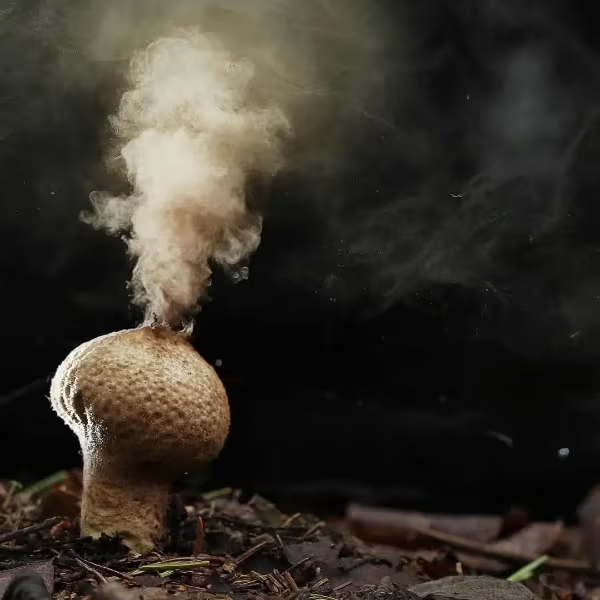
Curious about mushroom spores?
Mushroom spores are microscopic reproductive cells produced by fungi. They are released naturally into the environment and play a central role in the fungal life cycle.
In research and educational contexts, mushroom spores are commonly studied under a microscope to observe their shape, colour, and structure. This guide explains what mushroom spores are, how they differ from seeds, how they are typically handled for study, and the key legal and ethical considerations in the UK.
This page is intended as a factual, educational overview for beginners and curious readers.
What exactly are mushroom spores?
Mushroom spores are single-celled reproductive units produced by fungi. Their primary biological function is reproduction and dispersal.
Unlike plants, fungi do not produce seeds. Instead, they release spores, which are typically:
- Microscopic
- Lightweight
- Capable of travelling through air or water
- Produced in very large numbers
A single mushroom can release millions to billions of spores during its life cycle.
How spores fit into the fungal life cycle
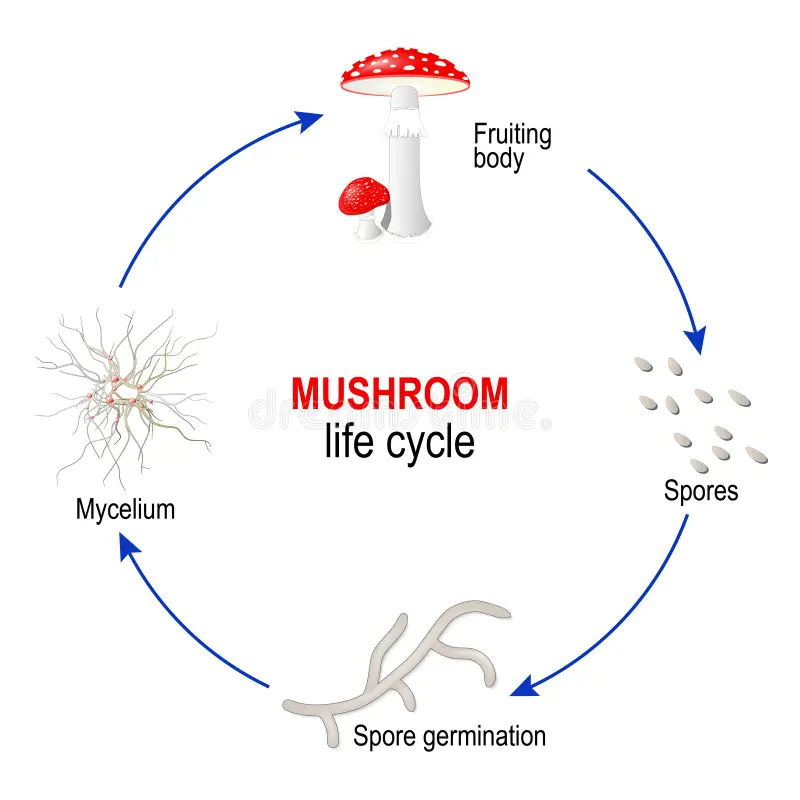
To understand mushroom spores properly, it helps to see where they fit biologically.
Simplified fungal life cycle:
- A mature mushroom releases spores
- Spores disperse into the environment
- Under suitable conditions, spores may germinate
- Germinated spores form mycelium (fungal network)
- Mycelium may eventually produce mushrooms
- The cycle repeats
In microscopy and research contexts, spores are studied at stage one before germination or development.
Are mushroom spores the same as seeds?
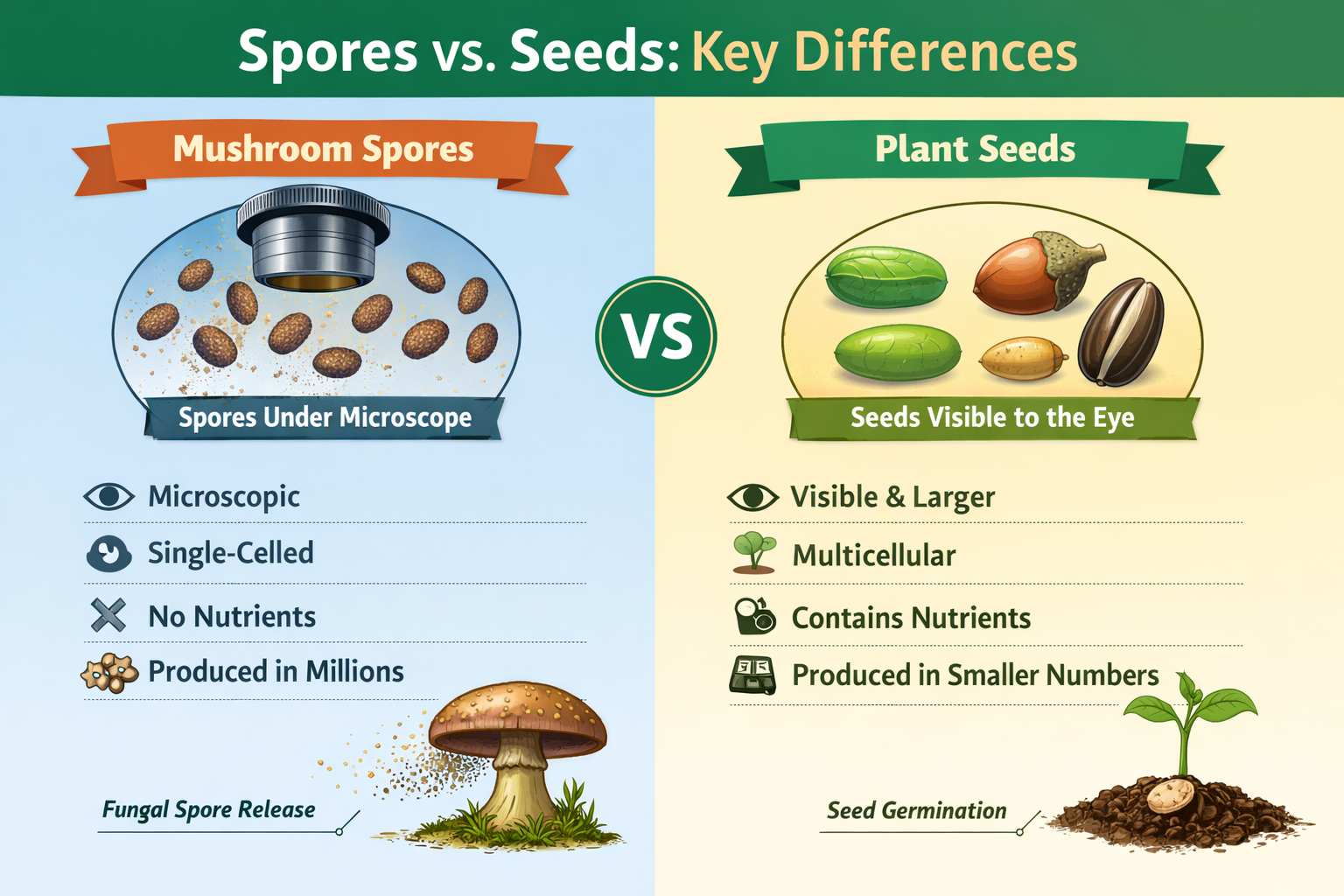
No. While spores and seeds serve a similar purpose (reproduction), they are biologically very different.
Key differences:
| Mushroom Spores | Plant Seeds |
|---|---|
| Single-celled | Multicellular |
| Microscopic | Visible to the eye |
| No stored nutrients | Contain nutrients |
| Produced by fungi | Produced by plants |
| Spread in vast quantities | Produced in smaller numbers |
This distinction is important in both biological study and legal classification.
What do mushroom spores look like?
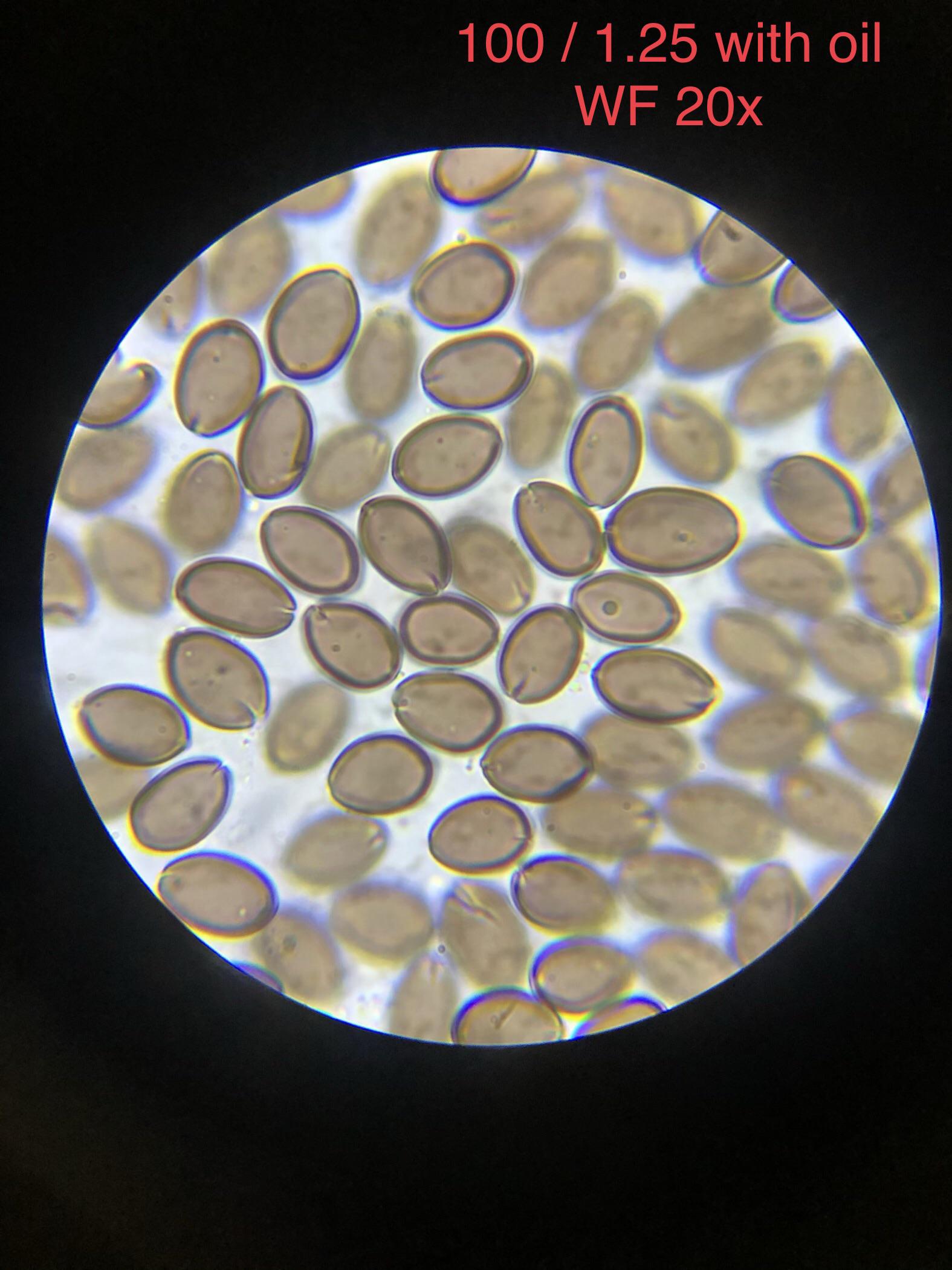
Under a microscope, mushroom spores display a wide range of shapes, sizes, and colours.
Common characteristics include:
- Oval or elliptical shapes
- Smooth or textured surfaces
- Brown, purple-brown, or dark pigmentation
- Distinctive spore wall structures
These features are often used in taxonomy and identification, which is why spores are of interest to researchers and microscopy enthusiasts.
You can learn more about observing spores in our guide to mushroom spore microscopy.
Why do people study mushroom spores?
Mushroom spores are studied for several legitimate reasons, including:
- Microscopy and laboratory observation
- Taxonomic classification of fungi
- Academic research and education
- Understanding fungal biodiversity
- Training in microscopy techniques
Spore morphology (shape and structure) is a core part of fungal identification in mycology.
How are mushroom spores collected?
In natural settings, spores are released from mature mushrooms and dispersed into the environment.
For research and microscopy purposes, spores may be:
- Collected onto sterile surfaces
- Suspended in sterile solutions
- Prepared for slide examination
At Mycotown, spores are supplied for microscopy and educational study only, in accordance with UK law.
Common forms of mushroom spores used for study
Mushroom spores for microscopy are commonly supplied in several formats:
Spore prints
Spores collected onto a sterile surface, forming a visible deposit.
Spore syringes
Spores suspended in a sterile liquid medium, commonly used for slide preparation.
Spore swabs
Spores collected using sterile swabs for controlled handling.
Each format has different handling characteristics and storage considerations.
How long do mushroom spores last?
Spore longevity varies depending on:
- Species
- Storage conditions
- Format (print, syringe, swab)
- Exposure to light, heat, and moisture
When stored correctly, many spores remain viable for extended periods.
For detailed guidance, see:
How To Store Mushroom Spores
Are mushroom spores legal in the UK?
In the UK, mushroom spores themselves are not classified as controlled substances, as they do not contain psychoactive compounds.
However:
- Laws can change
- Usage matters
- Cultivation of certain species is illegal
It is the responsibility of the individual to ensure compliance with all applicable laws.
For a detailed, up-to-date explanation, read:
Are Mushroom Spores Legal UK
Ethical and responsible use
Responsible handling of mushroom spores means:
- Using them only for legal, educational, or research purposes
- Avoiding misuse or unlawful activity
- Storing them safely and responsibly
Educational suppliers emphasise transparency, legality, and ethical use.
Frequently asked questions about mushroom spores
Are mushroom spores alive?
Mushroom spores are dormant reproductive cells. They are biologically active but do not grow or germinate until conditions such as moisture, temperature, and nutrients are suitable. In microscopy and research, spores are observed while dormant, making them safe and easy to handle for educational purposes.
Can you see spores without a microscope?
Individual spores are microscopic and cannot be seen with the naked eye. However, when collected in large numbers, they form visible spore prints on paper or foil. Microscopes are required to observe their shape, color, and surface details for study and identification.
Do all mushrooms produce spores?
Yes, all mushrooms reproduce via spores. The size, shape, color, and texture of spores vary depending on the species, which is why mycologists use spores as a key tool in identifying and classifying fungi. Spores are the fungal equivalent of seeds in plants.
How do spores differ from seeds?
Spores differ from seeds in several ways: spores are single-celled, microscopic, and produced in massive numbers, while seeds are multicellular, contain stored nutrients, and are visible. Spores do not germinate without the right environmental conditions, whereas seeds contain all the energy needed to start plant growth.
Are mushroom spores legal in the UK?
Mushroom spores themselves are legal in the UK because they do not contain psychoactive compounds. However, cultivating mushrooms from spores may be illegal depending on the species. Always ensure you understand and follow current UK laws before use. Spores supplied for microscopy and educational purposes are legal to possess.
Final thoughts
Mushroom spores are a fundamental part of fungal biology and play a key role in scientific study and education. Understanding what they are, and what they are not, helps demystify fungi and supports responsible, legal engagement with mycology.
If you are new to the subject, this page serves as a starting point. From here, you can explore microscopy techniques, legal considerations, and specific fungal variants in greater depth.
Suggested next steps
- Learn how spores are viewed under a microscope
- Understand legal and ethical considerations in the UK
- Explore reference material on specific fungal variants
Written by Mycotown Editorial Team
The Mycotown Editorial Team is responsible for producing and reviewing educational and reference content across the site. Our focus is on accurate, responsible information relating to mushroom spores, microscopy, and lawful research practices. View author profile