
Psilocybe cubensis is a species of mushroom belonging to the fungal genus Psilocybe, within the family Hymenogastraceae. Recognised by its distinctive physical characteristics and widespread geographical distribution, it is one of the best-known species within its genus and a frequently studied subject in mycology.
Like other members of the fungal kingdom, P. cubensis plays a role in the natural decomposition and recycling of organic matter. Its characteristic golden-brown caps, dark purple-brown spore deposits and distinctive microscopic features make it particularly recognisable.
This guide examines the species from a mycological perspective, covering its taxonomy, natural distribution, ecological relationships, physical characteristics and spore morphology. It also introduces some of the named varieties commonly associated with P. cubensis, providing an overview of their characteristics and place within the wider species.
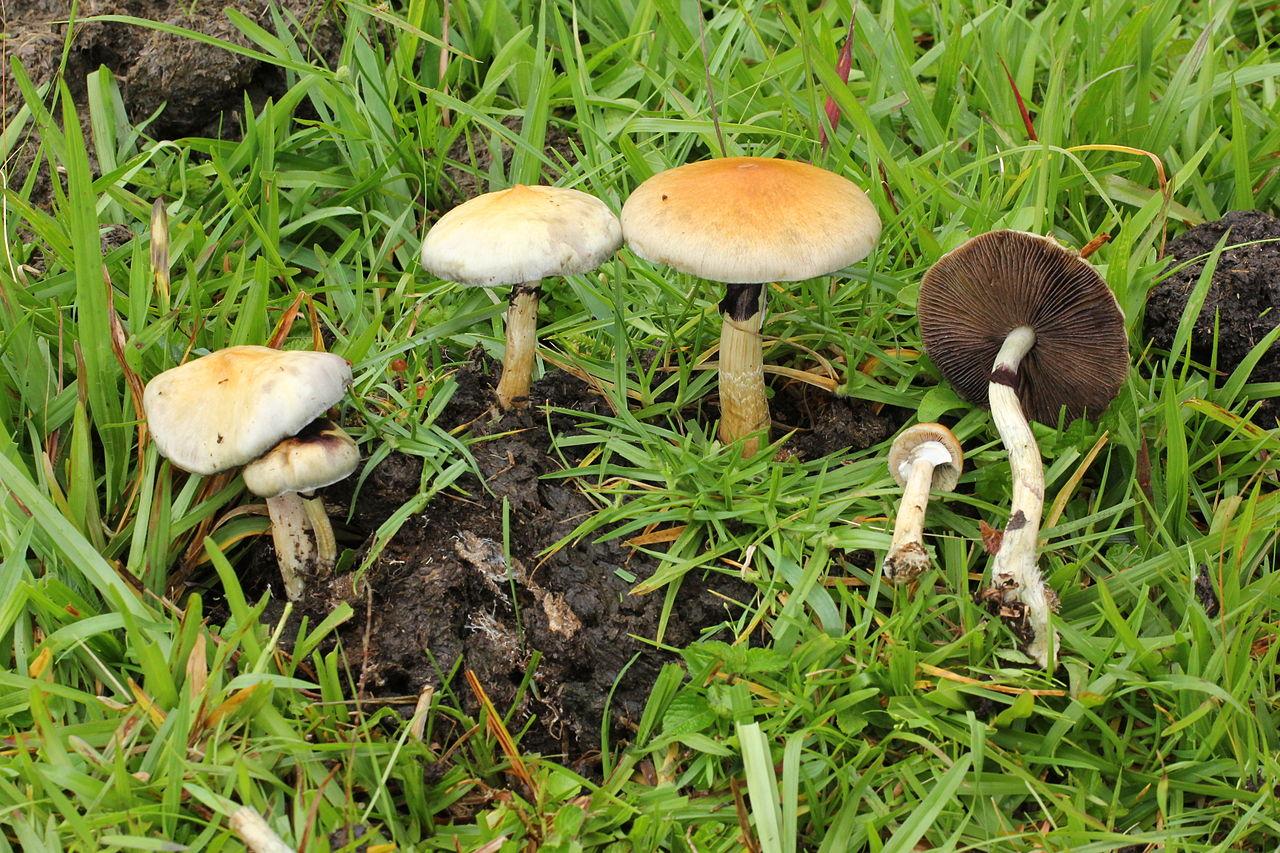
Table of Contents
- Taxonomy and classification
- Natural distribution and habitat
- Physical characteristics
- Spore characteristics
- Recognised varieties
- Golden Teacher
- Albino A+
- B+
- Amazonian
- Microscopy and identification
- Frequently asked questions
Taxonomy and classification
Taxonomy is the scientific system used to identify, name and organise living organisms according to their shared characteristics and evolutionary relationships. Within the fungal kingdom, species are arranged into increasingly specific classification groups, from broad divisions such as phyla to individual species.
Psilocybe cubensis belongs to the following taxonomic groups:
| Classification | Name |
|---|---|
| Kingdom | Fungi |
| Phylum | Basidiomycota |
| Class | Agaricomycetes |
| Order | Agaricales |
| Family | Agrocybaceae |
| Genus | Psilocybe |
| Species | Psilocybe cubensis |
Understanding the genus and species
The genus is a classification that groups together organisms sharing important characteristics and a common evolutionary relationship. In this case, Psilocybe is the genus, which contains numerous recognised mushroom species.
The species is a more specific classification. Psilocybe cubensis identifies one particular species within that genus, distinguishing it from other members such as Psilocybe cyanescens and Psilocybe semilanceata.
The scientific name consists of two parts: the genus name, beginning with a capital letter, followed by the species epithet in lowercase. Both are conventionally written in italics.
Varieties within Psilocybe cubensis
A number of familiar names are associated with different forms of P. cubensis, including Golden Teacher, Albino A+, B+ and Amazonian. These are commonly referred to as strains or varieties within spore-collecting communities.
Importantly, these names do not represent separate species. They are informal or commercial designations used for named forms within P. cubensis. Their histories, reported characteristics and genetic distinctions vary, and not every claimed distinction has been established through formal scientific classification.
This distinction is useful when exploring the different named varieties: although they may display differences in pigmentation, appearance and reported lineage, they are all associated with the same recognised species.
Natural distribution and habitat
Psilocybe cubensis is a species associated primarily with tropical and subtropical regions. It has been recorded across parts of Central and South America, the Caribbean, Southeast Asia, Australia and other warm regions of the world.
Its distribution is closely associated with environmental conditions that support the availability of organic matter and suitable fungal habitats. It is particularly well known for its ecological association with the dung of grazing herbivores, making it a coprophilous, or dung-associated, fungus.
Geographical distribution
Historical records place P. cubensis across a broad range of tropical and subtropical environments. Its presence has been documented in regions including Mexico, Central America, northern South America, parts of Southeast Asia and Australia.
The species is also associated with several Caribbean locations and other areas where suitable environmental conditions occur. Its distribution has been influenced by natural ecological relationships as well as the movement of livestock and other human-associated environmental changes.
Environmental conditions
The species is generally associated with warm, humid environments, particularly tropical and subtropical grasslands and pasture ecosystems.
These environments provide access to organic material and the moisture conditions associated with fungal activity. Its distribution is therefore influenced not only by regional climate but also by the availability of suitable ecological substrates.
Ecological relationships
Unlike fungi that primarily obtain nutrients from decaying wood or leaf litter, P. cubensis is coprophilous. This means it has an ecological association with animal dung, particularly that of grazing herbivores.
Fungi associated with dung contribute to the decomposition of organic material, helping return nutrients to the surrounding environment. Through this process, they form part of a wider community of decomposers that support nutrient cycling within grassland ecosystems.
Role within the fungal ecosystem
Fungi are essential components of healthy ecosystems, helping break down organic matter and making nutrients available to other organisms.
As a dung-associated fungus, P. cubensis occupies a particular ecological niche within this wider network. Its relationship with herbivore-associated environments illustrates the diversity of nutritional strategies found throughout the fungal kingdom.
Understanding these ecological relationships provides useful context for studying the species beyond its familiar appearance and microscopic characteristics.
Physical characteristics and morphology
The physical characteristics of Psilocybe cubensis are among its most recognisable features. Like other mushrooms, its visible fruiting body consists of several distinct structures, each with its own form and function.
Although individual specimens can vary considerably in size, shape and pigmentation, the species generally displays a recognisable combination of cap morphology, stem structure and gill arrangement.
Cap morphology
The cap, or pileus, is the uppermost part of the mushroom and is one of its most distinctive features.
In younger specimens, the cap is typically rounded or hemispherical. As it develops, it commonly expands towards a broadly convex shape, sometimes becoming flatter with maturity.
Cap colour can vary from pale golden and caramel tones to deeper brown shades. Younger specimens may display darker central areas, while the surface can become lighter or develop different colour patterns as the mushroom matures.
The cap surface is generally smooth, although environmental conditions and the specimen’s stage of development can influence its appearance.
Stem characteristics
The stem, scientifically known as the stipe, supports the cap and connects it to the underlying substrate.
In P. cubensis, the stem is generally cylindrical and relatively robust, although its length, thickness and overall proportions can vary between specimens.
Its colour is usually whitish to pale cream, sometimes developing yellowish or bluish discolouration in areas of damaged tissue. The surface can appear smooth or slightly fibrous.
The stem may also display variation in thickness along its length, with some specimens having a more substantial base.
Gills
The gills, or lamellae, are located beneath the cap and contain the spore-producing surfaces of the mushroom.
They are typically closely spaced and attached to the stem, with their appearance changing as the mushroom develops.
In younger specimens, the gills are generally pale grey or light in colour. As the spores mature, they progressively become darker, eventually taking on the characteristic deep purple-brown pigmentation associated with the species.
This colour change is one of the more useful visible characteristics when studying the development and morphology of P. cubensis.
Overall appearance
The combination of a rounded to broadly convex cap, pale fibrous stem and darkening gills gives P. cubensis its characteristic appearance.
However, considerable variation exists between individual specimens. Factors such as genetic variation, environmental conditions and developmental stage can all influence their visible characteristics.
For this reason, physical appearance alone should not be treated as definitive evidence of species identification. Reliable fungal identification considers multiple characteristics, including microscopic features and, where necessary, molecular evidence.
Spore characteristics
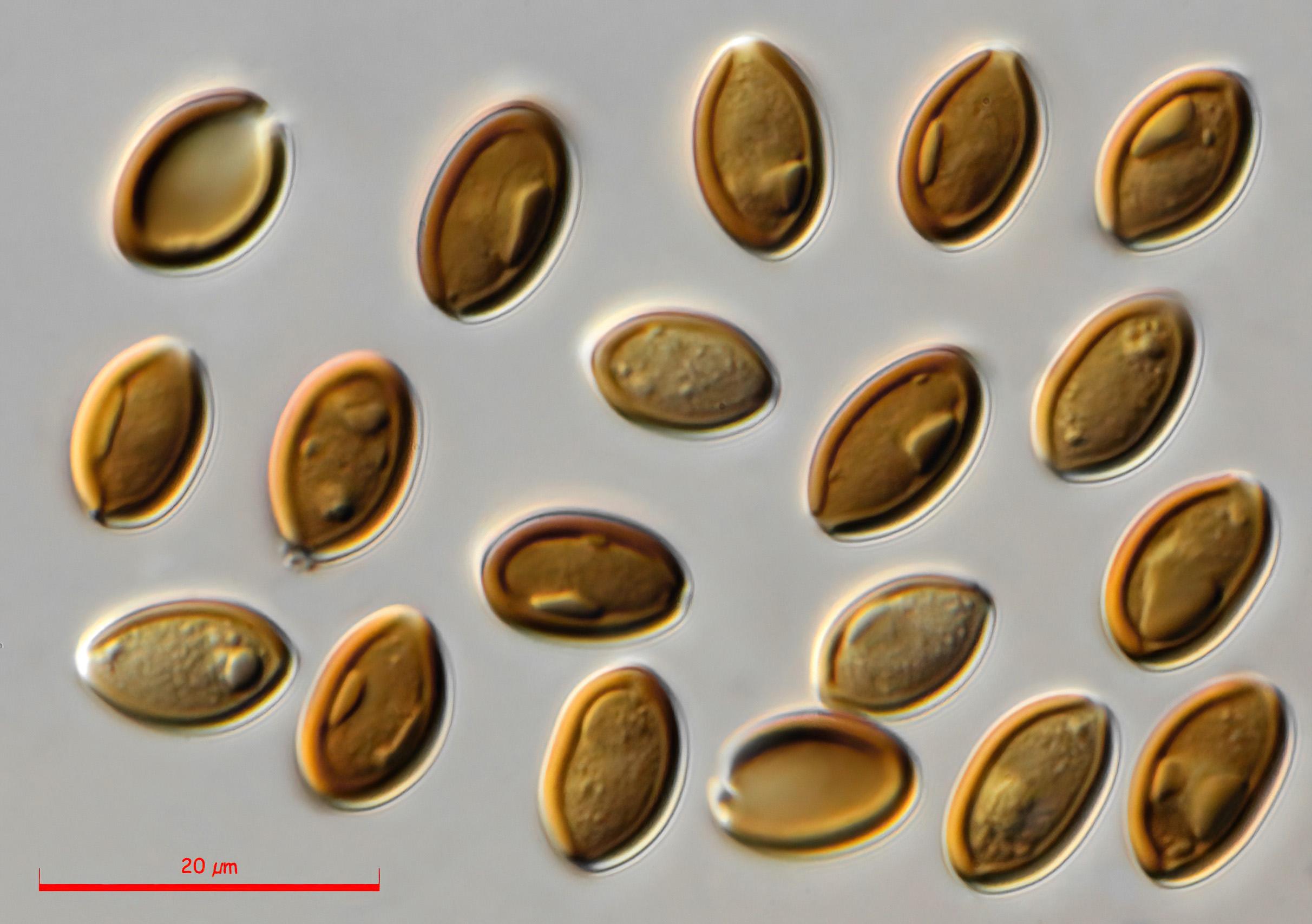
Spores are the reproductive structures produced by fungi and play an essential role in their classification, identification and reproduction. In Psilocybe cubensis, they possess several distinctive microscopic characteristics, including their pigmentation, shape, surface structure and germ pore.
Although spores are microscopic and cannot be examined in detail with the naked eye, their characteristics provide useful information when studying the species and comparing it with other fungi.
Spore pigmentation
One of the characteristic features of P. cubensis is its dark purple-brown spore pigmentation.
The mature spores accumulate to produce a very dark spore deposit, commonly described as purple-brown to nearly black. This pigmentation is characteristic of the species and helps distinguish it from many other mushroom groups with lighter-coloured spore deposits.
Spore pigmentation is an important taxonomic characteristic, although colour alone is not sufficient to identify a mushroom species.
Spore shape and morphology
Under microscopic examination, P. cubensis spores are generally ellipsoid, meaning they have an elongated oval shape.
Depending on their orientation and viewing angle, they can also appear slightly angular or subhexagonal. Their walls are relatively thick, and their surfaces are smooth rather than ornamented with prominent ridges or projections.
These structural characteristics are shared with other members of the genus and are useful when examining relationships between different Psilocybe species.
Surface characteristics and germ pore
Another distinctive microscopic feature is the germ pore, a small opening associated with one end of the spore.
The germ pore is a recognised morphological feature in several groups of dark-spored agaric fungi, including Psilocybe. Its presence, alongside spore shape, pigmentation and wall structure, contributes to the microscopic description of the species.
The spore wall is smooth and relatively robust, characteristics that can be examined under suitable magnification.
The role of spores in fungal identification
Spore morphology has long been an important part of fungal taxonomy. Characteristics such as shape, size, pigmentation, wall structure and the presence of a germ pore can help mycologists distinguish between closely related groups.
However, spores should not be considered in isolation. Accurate fungal identification generally involves examining a combination of microscopic and macroscopic characteristics, alongside ecological information and, where necessary, molecular evidence.
In P. cubensis, the combination of dark purple-brown pigmentation, smooth ellipsoid spores and a distinct germ pore contributes to its recognised microscopic profile.
Recognised varieties
A number of named varieties are associated with Psilocybe cubensis. Names such as Golden Teacher, B+, Amazonian and Albino A+ are widely used by collectors, suppliers and mycology communities to distinguish particular cultivated lines.
These names are not separate species or formally recognised botanical varieties. They are generally used as informal cultivar or strain names, and their histories and genetic relationships are not always well documented.
The profiles below introduce some of the best-known names, outlining their commonly reported characteristics and how they relate to Psilocybe cubensis. Descriptions should be treated as general guidance rather than definitive identification criteria, as considerable variation can occur between specimens.
Golden Teacher
Named variety of Psilocybe cubensis
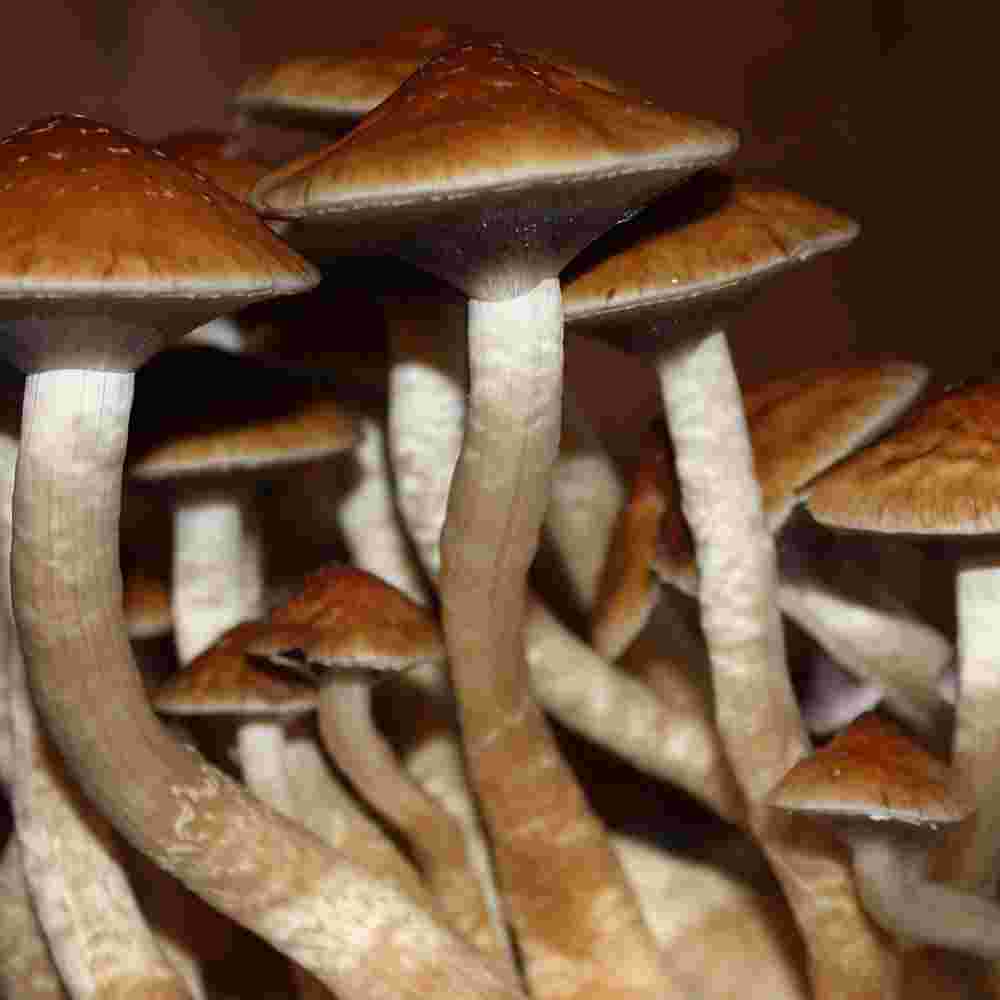
Golden Teacher is one of the best-known named varieties associated with Psilocybe cubensis. It is commonly recognised by its warm golden, honey-brown or caramel-coloured cap, which gives the variety its name. Individual specimens can vary in colour, shape and proportions, but these golden-brown tones are among the features most frequently associated with Golden Teacher.
The name refers to a recognised cultivated or commercial line within the species, rather than a formally described botanical variety. Unlike Psilocybe cubensis itself, Golden Teacher has no formal taxonomic standing. Its precise origins and the genetic identity of material sold under the name are not fully established. Different suppliers may therefore use the same name for material that is not necessarily genetically identical.
Key characteristics
- Species: Psilocybe cubensis
- Common name: Golden Teacher
- Typical cap colour: Golden, honey-brown to caramel
- Naming status: Informal cultivated variety or commercial designation
- Recognition: One of the most widely known named varieties of P. cubensis
Albino A+
Named cultivar of Psilocybe cubensis
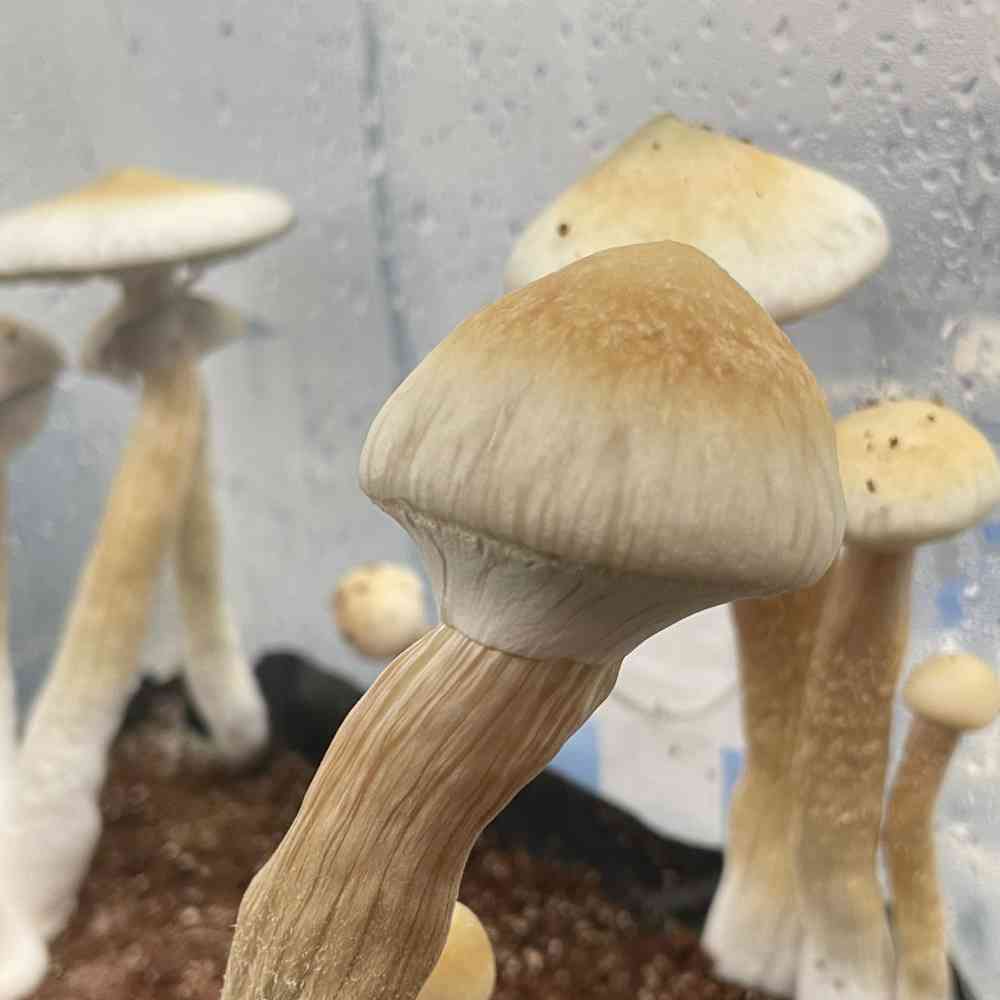
Albino A+ is recognised for its unusually pale appearance, with caps that are typically cream, ivory or near-white and stems that are similarly light in colour. Unlike the golden and brown tones commonly associated with many P. cubensis varieties, its reduced pigmentation gives it a noticeably different appearance.
Key characteristics:
- Species: Psilocybe cubensis
- Cap colour: Cream, ivory or near-white, sometimes with subtle blue-grey tones.
- Cap shape: Generally convex when young, becoming broader as it matures.
- Stem: Typically pale or white, with a relatively substantial appearance.
- Pigmentation: Commonly described as leucistic rather than truly albino.
Despite its name, Albino A+ is generally described as leucistic, meaning it has reduced pigmentation rather than a complete absence of pigment. It is not a separate species or a formally recognised botanical variety, and its precise genetic history is not firmly established.
B+
Named cultivar of Psilocybe cubensis

B+ is one of the most widely recognised names associated with Psilocybe cubensis. It is commonly associated with broad, caramel to golden-brown caps and relatively thick, pale stems. Its appearance is often described as having a softer, rounded profile compared with some other named varieties.
Key characteristics:
- Species: Psilocybe cubensis
- Cap colour: Caramel, golden-brown or light chestnut.
- Cap shape: Broad and rounded, often becoming flatter as it matures.
- Stem: Typically pale cream to whitish, often described as relatively thick.
- Overall appearance: Commonly associated with broad caps and a substantial-looking stem.
The name has become well established within the wider mushroom community, although its precise origin and historical lineage are not clearly documented. B+ is not a separate species or a formally recognised botanical variety. Its commonly reported appearance can vary, and the name alone does not establish the genetic identity of a specimen.
Amazonian
Named cultivar of Psilocybe cubensis

Amazonian is a recognised name associated with Psilocybe cubensis, commonly linked by its name and reported history to the Amazon region of South America. It is often described as having golden to caramel-brown caps, with a relatively broad shape and thick, pale stems.
Key characteristics:
- Species: Psilocybe cubensis
- Cap colour: Golden-brown to caramel, sometimes with darker central colouring.
- Cap shape: Broad and rounded, becoming more open as it matures.
- Stem: Commonly described as thick and pale, with a sturdy appearance.
- Overall appearance: Often associated with larger-looking caps and substantial stems.
The name reflects its reported geographical association, although the precise origin and historical lineage of the commercial variety are not firmly established. Amazonian is not a separate species or a formally recognised botanical variety, but an informal cultivar name within the wider P. cubensis group.
PE6 (Penis Envy 6)
Named cultivar of Psilocybe cubensis
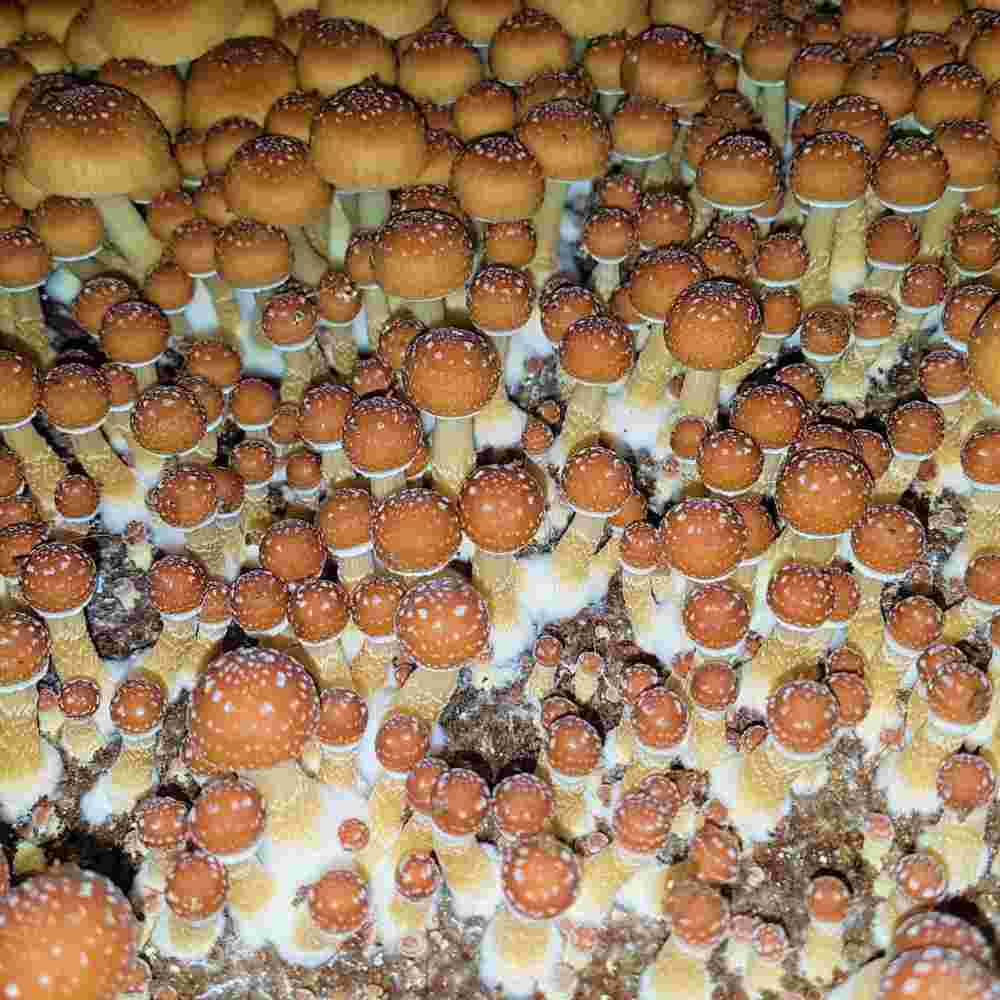
PE6, short for Penis Envy 6, is a named cultivar associated with the Penis Envy group of Psilocybe cubensis. It is commonly described as having a more conventional cap shape than classic Penis Envy, with golden to caramel-brown colouring and a relatively substantial stem.
Key characteristics:
- Cap colour: Golden-brown to caramel, sometimes with darker central colouring.
- Cap shape: Generally rounded or convex, with a more open appearance than classic Penis Envy.
- Stem: Commonly described as thick and pale, although proportions can vary.
- Overall appearance: Combines some of the commonly associated physical characteristics of the Penis Envy group with a more conventional P. cubensis appearance.
The PE6 name is generally associated with a line developed from the Penis Envy group, although its precise breeding history and genetic relationship to other named lines are not consistently documented. It is not a separate species or a formally recognised botanical variety.
Blue Meanie
Named cultivar of Psilocybe cubensis
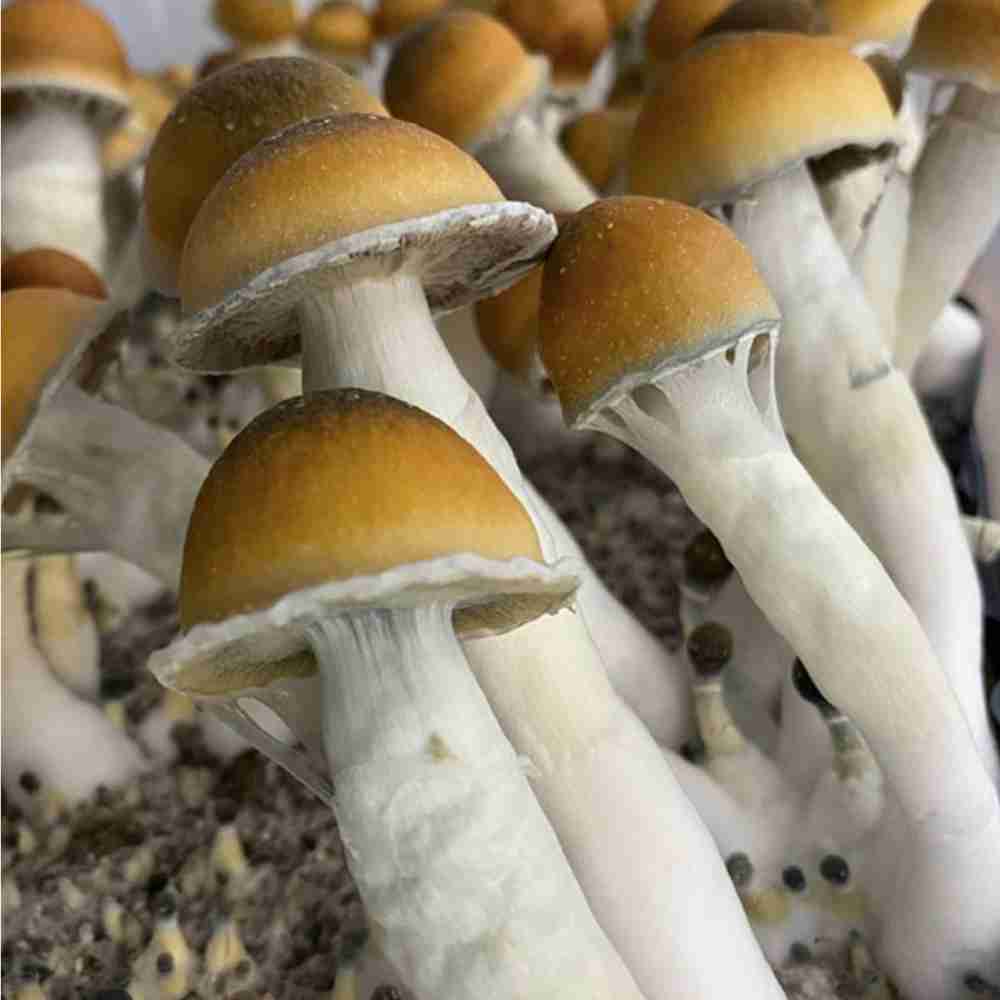
Blue Meanie is a name used for a recognised commercial variety of Psilocybe cubensis. It is commonly associated with golden to medium-brown caps and pale stems, with the name often linked to the blue bruising sometimes reported in descriptions of the variety.
Key characteristics:
- Cap colour: Golden to medium-brown, sometimes with a darker central area.
- Cap shape: Typically rounded or convex, becoming broader with maturity.
- Stem: Usually described as pale or cream-coloured.
- Overall appearance: Generally resembles other golden-capped P. cubensis varieties, with no consistently established visual feature that uniquely identifies it.
An important distinction is that the name Blue Meanie is also commonly used for Panaeolus cyanescens, a completely separate mushroom species. The name alone therefore does not establish which species is being discussed. In this section, Blue Meanie refers specifically to the named P. cubensis variety.
Microscopy and identification
Microscopy plays an important role in fungal taxonomy, allowing researchers to examine structures that cannot be reliably distinguished with the naked eye. While features such as cap shape, stem characteristics, gill arrangement and habitat provide useful clues, microscopic observations can reveal additional details that help distinguish between related species.
The importance of microscopic characteristics
Fungal identification often involves examining several different structures, including spores, basidia and cystidia. Their shape, size, arrangement and other physical features can provide useful taxonomic information.
In the case of Psilocybe cubensis, spore morphology is one of the recognised microscopic characteristics used in published species descriptions. However, it is only one part of a much wider identification process.
Spore morphology
The spores of Psilocybe cubensis are generally described as ellipsoid to subellipsoid, with a smooth surface, relatively thick walls and a distinct germ pore. They are dark purplish-brown in mass, contributing to the characteristic dark spore deposit associated with the species.
These features can be compared with published descriptions and observations of other fungi. However, spore characteristics can overlap between related species, meaning that no single feature should be considered conclusive.
The limitations of spore identification
Although spores can provide valuable information, identifying a fungus from spores alone has limitations. Different species may share similar spore shapes, colours and dimensions, while measurements can vary between specimens.
Microscopy is also unlikely to establish the identity of a particular named P. cubensis variety. Names such as Golden Teacher and Albino A+ are informal cultivar or strain designations, rather than separate taxonomic classifications, and their spores do not necessarily have unique microscopic characteristics.
A combined approach to identification
Reliable fungal identification considers a combination of characteristics rather than relying on a single observation. These may include visible morphology, microscopic structures, geographical distribution, habitat and, where necessary, molecular evidence such as DNA analysis.
For this reason, microscopy is best understood as an important tool within the wider study of fungal taxonomy. It can help researchers compare specimens and assess their characteristics, but accurate identification requires evidence to be considered as a whole.
Frequently asked questions
What is Psilocybe cubensis?
Psilocybe cubensis is a species of mushroom in the genus Psilocybe. It is recognised by its distinctive physical characteristics and its distribution across tropical and subtropical regions. It is one of the best-known species in the genus.
What is the difference between a species and a strain?
A species is a formal biological classification used to group organisms with shared characteristics and evolutionary relationships. A strain is an informal term commonly used to describe a particular cultivated or maintained line within a species. Names such as Golden Teacher and B+ refer to named lines of P. cubensis, not separate species.
How many named Psilocybe cubensis varieties are there?
There is no definitive number. Dozens of names are used by suppliers and mycology communities, and new names and combinations continue to appear. However, these names are not maintained in a single authoritative scientific register, and their histories and genetic distinctions are not always well established.
What distinguishes Golden Teacher from Albino A+?
Golden Teacher is commonly associated with golden-brown cap colouring, while Albino A+ is known for its much paler or white appearance. Both names refer to recognised commercial lines associated with P. cubensis. These descriptions are general rather than definitive identification criteria, and neither name represents a separate species.
What colour are Psilocybe cubensis spores?
Psilocybe cubensis spores are dark purplish-brown when viewed in mass. Individual spores are typically described as having a brown to purple-brown appearance under appropriate microscopic examination.
Are all named Psilocybe cubensis varieties genetically distinct?
Not necessarily. Some named lines may have identifiable genetic differences, but many commercial names have not been independently characterised through published genetic research. A different name or appearance does not, by itself, demonstrate that two lines are genetically distinct.
What is the difference between Psilocybe cubensis and other Psilocybe species?
Psilocybe cubensis is one species within the genus Psilocybe. Other members of the genus, such as Psilocybe semilanceata and Psilocybe cyanescens, are separate species with their own physical characteristics, ecological distributions and genetic identities. They should not be confused with named varieties of P. cubensis.
Written by Mycotown Editorial Team
The Mycotown Editorial Team is responsible for producing and reviewing educational and reference content across the site. Our focus is on accurate, responsible information relating to mushroom spores, microscopy, and lawful research practices. View author profile
