Magic mushroom laws can be complicated, and the legal position is not always as straightforward as it might seem. Rules vary between countries and can differ depending on whether the material involved is a mushroom, spore sample, mycelium, liquid culture or grow kit.
This guide examines the legal status of magic mushrooms in the UK and around the world. It covers the legislation governing psilocybin and psilocin, the rules surrounding spores and mushroom cultivation, and the legal implications of possession, supply, research and international shipping.
Whether you’re trying to understand UK drug laws, the distinction between spores and mature fungi, or how different countries approach psilocybin, the sections below provide a detailed overview of the relevant legislation and legal considerations.
Use the contents below to jump to the section most relevant to your question.
Contents
Part 1 — Understanding Magic Mushroom Laws
- What Are Magic Mushrooms?
- Psilocybin and Psilocin: What Does the Law Control?
- Why Do Magic Mushroom Laws Differ Between Countries?
- Legalisation, Decriminalisation and Prohibition: What’s the Difference?
Part 2 — Magic Mushroom Laws in the UK
- Are Magic Mushrooms Legal in the UK?
- The Misuse of Drugs Act 1971
- What Changed in the Drugs Act 2005?
- The Misuse of Drugs Regulations 2001
- Are Fresh Magic Mushrooms Illegal?
- Are Dried Magic Mushrooms Illegal?
- Are Mushroom Truffles and Sclerotia Legal?
- Does the Law Treat Different Mushroom Species Differently?
Part 3 — Spores, Syringes and Mushroom Cultures
- Are Magic Mushroom Spores Legal in the UK?
- Are Spore Syringes Legal?
- Are Spore Prints and Swabs Legal?
- Are Mushroom Mycelium and Liquid Cultures Legal?
- Does the Intended Use of Mushroom Spores Matter?
- What Is the Legal Difference Between Spores and Fruiting Bodies?
Part 4 — Grow Kits and Mushroom Cultivation
- Are Magic Mushroom Grow Kits Legal in the UK?
- Is Growing Magic Mushrooms Illegal in the UK?
- Is Cultivating Mycelium Different from Growing Mushrooms?
- Are Colonised Substrates Legal?
- Is It Legal to Pick Wild Magic Mushrooms?
- What Are the Potential Penalties for Cultivation?
Part 5 — Possession, Supply and Commercial Activity
- Is Possessing Magic Mushrooms Illegal?
- Is Selling Magic Mushrooms Illegal?
- Is Giving Magic Mushrooms Away Illegal?
- What Are the Laws Around Advertising and Selling Spores?
- What Are the Penalties for Magic Mushroom Offences?
- Can Researchers Legally Work with Psilocybin?
Part 6 — Shipping, Importing and Exporting
- Can You Legally Buy Magic Mushroom Spores Online?
- Can You Ship Magic Mushroom Spores Internationally?
- Can You Import Mushroom Spores into the UK?
- Can You Export Mushroom Spores from the UK?
- What Happens If Customs Seizes a Package?
- Does a Product Being Legal Abroad Make It Legal to Import?
Part 7 — Magic Mushroom Laws Around the World
- United States
- Canada
- Netherlands
- Portugal
- Jamaica
- Brazil
- Germany
- Other European Countries
- Australia and New Zealand
- International Drug Control Treaties
Part 8 — Medical Research and Changing Legislation
- Is Psilocybin Therapy Legal in the UK?
- Can Psilocybin Be Prescribed?
- What Licences Are Required for Scientific Research?
- Where Is Psilocybin Being Decriminalised or Legalised?
- Could Magic Mushrooms Become Legal in the UK?
Part 9 — Frequently Asked Questions
- Are magic mushrooms legal anywhere in the world?
- Are magic mushroom spores legal in the UK?
- Are spore syringes legal to buy?
- Can I buy mushroom spores online?
- Are magic mushroom grow kits legal?
- Is it illegal to grow magic mushrooms for personal use?
- Are fresh magic mushrooms treated differently from dried ones?
- Are magic truffles legal in the UK?
- Can you legally pick wild magic mushrooms?
- Can you travel internationally with mushroom spores?
- Is psilocybin legal for medical research?
- What is the difference between decriminalisation and legalisation?
Part 1 — Understanding Magic Mushroom Laws
1. What Are Magic Mushrooms?
Magic mushrooms are a common name for fungi that naturally contain the psychoactive compounds psilocybin and psilocin. These compounds can affect perception, mood, thinking and sensory experiences, which is why mushrooms containing them are commonly described as psychedelic or hallucinogenic mushrooms.
Unlike ordinary edible mushrooms, psilocybin-containing species produce naturally occurring compounds that interact with the human nervous system. Their effects can vary considerably depending on the species, the individual mushroom, its chemical composition and the person exposed to it.
Magic mushrooms are not a single species. The term describes a group of different fungi, most commonly associated with certain members of the Psilocybe and Panaeolus genera.
Common species associated with psilocybin
More than 50 species of fungi have been identified as containing psilocybin or psilocin. Some of the better-known examples include:
- Psilocybe cubensis — A widely recognised species found in tropical and subtropical environments.
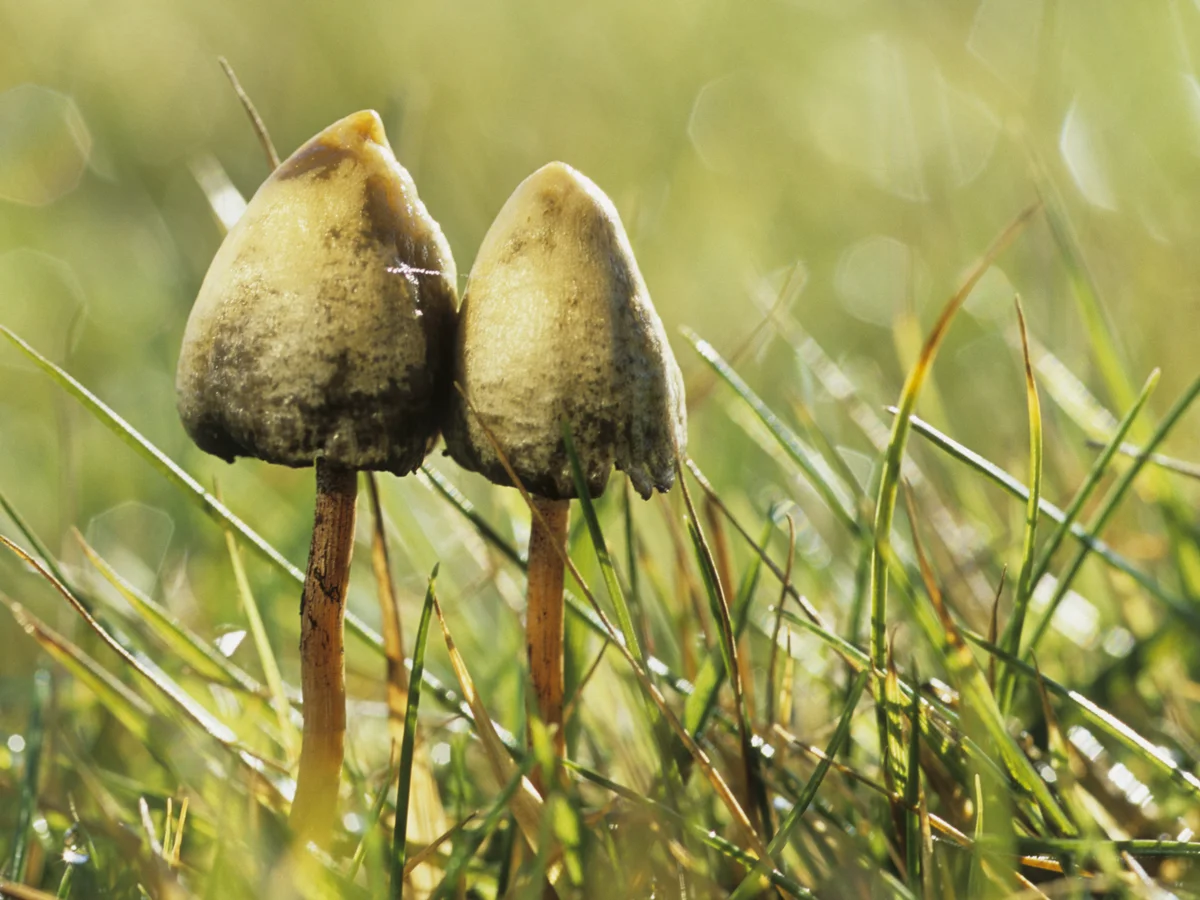
- Psilocybe semilanceata — Commonly known as the Liberty Cap, a species found in grassland habitats, including parts of the UK.
- Psilocybe cyanescens — Often called the Wavy Cap, recognised by its distinctive wavy cap and association with wood-rich environments.
- Psilocybe azurescens — A species associated with coastal habitats in parts of the Pacific Northwest.
- Panaeolus cyanescens — A species sometimes referred to as the Blue Meanie, belonging to a different fungal genus from Psilocybe.
These are examples rather than an exhaustive list. The presence and concentration of psychoactive compounds can vary between species and individual specimens.
It is also important to distinguish psilocybin-containing mushrooms from other fungi that produce hallucinogenic effects through different chemicals. For example, Amanita muscaria, commonly known as Fly Agaric, contains compounds called muscimol and ibotenic acid rather than psilocybin. It is therefore chemically and pharmacologically different from the mushrooms generally covered by the term magic mushrooms.
What are psilocybin and psilocin?
Psilocybin and psilocin are naturally occurring tryptamine compounds found in certain fungi.
Psilocybin is the principal psychoactive compound present in many of these mushrooms. After ingestion, it is converted by the body into psilocin, which is the form that produces the main psychoactive effects.
Psilocin interacts with serotonin receptors in the brain, particularly the 5-HT2A receptor. This activity is associated with changes in perception, sensory processing, mood and thought.
Although the two compounds are closely related, they are not identical. Psilocybin is a phosphorylated compound that acts as a precursor to psilocin, while psilocin is the pharmacologically active form.
These chemical distinctions are particularly important when considering the law, because legislation may refer specifically to psilocybin, psilocin, preparations containing them or, in some jurisdictions, the fungi themselves.
How do magic mushrooms differ from other mushroom species?
Most familiar mushroom species do not contain psilocybin or psilocin. Edible varieties such as button mushrooms, oyster mushrooms and shiitake are biologically different in their chemical composition, even though they share the same broad classification as fungi.
The distinction is not simply one of appearance. Many psilocybin-containing mushrooms are relatively small and brown or tan, and can resemble other non-psychoactive or poisonous species.
For this reason, mushroom identification cannot reliably establish the chemical composition or legal status of an unknown specimen. Scientific identification may involve microscopic, chemical or genetic analysis.
From a legal perspective, the important distinction is generally whether a fungus contains a substance controlled under the relevant legislation, or whether the fungus itself is specifically covered by the law. The precise wording differs between countries, as explained in the following sections.
2. Psilocybin and Psilocin: What Does the Law Control?
Understanding the difference between psilocybin, psilocin and the fungi that contain them is central to understanding magic mushroom legislation.
Drug laws do not always regulate naturally occurring substances in the same way. Some legislation names particular chemical compounds, while other laws specifically include plants, fungi or preparations containing controlled substances.
This distinction has contributed to some of the differences between national approaches to magic mushrooms.
What is psilocybin?
Psilocybin is a naturally occurring psychoactive compound produced by certain fungi. Chemically, it belongs to a group of compounds known as tryptamines.
Under the 1971 United Nations Convention on Psychotropic Substances, psilocybin is listed as a Schedule I substance. This means it is subject to international controls intended to restrict its use, manufacture, distribution and possession to authorised purposes, principally scientific and very limited medical purposes under the Convention’s framework.
Individual countries implement these international obligations through their own domestic legislation. The precise classification, permitted activities and penalties therefore depend on the laws of the country concerned.
What is psilocin?
Psilocin is another naturally occurring compound found in certain mushrooms. It is closely related to psilocybin and is responsible for much of the psychoactive activity associated with these fungi.
Psilocin is also listed under the 1971 United Nations Convention on Psychotropic Substances as a Schedule I substance.
The distinction between the two compounds matters because some legislation refers to psilocybin and psilocin separately, while other legislation uses broader wording to cover fungi containing one or both compounds.
Why are these compounds controlled?
Psilocybin and psilocin are controlled because of their psychoactive properties and the potential risks associated with their use.
International drug control frameworks assess substances using factors that include their pharmacological effects, potential for misuse and public health implications.
Under the 1971 Convention, the scheduling system establishes different levels of international control. Schedule I contains substances subject to particularly restrictive controls, including limitations on use to scientific and very limited medical purposes by duly authorised persons.
However, international scheduling should not be confused with a complete statement of national law. Countries may introduce additional controls, define offences differently or establish specific exemptions and authorisation systems.
How do controlled substances relate to the fungi containing them?
This is one of the most important distinctions in magic mushroom law.
The international scheduling of psilocybin and psilocin does not automatically mean that every country uses identical wording to control the mushrooms that naturally contain these compounds.
For example, legislation may:
- Specifically identify fungi containing controlled compounds.
- Control the chemical substances themselves without separately naming the fungi.
- Include preparations or products containing controlled substances.
- Apply additional rules to cultivation, possession, supply or importation.
- Provide specific exemptions for certain activities or materials.
The UK provides a clear example of legislation specifically addressing the fungi themselves.
Section 21 of the Drugs Act 2005 amended the Misuse of Drugs Act 1971 to include:
“Fungus (of any kind) which contains psilocin or an ester of psilocin.”
This provision places qualifying fungi within the UK’s Class A drug classification. It is therefore not simply a question of whether psilocin has been extracted or whether a mushroom has been dried or prepared.
The distinction between a fungus containing a controlled substance and other fungal material, such as spores, is a separate legal question. It should not be assumed that every product associated with a psilocybin-producing species automatically has the same legal status.
Does the law distinguish between isolated compounds and naturally occurring fungi?
Yes, depending on the jurisdiction.
Some countries regulate psilocybin and psilocin as chemical substances, while others have introduced legislation that explicitly covers fungi containing those compounds.
The UK is an example of the latter approach. Its legislation specifically includes fungi containing psilocin or an ester of psilocin, rather than limiting control to isolated or prepared chemical compounds.
Other jurisdictions may approach the issue differently, particularly where their legislation was originally written around controlled substances rather than naturally occurring fungi.
This is one reason why the legal position of fresh mushrooms, dried mushrooms, extracts, spores and cultures cannot be assumed to be identical across different countries.
It also explains why a product’s biological description alone is not enough to establish its legal status. The relevant legislation, the material involved and the activity being undertaken must all be considered.
3. Why Do Magic Mushroom Laws Differ Between Countries?
Although psilocybin and psilocin are subject to international drug controls, the laws governing magic mushrooms vary considerably around the world.
Some countries specifically prohibit the possession and sale of fungi containing these compounds. Others focus primarily on the chemical substances themselves, while some have introduced different approaches to personal possession, cultivation, medical research or regulated therapeutic use.
These differences arise from the way international agreements are implemented through national legislation, as well as differences in legal systems, public policy and historical approaches to drug control.
International drug control conventions
The international framework for controlling psychoactive substances is based primarily on three United Nations conventions:
- The 1961 Single Convention on Narcotic Drugs.
- The 1971 Convention on Psychotropic Substances.
- The 1988 Convention against Illicit Traffic in Narcotic Drugs and Psychotropic Substances.
Psilocybin and psilocin are controlled under the 1971 Convention on Psychotropic Substances.
The Convention establishes international obligations for participating countries, including controls on the manufacture, trade, distribution, possession and use of scheduled substances.
For substances in Schedule I, Article 7 provides for particularly restrictive controls, limiting use to scientific and very limited medical purposes by duly authorised persons, subject to the Convention’s requirements.
However, the Convention does not provide a single, universally applicable criminal law for every country. National governments implement their obligations through domestic legislation, which can differ in its definitions, enforcement arrangements and treatment of naturally occurring materials.
One important distinction is that the Convention schedules the chemical compounds psilocybin and psilocin. It does not simply provide one identical legal classification for every mushroom species containing them.
National controlled-drug legislation
Each country establishes its own domestic framework for regulating controlled substances.
This may involve specific legislation identifying prohibited compounds, lists of controlled drugs, regulations governing authorised activities and separate offences relating to possession, production, cultivation, supply and importation.
The wording of these laws can make a substantial difference.
For example, a country may control a chemical compound without explicitly naming the fungi that produce it. Another may specifically include any fungus containing that compound within its controlled-drug legislation.
Some countries also distinguish between different forms of material, such as fresh and prepared mushrooms, while others apply the same general controls regardless of preparation.
These differences are particularly relevant when considering mushroom spores, mycelium, liquid cultures and grow kits. A product that is not expressly named in one country’s legislation should not automatically be assumed to be lawful in another.
Different approaches to fungi, spores and preparations
Magic mushroom legislation can be more complicated than legislation covering substances that are only encountered in isolated or manufactured forms.
Fungi are living organisms that develop through several biological stages, from microscopic spores to mycelium and eventually fruiting bodies.
The law may treat these materials differently depending on the substances they contain and the wording of the relevant legislation.
For example, the legal questions surrounding an unused spore sample may differ from those concerning a colonised substrate or a mushroom containing psilocybin.
Similarly, fresh mushrooms, dried mushrooms, extracts and other preparations may be addressed differently in some jurisdictions.
There is no universal international rule that gives all these materials the same legal status. Each must be considered in the context of the applicable national legislation.
The European Union Drugs Agency has documented differences in how European countries regulate hallucinogenic mushrooms, including variations in the treatment of the fungi themselves, their chemical compounds and their physical condition.
This helps explain why assumptions based on the law in one country can be misleading when applied elsewhere.
Differences between possession, cultivation and commercial supply
Another reason magic mushroom laws differ is that legislation often treats different activities as separate legal matters.
Possessing a controlled substance, cultivating an organism that produces it, supplying it to another person and importing it across an international border may all involve different offences and legal requirements.
A country may, for example, have a policy that reduces criminal penalties for possession of small quantities intended for personal use while continuing to prohibit commercial supply and cultivation.
Similarly, an authorised research programme or regulated medical service may be permitted to handle controlled substances under specific licences, even where unauthorised possession remains prohibited.
It is therefore important not to treat a country’s general approach to magic mushrooms as a single yes-or-no answer.
The legal position may depend on:
- The particular substance or fungal material involved.
- Whether the activity involves possession, cultivation, production or supply.
- Whether the material is intended for personal, commercial, medical or scientific purposes.
- Whether the relevant activity requires a licence or other authorisation.
- Whether additional restrictions apply to importing or exporting the material.
These distinctions are explored in more detail throughout this guide, particularly in the sections covering spores, grow kits, cultivation and international shipping.
4. Legalisation, Decriminalisation and Prohibition: What’s the Difference?
When researching magic mushroom laws around the world, terms such as legalisation, decriminalisation, depenalisation and tolerated possession are frequently used.
Although these terms are sometimes treated as interchangeable, they describe different legal and policy approaches.
Understanding the distinctions is important because a country may have reduced penalties for certain activities without actually making those activities lawful.
What does legalisation mean?
Legalisation generally means that an activity previously prohibited by law becomes legally permitted.
Depending on the legislation, this may involve allowing possession, cultivation, sale or use under specified conditions.
Legalisation does not necessarily mean that an activity becomes unrestricted. Governments can introduce licensing requirements, age restrictions, limits on quantities, approved sales channels and other regulatory controls.
For example, a regulated system for providing a controlled substance for medical or therapeutic purposes may permit certain activities while continuing to prohibit unauthorised commercial sales or possession outside that system.
When discussing magic mushrooms, it is therefore important to identify exactly what has been legalised rather than describing an entire country as having made magic mushrooms legal.
What does decriminalisation mean?
Decriminalisation generally refers to changing the legal treatment of certain behaviour so that it is no longer dealt with as a criminal offence.
Depending on the legislation, conduct such as possession of a limited quantity for personal use may be reclassified as a non-criminal matter, potentially attracting administrative measures or other responses instead of criminal prosecution.
However, decriminalisation does not necessarily create a legal market or permit commercial production and supply.
A country may decriminalise certain forms of personal possession while continuing to prohibit cultivation, distribution, sale and importation.
Portugal is frequently discussed in this context. Its approach to the possession of certain quantities of controlled substances for personal use involves an administrative framework rather than treating every such case as a criminal prosecution. This should not be confused with the legalisation of commercial drug sales.
What is depenalisation?
Depenalisation refers to reducing or limiting the penalties applied to behaviour that remains a criminal offence.
This can involve measures such as reduced sentences, police discretion, diversion programmes or a lower likelihood of prosecution for particular circumstances.
The important distinction is that the underlying conduct remains criminally prohibited.
In other words, depenalisation changes the consequences or enforcement of an offence without necessarily changing its legal classification.
The International Narcotics Control Board has specifically highlighted the importance of distinguishing depenalisation from decriminalisation when discussing international drug policy.
What does tolerated possession mean?
The term tolerated possession is often used to describe situations where authorities do not routinely prosecute or prioritise enforcement against certain forms of possession, despite the activity not necessarily being formally legal.
This may arise through official policy, prosecutorial discretion, established enforcement practices or a particular legal framework.
However, tolerance is not the same as a legal right.
An activity that is generally overlooked may still be prohibited under the law, and enforcement practices can change. Tolerance may also apply only to specific quantities, locations, circumstances or types of activity.
For this reason, descriptions such as ‘legal to possess’ should not be used when the actual position is that possession is merely tolerated or subject to reduced enforcement.
Why a reduction in penalties does not necessarily make an activity legal
These distinctions are particularly important when comparing magic mushroom laws internationally.
A country may have introduced reforms that reduce the consequences of personal possession without permitting cultivation or commercial supply. Another may allow licensed therapeutic use while continuing to prohibit recreational possession.
Similarly, a country may tolerate certain products or activities under a particular policy without having removed the underlying legal restrictions.
The following table summarises the differences:
| Legal approach | What it generally means | Does the activity remain prohibited? |
|---|---|---|
| Prohibition | The activity is legally forbidden | Yes |
| Legalisation | The activity is permitted, potentially subject to regulation | No, within the permitted conditions |
| Decriminalisation | Certain conduct is removed from the criminal-law framework | Not as a criminal offence, although other restrictions may remain |
| Depenalisation | Penalties or enforcement consequences are reduced | Yes, the conduct remains an offence |
| Tolerated possession | Authorities may choose not to routinely enforce the prohibition in certain circumstances | Potentially yes |
These descriptions are general explanations rather than universal legal definitions. The precise meaning and consequences depend on the legislation and policies of each jurisdiction.
When examining the legal position of magic mushrooms in a particular country, it is therefore essential to look beyond headlines describing a substance as ‘decriminalised’ or ‘legal’.
The important questions are what activities are actually permitted, which restrictions remain in force and whether the law applies differently to spores, cultures, grow kits, fresh mushrooms and dried products.
Suggested further reading
- European Union Drugs Agency — Hallucinogenic Mushrooms: Drug profile. Useful for the chemistry of psilocybin and psilocin, species, and differences in European legal approaches.
- United Nations — Convention on Psychotropic Substances 1971: Full convention. The primary international treaty reference.
- UK Government — Drugs Act 2005, Section 21: Legislation. The exact UK wording covering fungi containing psilocin or an ester of psilocin.
- International Narcotics Control Board — Report 2021: Report, Chapter III. Particularly useful for the distinctions between legalisation, decriminalisation and depenalisation.
Part 2 — Magic Mushroom Laws in the UK
5. Are Magic Mushrooms Legal in the UK?
No. Magic mushrooms are illegal in the UK and are classified as Class A drugs. Under the Misuse of Drugs Act 1971, fungi containing psilocin or an ester of psilocin are controlled substances. This includes mushrooms containing psilocybin, which is an ester of psilocin.
The law applies regardless of whether the mushrooms are fresh, dried or otherwise prepared. It also covers fungi of any species that contain the relevant controlled compounds.
Class A drug status
Magic mushrooms are classified as Class A drugs, the most serious category under the UK’s drug classification system.
The three classifications are:
- Class A: Includes heroin, cocaine, LSD and magic mushrooms.
- Class B: Includes cannabis, amphetamines and ketamine.
- Class C: Includes benzodiazepines and anabolic steroids.
The classification is based on the substances contained within the fungi. Schedule 2 of the Misuse of Drugs Act 1971 specifically includes any fungus containing psilocin or an ester of psilocin.
Does the law differ between England, Wales, Scotland and Northern Ireland?
No. Magic mushrooms are Class A drugs throughout the UK. The Misuse of Drugs Act 1971 extends to England, Wales, Scotland and Northern Ireland.
Although the four nations have different legal and criminal justice systems, the controlled-drug restrictions on magic mushrooms apply across the UK.
What activities are illegal?
The Misuse of Drugs Act 1971 prohibits several activities involving controlled drugs, including:
- Possession: Having magic mushrooms in your possession, including for personal use.
- Production: Producing controlled drugs, including cultivating mushrooms containing controlled substances.
- Supply: Selling, distributing, sharing or offering to supply magic mushrooms.
- Importation and exportation: Bringing controlled drugs into or taking them out of the UK without the necessary legal authorisation.
These are separate offences, and a person does not need to intend to sell or consume magic mushrooms for possession to be an offence. There are limited statutory exceptions, including specific provisions relating to certain uncultivated wild fungi.
The penalties depend on the offence and the circumstances involved.
6. The Misuse of Drugs Act 1971
The Misuse of Drugs Act 1971 is the principal legislation governing controlled drugs in the UK. It establishes the framework for controlling substances, restricting activities involving them and setting out criminal offences.
The Act is not limited to magic mushrooms. It covers a wide range of controlled substances, including drugs used medically, recreationally and in scientific research.
How are controlled drugs classified?
Section 2 of the Act explains what constitutes a controlled drug and establishes the Class A, B and C framework.
The classification of individual substances is set out in Schedule 2 to the Act:
- Part I contains Class A drugs.
- Part II contains Class B drugs.
- Part III contains Class C drugs.
The legislation can be amended to add substances or change their classification.
Magic mushrooms were added to Part I, the Class A section, through the Drugs Act 2005. The relevant entry covers a fungus of any kind which contains psilocin or an ester of psilocin.
It is worth distinguishing this classification system from the schedules in the Misuse of Drugs Regulations 2001. Those regulations use a separate scheduling system to govern matters such as possession, prescribing, supply and authorised handling. The two systems work together but serve different purposes.
Section 3: Importation and exportation
Section 3 restricts the importation and exportation of controlled drugs.
In general, bringing a controlled drug into the UK or taking it out of the country is prohibited unless an applicable legal exception or licence permits it.
This is relevant to magic mushrooms and other controlled fungal material. The fact that a product may be available legally in another country does not automatically make it lawful to import into the UK.
The rules are also relevant to international shipments. Sending a controlled substance through the post or using a commercial courier does not remove the legal restrictions.
Section 4: Production and supply
Section 4 restricts the production and supply of controlled drugs.
The Act makes it an offence to:
- Produce a controlled drug unlawfully.
- Be involved in another person’s unlawful production of a controlled drug.
- Supply or offer to supply a controlled drug.
- Be involved in the unlawful supply of a controlled drug.
The statutory definition of production is broad. Section 37 explains that producing a controlled drug includes producing it by manufacture, cultivation or any other method.
This is important when considering mushroom cultivation. The legislation is not concerned only with the final act of harvesting a mushroom. Depending on the material involved and the circumstances, cultivation and other activities connected with producing a controlled drug may raise issues under the Act.
Supply is also broader than a conventional commercial sale. The statutory definition includes distributing, meaning that giving a controlled drug to another person can still constitute supply even where no money changes hands.
Section 5: Possession
Section 5 makes it unlawful to possess a controlled drug unless an applicable legal provision permits it.
Possession does not necessarily require a person to own the substance. The Act also provides that something subject to a person’s control can be treated as being in their possession even if it is physically held by someone else.
For example, a person may potentially be regarded as possessing a controlled substance if they exercise control over it despite it being stored elsewhere.
The law does not provide a general personal-use exemption for magic mushrooms. A small quantity intended solely for personal consumption can still give rise to a possession offence.
Potential penalties
The maximum penalties for Class A drug offences are substantial.
| Offence | Maximum penalty |
|---|---|
| Possession | Up to 7 years in prison, an unlimited fine, or both |
| Supply or production | Up to life imprisonment, an unlimited fine, or both |
| Importation or exportation | Up to life imprisonment, an unlimited fine, or both |
These are maximum penalties, not automatic sentences. The sentence imposed in an individual case depends on the circumstances and the relevant sentencing framework.
Factors can include:
- The quantity and nature of the controlled material.
- Whether the offence involved personal possession or commercial supply.
- The person’s role and level of involvement.
- Whether the activity was organised or carried out on a larger scale.
- Previous convictions.
- Aggravating and mitigating circumstances.
A possession offence and a commercial supply offence are therefore treated very differently, even though both involve a Class A substance.
7. What Changed in the Drugs Act 2005?
The legal treatment of magic mushrooms changed significantly on 18 July 2005, when section 21 of the Drugs Act 2005 came into force.
Before this amendment, the law treated mushrooms differently depending on their physical form. The change was intended to close a distinction between prepared mushroom products and mushrooms in their natural state.
The legal position before 2005
Before July 2005, the relevant Class A controls covered psilocin and preparations or other products containing psilocin or an ester of psilocin.
This meant that prepared magic mushroom products could be controlled, while mushrooms in their natural, unprepared form were not automatically covered in the same way.
The distinction created a legal gap. Fresh, unprepared mushrooms could fall outside the relevant wording even though they contained the same psychoactive compounds as prepared products.
This was the position that the 2005 legislation sought to change.
The amendment introduced by section 21
Section 21 of the Drugs Act 2005 amended Part I of Schedule 2 to the Misuse of Drugs Act 1971.
It added the following wording:
“Fungus (of any kind) which contains psilocin or an ester of psilocin.”
This made the fungus itself a Class A drug where it contains the specified compounds.
The wording is deliberately broad. It does not identify particular mushroom species, require the fungus to be dried, or distinguish between cultivated and wild mushrooms.
The change came into force on 18 July 2005.
Why were fungi specifically included?
The amendment addressed the distinction between mushrooms in their natural state and products prepared from them.
Before the change, the legal position could depend on whether the mushrooms had been processed into a preparation or other product containing the controlled compounds.
By specifically including fungi containing psilocin or an ester of psilocin, the legislation removed that distinction for the purposes of Class A classification.
The intention was to bring the mushrooms themselves within the controlled-drug framework, rather than relying on whether they had undergone a particular form of preparation.
What is the difference between the old and current law?
The distinction can be summarised as follows:
| Before 18 July 2005 | From 18 July 2005 |
|---|---|
| Prepared products containing psilocin or an ester of psilocin could be controlled. | The fungus itself is controlled if it contains psilocin or an ester of psilocin. |
| The natural, unprepared state could create a distinction in legal treatment. | Fresh and dried fungi are covered by the same general classification. |
| The law focused on the controlled compounds in preparations and products. | The legislation expressly includes the fungus containing those compounds. |
What does the change mean today?
The 2005 amendment remains central to the current legal position.
It means that the following distinctions do not, by themselves, remove a psilocin-containing fungus from Class A control:
- Fresh rather than dried.
- Wild rather than cultivated.
- Whole rather than broken into pieces.
- Sold under a different species or commercial variety name.
- Described as a natural or unprocessed product.
The relevant question is whether the fungus contains psilocin or an ester of psilocin, not simply how it looks or how it has been prepared.
8. The Misuse of Drugs Regulations 2001
The Misuse of Drugs Regulations 2001 operate alongside the Misuse of Drugs Act 1971.
While the 1971 Act establishes the principal offences and drug classifications, the regulations provide more detailed rules governing the legitimate possession, supply, production and handling of controlled drugs.
They also establish circumstances in which certain activities may be authorised or exempt from the general restrictions.
How do the regulations work?
The regulations divide controlled drugs into five schedules, each subject to different requirements.
Broadly, the schedules distinguish between substances with different levels of accepted medical use and the controls required for their legitimate handling.
Schedule 1 contains substances considered to have little or no recognised therapeutic use under the regulations and subjects them to particularly strict controls.
Psilocin and fungi containing psilocin or an ester of psilocin are included in Schedule 1.
This is separate from their Class A classification under the 1971 Act. The Class A designation concerns the drug’s legal classification and the seriousness of offences, while Schedule 1 under the regulations concerns the controls applying to authorised activities.
Authorised activities and exemptions
The regulations provide limited routes for legitimate activities involving controlled drugs.
For example, appropriately authorised organisations and individuals may be able to possess or handle certain Schedule 1 substances for scientific research or other permitted purposes, subject to the relevant Home Office licensing and regulatory requirements.
These provisions do not create a general exemption for ordinary commercial activity or personal possession.
A person or organisation cannot assume that an activity is lawful simply because it is described as research, education or scientific work. The applicable authorisations, licences and conditions must be considered.
The exception concerning certain uncultivated fungi
One particularly relevant provision is regulation 4A, which was inserted into the Misuse of Drugs Regulations 2001 by the Misuse of Drugs (Amendment) (No. 2) Regulations 2005.
It creates a narrow exception to the possession offence under section 5(1) of the 1971 Act for certain fungi containing psilocin or an ester of psilocin.
The exception concerns fungi that are growing uncultivated and are picked in specified circumstances.
In broad terms, the provision covers situations where the fungi are picked and held for the purpose of:
- Delivering them as soon as reasonably practicable into the custody of someone legally entitled to take custody of them; or
- Destroying them as soon as reasonably practicable.
The regulation sets out specific conditions governing how the fungi must be held and the purposes for which they may be picked.
Is there a general exemption for picking wild magic mushrooms?
No.
The existence of regulation 4A should not be interpreted as making it lawful to pick wild magic mushrooms for personal use.
The exception is narrowly defined and relates to specific circumstances involving lawful custody or destruction. It does not provide a general permission to collect, possess or consume wild psilocin-containing mushrooms.
This distinction is important because the fact that a mushroom grows naturally in the countryside does not, by itself, make possession lawful.
9. Are Fresh Magic Mushrooms Illegal?
Yes. Fresh magic mushrooms containing psilocin or an ester of psilocin are controlled as Class A drugs in the UK.
The law does not distinguish between fresh and dried mushrooms for the purpose of the relevant classification.
Does freshness change their legal status?
Before the 2005 amendment, the natural, unprepared state of a mushroom could affect its treatment under the legislation.
That position changed when section 21 of the Drugs Act 2005 specifically brought fungi containing psilocin or an ester of psilocin within the Class A classification.
As a result, a fresh mushroom does not fall outside the law simply because it has not been dried, processed or prepared.
The same general principle applies to whole mushrooms and pieces of mushrooms.
Possession and supply of fresh mushrooms
Possessing fresh psilocin-containing mushrooms can constitute an offence under section 5 of the Misuse of Drugs Act 1971.
Supplying or distributing them can constitute an offence under section 4.
There is no general exception for fresh mushrooms intended for personal consumption, and giving them to another person does not automatically avoid the supply provisions.
Are wild and cultivated mushrooms treated differently?
The relevant Class A classification does not distinguish between wild and cultivated fungi.
A naturally growing mushroom and one produced through cultivation can both fall within the statutory definition if they contain the specified compounds.
The circumstances in which a mushroom was obtained may be relevant to the facts of an individual case, but wild origin does not create a general exemption from the law.
The narrow provision concerning certain uncultivated fungi in regulation 4A should also be considered separately. As explained above, it does not provide a general right to pick and possess wild magic mushrooms.
10. Are Dried Magic Mushrooms Illegal?
Yes. Dried magic mushrooms containing psilocin or an ester of psilocin are also controlled as Class A drugs.
Drying does not remove the mushroom from the scope of the Misuse of Drugs Act 1971.
Does drying change the classification?
No. The legislation does not make the Class A classification dependent on whether the fungus is fresh or dried.
The relevant wording covers a fungus of any kind which contains psilocin or an ester of psilocin.
Consequently, drying a mushroom does not create a different legal category or make it lawful to possess.
The same general position applies to mushrooms that have been cut, powdered or otherwise processed, provided the relevant controlled material remains present.
Possession and supply of dried mushrooms
Possession of dried psilocin-containing mushrooms can constitute an offence under section 5 of the 1971 Act.
Supplying or distributing them can constitute an offence under section 4.
The quantity, intended use and circumstances may affect how an offence is investigated or sentenced, but they do not create a general exemption from the underlying restrictions.
Does preparation or processing make a legal difference?
The 2005 amendment was specifically intended to remove the previous distinction between natural mushrooms and preparations or products containing the controlled compounds.
As a result, processing is not a reliable dividing line between legal and illegal mushroom material.
A mushroom does not become lawful simply because it is fresh, nor does drying create a new offence category. The statutory classification is based on the fungus containing the specified controlled compounds.
11. Are Mushroom Truffles and Sclerotia Legal?
Mushroom truffles containing psilocybin or psilocin are not generally exempt from UK drug laws. The Misuse of Drugs Act 1971 classifies any fungus containing psilocin or an ester of psilocin as a Class A drug. This broad wording is relevant to sclerotia, even though they are not conventional mushroom fruiting bodies.
What are sclerotia?
Sclerotia are compact masses of fungal tissue produced by certain fungi as storage and survival structures. They can develop underground or within a growing substrate and may contain psilocybin and psilocin.
They are commonly marketed as magic truffles because of their appearance and psychoactive compounds.
How do sclerotia differ from mushroom fruiting bodies?
The main difference is their biological structure and function.
| Sclerotia | Fruiting bodies |
|---|---|
| Compact masses of fungal tissue. | Reproductive structures commonly known as mushrooms. |
| Often develop underground or within a substrate. | Usually develop above the substrate. |
| Function as storage and survival structures. | Produce and release spores for reproduction. |
| May contain psilocybin and psilocin. | May contain psilocybin and psilocin. |
Both are fungal structures, but they serve different biological purposes.
What is their legal status in the UK?
Sclerotia containing psilocybin or psilocin are likely to fall within the UK’s Class A drug legislation. The Drugs Act 2005 amended the Misuse of Drugs Act 1971 to include:
“Fungus (of any kind) which contains psilocin or an ester of psilocin.”
The legislation does not restrict this wording to mushroom fruiting bodies. As sclerotia are fungal tissue, the wording is directly relevant to their legal status.
There is no general exemption for sclerotia simply because they are sold as truffles rather than mushrooms. The precise application of the legislation to particular material can depend on its composition and legal interpretation.
Does the term “magic truffle” create a legal distinction?
No. “Magic truffle” is a commercial name, not a separate legal classification. Describing a product as a truffle, sclerotium or underground fungal structure does not automatically exempt it from controlled-drug legislation.
The relevant considerations are the nature of the material and whether it contains the specified controlled compounds.
12. Does the Law Treat Different Mushroom Species Differently?
The UK legislation does not create a list of individually prohibited magic mushroom species.
Instead, the relevant entry in the Class A schedule uses broad wording covering a fungus of any kind that contains psilocin or an ester of psilocin.
This means the legal position is based primarily on the chemical composition of the fungus rather than its scientific name or commonly used variety name.
Psilocybin-producing species
A number of fungi are known to contain psilocybin and psilocin.
Examples include:
- Psilocybe cubensis.
- Psilocybe semilanceata, commonly known as Liberty Caps.
- Psilocybe cyanescens, commonly known as Wavy Caps.
- Psilocybe azurescens.
- Panaeolus cyanescens.
Where a fungus contains psilocin or an ester of psilocin, it falls within the wording used in the Class A schedule.
The law does not distinguish between these species simply because they belong to different genera or have different appearances.
What about fungi containing other compounds?
Not all fungi associated with psychoactive effects contain psilocybin or psilocin.
For example, Amanita muscaria, commonly known as the fly agaric, contains different psychoactive compounds, principally muscimol and ibotenic acid.
Its chemical composition is therefore different from that of psilocybin-containing mushrooms.
This illustrates why the term “magic mushroom” can be imprecise. It is a broad common name rather than a scientific or legal classification.
The legal position of a fungus containing a different psychoactive compound must be assessed separately. It should not automatically be assumed to have the same status as a fungus containing psilocin, nor should it automatically be assumed to be lawful.
Does the species name determine legality?
No. A scientific species name is useful for identifying an organism, but it is not the legal test used by the relevant Class A provision.
The wording refers to a fungus of any kind which contains psilocin or an ester of psilocin.
Consequently, a species not commonly associated with magic mushrooms could still fall within the provision if it contains the specified compounds.
Equally, a common name or informal identification is not enough to establish the legal status of a particular specimen.
Does the presence of psilocybin or psilocin matter?
Yes. The statutory wording specifically refers to psilocin and its esters.
Psilocybin is an ester of psilocin, and fungi containing psilocybin fall within the scope of this wording.
This is an important distinction because the legislation does not simply refer to fungi that cause hallucinations or produce a particular subjective effect. It identifies the relevant compounds.
The chemical composition of a fungus is therefore central to understanding how the legislation applies.
Why common names and commercial strain names are not legal classifications
Names such as Golden Teacher, B+, Amazonian and Blue Meanie are commonly used to describe particular varieties or commercial lines of Psilocybe cubensis and other fungi.
These names may be useful in cultivation, taxonomy discussions and commercial descriptions, but they do not have a separate legal meaning under the Misuse of Drugs Act 1971.
The legislation does not provide different classifications for individual commercial varieties.
A fungus does not become exempt from control because it is sold under a particular strain name, and a different name does not change the statutory test.
The key principle
For the purposes of the UK’s Class A classification, the important distinction is not between one named magic mushroom variety and another.
It is whether the fungus contains psilocin or an ester of psilocin.
This is why the legal framework applies across different species, physical forms and common names, while fungi containing entirely different compounds require separate consideration.
Important legal note: This article provides general information about UK controlled-drug legislation. It is not legal advice and should not be relied upon when making decisions about possession, cultivation, research, sale, importation or exportation. The application of the law can depend on the precise material and circumstances. Anyone requiring advice about a specific activity should consult a solicitor with relevant experience in controlled-drug law.
Part 3 — Spores, Syringes and Mushroom Cultures
13. Are Magic Mushroom Spores Legal in the UK?
Yes. Magic mushroom spores are legal to buy, sell and possess in the UK for microscopy and research purposes, provided they are not used to cultivate controlled mushrooms. Unlike mature magic mushrooms, isolated spores are not classified as Class A drugs under the Misuse of Drugs Act 1971.
What are mushroom spores?
Mushroom spores are microscopic reproductive cells produced by fungi. They can germinate and develop into mycelium, which may eventually produce fruiting bodies.
In mycology, spores are used for microscopic examination, identification and the study of fungal characteristics. They can be collected as spore prints, swabs or liquid suspensions.
Do spores contain psilocybin or psilocin?
No. Isolated mushroom spores do not ordinarily contain the psilocybin and psilocin found in mature magic mushrooms.
These compounds are associated with the developed fungal tissue of certain species, including Psilocybe and Panaeolus. This biological distinction is important to their legal classification.
How does UK law distinguish spores from magic mushrooms?
Section 21 of the Drugs Act 2005 amended the Misuse of Drugs Act 1971 to classify the following as a Class A drug:
“Fungus (of any kind) which contains psilocin or an ester of psilocin.”
The legislation specifically refers to fungi containing these controlled compounds. It does not separately list isolated spores as controlled drugs.
This is the basis for the distinction between legally possessed mushroom spores and fungi containing controlled substances.
Is possessing or selling magic mushroom spores legal?
Yes. Possessing and supplying isolated magic mushroom spores is not, in itself, an offence under the Misuse of Drugs Act 1971.
Spores are commonly sold for microscopy, taxonomic identification and research. However, their legal status should not be confused with that of the mushrooms they can produce.
What happens if spores are cultivated?
Cultivating psilocybin-producing mushrooms is illegal in the UK because producing a controlled drug is an offence.
Under Section 4 of the Misuse of Drugs Act 1971, producing controlled drugs is prohibited without the necessary authorisation. Section 37 defines production to include cultivation.
Once fungal material contains the relevant controlled compounds, it can fall within the Class A drug classification.
14. Are Spore Syringes Legal?
Yes. Spore syringes containing isolated mushroom spores are legal to buy, sell and possess in the UK for microscopy and research purposes, provided they are not used to cultivate controlled mushrooms. The legal position depends on the contents of the syringe, not the container itself.
What does a typical spore syringe contain?
A conventional spore syringe contains microscopic mushroom spores suspended in sterile water. It is commonly used for collecting, storing and transferring spores for microscopy and mycological study.
Spores are reproductive cells, not developed fungal tissue such as mycelium or mushroom fruiting bodies.
Does the contents of a spore syringe affect its legal status?
Yes. A syringe containing isolated spores is different from one containing developed mycelium or other fungal material containing controlled compounds.
Mycelium is the vegetative tissue of a fungus. Some psilocybin-producing species can contain psilocybin in their mycelium, meaning that a syringe containing such material may fall within the Class A drug provisions of the Misuse of Drugs Act 1971.
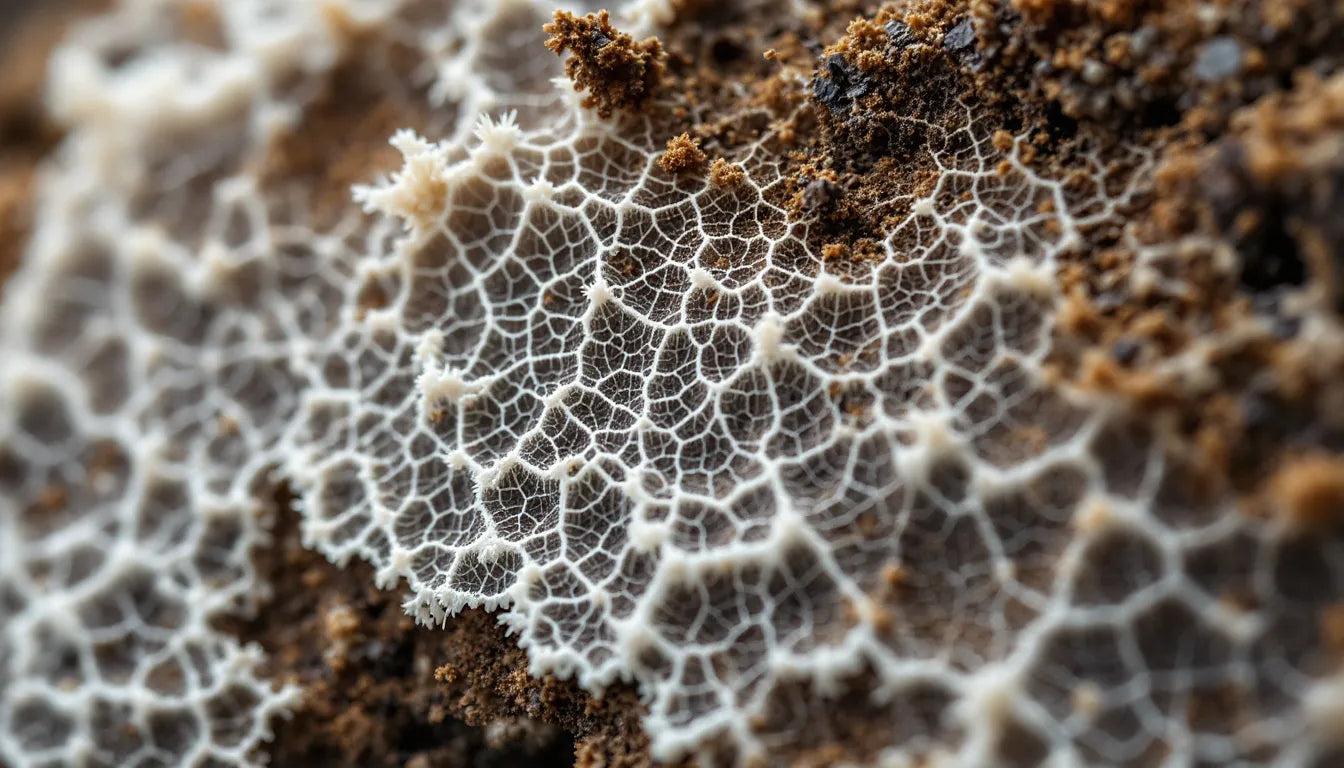
Close-up of fungal mycelium showing its network of hyphae
A product description alone cannot establish its chemical composition or legal status.
Are spore syringes treated differently from spore prints?
No. The format does not determine the legal status of the spores.
A spore print contains spores deposited on a surface, whereas a spore syringe contains spores suspended in liquid. Both can consist of isolated spores and are treated according to their contents rather than their presentation.
Does intended use affect the legal position?
Yes. Possessing isolated spores for microscopy is different from cultivating fungi containing controlled substances.
The Misuse of Drugs Act 1971 prohibits the unauthorised production of controlled drugs. This includes cultivating fungi that contain psilocin or an ester of psilocin.
Labelling a product as intended for microscopy does not make cultivation lawful or exempt controlled fungal material from the legislation.
What should buyers and sellers understand?
The main distinction is between isolated spores and developed fungal material containing controlled compounds.
- Spore syringes containing isolated spores can be legally sold and possessed for microscopy.
- Syringes containing controlled fungal material may fall within Class A drug legislation.
- A product description does not determine the actual contents.
- Cultivating mushrooms containing controlled compounds is illegal without the necessary authorisation.
The legal position depends on the material involved and how it is used.
15. Are Spore Prints and Swabs Legal?
Yes. Spore prints and swabs containing isolated mushroom spores are legal to buy, sell and possess in the UK for microscopy and research purposes, provided they are not used to cultivate controlled mushrooms.
What is a spore print?
A spore print is a collection of mushroom spores deposited onto a surface, usually paper, foil or glass. Spore prints are commonly used in mushroom identification because spore colour can help distinguish between different fungal species.
What is a spore swab?
A spore swab is a sterile sampling tool used to collect mushroom spores from a spore-producing surface or existing spore deposit. The spores remain on the swab for subsequent microscopic examination and identification.
How do spore prints and swabs differ?
The main difference is how the spores are collected and stored.
| Spore prints | Spore swabs |
|---|---|
| Spores are deposited onto a flat surface. | Spores are collected onto a sterile swab. |
| Produce a visible spore deposit. | Hold spores on a small sampling tip. |
| Useful for examining spore colour and characteristics. | Useful for collecting and examining individual samples. |
Both formats can be used for microscopic study.
What is their legal status in the UK?
The legal position is the same as for other isolated mushroom spores. Spore prints and swabs containing isolated spores are not themselves classified as Class A drugs under the Misuse of Drugs Act 1971.
The legislation specifically controls fungi containing psilocin or an ester of psilocin. If a sample contains developed fungal material containing these compounds, its legal position may be different.
Does their intended use matter?
Microscopic examination and identification are different from cultivating fungi containing controlled compounds. Possessing isolated spores for research does not make the cultivation of controlled mushrooms lawful.
As with spore syringes, the actual contents of a sample matter more than its packaging or description.
16. Are Mushroom Mycelium and Liquid Cultures Legal?
Mycelium and liquid cultures containing psilocybin or psilocin are controlled under UK drug legislation and may constitute Class A drugs. Unlike isolated mushroom spores, mycelium is developed fungal tissue that can contain psilocybin and psilocin.
What is mycelium?
Mycelium is the network of fine, thread-like structures called hyphae that forms the vegetative body of a fungus.
It grows through soil, wood, grain and other substrates, absorbing nutrients and supporting the development of the fungus. The familiar mushroom is simply the reproductive fruiting body of this larger organism.
What are liquid cultures?
A liquid culture is a preparation in which fungal mycelium grows within a liquid nutrient medium.
Liquid cultures are used in mycology and commercial mushroom production. They contain developed fungal tissue rather than simply isolated reproductive spores.
How do cultures differ from spores?
The main difference is the stage of fungal development.
- Spores: Microscopic reproductive cells.
- Mycelium: Developed fungal tissue consisting of interconnected hyphae.
- Liquid culture: Mycelium growing or suspended in a liquid medium.
This distinction is important because developed fungal tissue can contain controlled compounds.
Can mycelium contain psilocybin?
Yes. Research has identified psilocybin and psilocin in the mycelium of certain psilocybin-producing fungi.
Concentrations can vary depending on the species, strain and growing conditions. However, the compounds are not exclusive to mature mushroom fruiting bodies.
What is the legal status of mycelium and liquid cultures in the UK?
Mycelium containing psilocybin or psilocin falls within the scope of UK Class A drug legislation. The Misuse of Drugs Act 1971 covers fungi containing psilocin or an ester of psilocin, including psilocybin.
The legislation does not require a fungus to have produced a visible mushroom before it can be controlled.
This is why liquid cultures containing controlled fungal material should not be treated as equivalent to isolated mushroom spores.
The same distinction applies to other mushroom species: mycelium from ordinary edible or medicinal mushrooms is not automatically controlled. The relevant consideration is whether the fungus contains the specified controlled compounds.
17. Does the Intended Use of Mushroom Spores Matter?
Yes. The intended use of mushroom spores can be relevant to the legal circumstances, particularly the distinction between microscopy and cultivating controlled fungi. However, intended use does not override the legal classification of the material itself.
Microscopy and scientific research
Microscopy is a standard method of studying mushroom spores. It allows researchers and mycologists to examine their size, shape, colour and surface characteristics to help identify fungal species.
Mushroom spore microscopy does not, by itself, involve cultivating a controlled fungus.
Research involving controlled drugs or fungi containing controlled compounds is different and may require appropriate Home Office authorisation.
Educational use
Mushroom spores are also used in education to demonstrate fungal reproduction, classification and microscopic structures.
Educational and microscopy use does not, by itself, make isolated spores illegal. However, describing an activity as educational does not provide an exemption for possessing or producing controlled substances.
Commercial sale
Isolated mushroom spores can be sold commercially in the UK for microscopy and research purposes. The distinction is between supplying isolated spores and supplying a fungus containing controlled compounds.
Businesses should ensure that their products genuinely consist of isolated spores. Product descriptions and disclaimers cannot change the legal status of material that actually contains a controlled fungus.
Intended cultivation
Cultivating fungi containing psilocybin or psilocin is illegal in the UK without the necessary authorisation.
Section 4 of the Misuse of Drugs Act 1971 prohibits the unauthorised production of controlled drugs. The Act also defines production to include cultivation.
Consequently, the legality of possessing isolated spores does not provide permission to cultivate them into a controlled fungus.
Does a microscopy disclaimer determine legality?
No. A microscopy disclaimer does not override drug-control legislation.
It may describe the intended purpose of a product, but the actual contents and activities involved remain important.
Isolated spores held for microscopy are different from developed fungal material containing controlled compounds. Equally, a product cannot be made lawful simply by labelling it as a research or microscopy sample.
18. What Is the Legal Difference Between Spores and Fruiting Bodies?
The main legal distinction is that isolated spores are different from developed fungi containing controlled compounds. UK legislation classifies fungi containing psilocin or an ester of psilocin as Class A drugs, regardless of whether they have produced a visible mushroom.
The biological distinction
Spores are microscopic reproductive cells released by mature fungi. Under suitable conditions, they can germinate and develop into hyphae, which form a network of mycelium.
The mycelium is the vegetative body of the fungus. In mushroom-forming species, it can eventually produce a fruiting body, commonly recognised as a mushroom.
The basic fungal life cycle is:
- Spore: Reproductive cells are released from a mature mushroom.
- Germination: Spores begin to develop into fungal growth.
- Mycelium: Hyphae develop into a network of fungal tissue.
- Fruiting body: The mature fungus may produce a mushroom.
- Spore release: The fruiting body releases further spores.
Each stage represents a different form of fungal development.
How does UK law classify fungi containing controlled compounds?
The Misuse of Drugs Act 1971 classifies any fungus containing psilocin or an ester of psilocin as a Class A drug.
This wording was introduced by Section 21 of the Drugs Act 2005:
“Fungus (of any kind) which contains psilocin or an ester of psilocin.”
The legislation does not require the fungus to have produced a visible mushroom. Psilocybin is an ester of psilocin, so fungi containing psilocybin fall within the statutory wording.
What happens when spores develop into mycelium?
Once spores develop into fungal tissue, the material is no longer simply an isolated spore sample.
Certain psilocybin-producing fungi can contain psilocybin and psilocin in their mycelium as well as their fruiting bodies.
Where the developed fungal material contains the specified controlled compounds, it can fall within the Class A classification.
How does the law apply at different stages?
The legislation does not provide a separate classification for every stage of fungal development.
Instead, the specific fungus entry in the Misuse of Drugs Act focuses on whether the fungus contains psilocin or an ester of psilocin.
This is why isolated spores, developed mycelium and mature fruiting bodies should not automatically be treated as legally equivalent. Their biological composition matters.
Why does the distinction matter?
Understanding the difference between spores and fruiting bodies helps explain why their legal treatment can differ.
- Isolated spores: Not themselves classified as Class A drugs simply because they originate from a psilocybin-producing species.
- Developed mycelium: May fall within the Class A classification if it contains psilocybin or psilocin.
- Mature fruiting bodies: Fall within the Class A classification when they contain the specified controlled compounds.
The important distinction is not simply whether a visible mushroom exists. It is whether the fungal material contains the compounds specified by UK drug legislation.
Part 4 — Grow Kits and Mushroom Cultivation
19. Are Magic Mushroom Grow Kits Legal in the UK?
Empty mushroom grow kits and ordinary cultivation equipment are legal in the UK. However, kits containing fungi that meet the statutory definition of a Class A drug are controlled under the Misuse of Drugs Act 1971. The legal position depends on the contents of the kit and any cultivation activity taking place.
What constitutes a grow kit?
A mushroom grow kit is a collection of materials designed to support fungal cultivation. Depending on the product, it may contain:
- A growing container or plastic tub.
- Substrate or growing medium.
- Humidity and ventilation equipment.
- Spores or a spore suspension.
- Mycelium or colonised substrate.
- Developing or mature mushrooms.
Grow kits are widely used to cultivate edible and gourmet mushrooms, including oyster mushrooms, shiitake and lion’s mane. These are not controlled simply because they are supplied as cultivation kits.
Are empty grow kits and cultivation equipment legal?
Yes. Empty containers, growing chambers, humidity covers and ordinary cultivation equipment are not automatically controlled under UK drug legislation.
These items have legitimate uses in growing many different types of mushrooms. Their possession does not, by itself, constitute an offence under the Misuse of Drugs Act 1971.
Are grow kits containing spores legal?
A kit containing isolated mushroom spores is different from one containing developed fungal material. As discussed in Section 13, isolated spores are not themselves classified as Class A drugs simply because they originate from a psilocybin-producing species.
However, possessing isolated spores does not provide permission to cultivate controlled mushrooms. The actual contents of the kit and the activities involved remain important.
What about kits containing mycelium or colonised substrate?
Kits containing developed fungal material require particular care because mycelium can contain psilocybin and psilocin.
Colonised substrate contains established fungal growth rather than simply unused growing medium. Where the fungal material contains psilocin or an ester of psilocin, it falls within the Class A definition.
This means that a colonised kit containing controlled fungal material is legally different from an empty grow kit or a sample of isolated spores.
Are kits containing developing or mature magic mushrooms legal?
No. Kits containing magic mushrooms that contain psilocybin or psilocin are subject to Class A drug legislation.
Their size or stage of development does not automatically change their legal classification. Possession and supply of controlled fungal material are prohibited unless an applicable legal authority or exception applies.
How does the law apply to different grow kits?
| Kit contents | Legal position |
|---|---|
| Empty container and ordinary equipment | Legal to possess |
| Unused substrate | Not automatically controlled |
| Isolated spores | Not themselves Class A drugs |
| Mycelium or colonised substrate | Depends on whether the fungus contains controlled compounds |
| Developing or mature magic mushrooms | Controlled where they contain the specified compounds |
Why do the contents matter?
The Misuse of Drugs Act 1971 does not prohibit ordinary mushroom cultivation equipment or every biological material associated with psilocybin-producing species.
Its specific provision covers fungi containing psilocin or an ester of psilocin. Separately, Section 4 prohibits the unauthorised production of controlled drugs, including production by cultivation.
The distinction is therefore between possessing ordinary cultivation materials or isolated spores and possessing or producing controlled fungal material.
20. Is Growing Magic Mushrooms Illegal in the UK?
Yes. Growing magic mushrooms is illegal in the UK where the cultivation produces a fungus containing psilocin or an ester of psilocin. Under the Misuse of Drugs Act 1971, this can constitute the production of a Class A controlled drug.
What constitutes production under the Misuse of Drugs Act?
Section 4 of the Misuse of Drugs Act 1971 prohibits the unauthorised production of controlled drugs.
Section 37 defines production as producing a controlled drug by manufacture, cultivation or any other method. This means the offence is not limited to processing or preparing an already harvested drug.
The law also covers being involved in another person’s unlawful production of a controlled drug.
How does the law apply to magic mushrooms?
The Drugs Act 2005 amended the Misuse of Drugs Act 1971 to classify any fungus containing psilocin or an ester of psilocin as a Class A drug.
As a result, cultivating a fungus that meets this definition can amount to producing a controlled drug. The legislation does not require the cultivation to take place on a commercial scale or for the fungus to be intended for sale.
It is important to distinguish between isolated spores and the cultivation of a controlled fungus. The legal position of spores does not create an exemption for growing fungi that meet the statutory definition.
Does growing for personal use make a difference?
No. There is no general personal-use exemption for producing controlled drugs.
Growing magic mushrooms for personal consumption can still amount to unlawful production. The fact that the mushrooms are not intended for sale does not make the activity legal.
However, the purpose and circumstances of the activity may be relevant when assessing the seriousness of an offence and determining an appropriate sentence.
Does the scale of cultivation matter?
Yes. The scale and circumstances of cultivation can affect how seriously an offence is treated, although they do not make otherwise unlawful production legal.
Relevant factors may include:
- The quantity of controlled material produced or the potential output.
- The scale and organisation of the operation.
- Whether the activity involved commercial distribution.
- The person’s role and level of involvement.
- Whether other people were involved.
- Any previous relevant convictions.
These factors may influence charging decisions and sentencing. A small personal operation and an organised commercial operation may be treated very differently.
What are the potential legal consequences?
Unauthorised production of a Class A drug carries a maximum penalty of life imprisonment, an unlimited fine, or both.
This is the statutory maximum, not a prediction of the sentence in an individual case. The actual sentence depends on the circumstances, including the scale of production and the offender’s role.
The distinction between personal cultivation and commercial production is considered further in Section 24.
21. Is Cultivating Mycelium Different from Growing Mushrooms?
No. Mycelium and mushrooms are different stages of fungal development, but growing mycelium is not automatically exempt from drug legislation.
The legal question is whether the fungal material contains psilocin or an ester of psilocin, as specified by the Misuse of Drugs Act 1971.
What is the difference between mycelium and mushrooms?
Mycelium is the main vegetative body of a fungus. It consists of a network of microscopic filaments called hyphae, which grow through the surrounding material.
Mushrooms are the visible fruiting bodies produced by some fungi. They are reproductive structures that release spores.
The main stages of fungal development include:
| Stage | Description |
|---|---|
| Spores | Microscopic reproductive cells |
| Germinating spores | Spores beginning to develop |
| Hyphae | Fine filaments forming fungal growth |
| Mycelium | An established network of hyphae |
| Fruiting bodies | The reproductive structures commonly called mushrooms |
Can mycelium contain psilocybin or psilocin?
Yes. Research has identified psilocybin and related compounds in the mycelium of certain psilocybin-producing fungi.
This means the absence of visible mushrooms does not necessarily mean that the relevant compounds are absent.
What does the law say about mycelium?
The Drugs Act 2005 amended the Misuse of Drugs Act 1971 to classify a fungus containing psilocin or an ester of psilocin as a Class A drug.
The wording does not require the fungus to have produced visible fruiting bodies. Consequently, mycelium cannot automatically be treated as outside the legislation simply because it has not developed into mushrooms.
The relevant question is whether the fungal material meets the statutory definition of a controlled fungus.
Does the stage of fungal development determine legality?
No. The biological stage alone does not establish whether material is controlled.
Isolated spores, developing fungal material, mycelium and mature fruiting bodies are not necessarily legally interchangeable. Their composition and the relevant activity must be considered.
The distinction between mycelium and mushrooms is biologically important, but it does not provide a general exemption from the law.
22. Are Colonised Substrates Legal?
A colonised substrate is not automatically illegal. Its legal status depends on the fungus growing within it and whether that fungus contains the controlled compounds specified by the Misuse of Drugs Act 1971.
What is colonised substrate?
A substrate is a growing medium used to support fungal growth. Common examples include grain, sawdust and straw.
When mycelium spreads through the material, the substrate becomes colonised. It then contains living fungal tissue rather than being simply an unused growing medium.
Colonised substrates are routinely used to grow ordinary edible and gourmet mushrooms.
How does it differ from unused substrate?
Unused substrate contains no established fungal growth. A colonised substrate contains mycelium, which forms the vegetative body of the fungus.
This distinction matters because the legislation covers a fungus containing psilocin or an ester of psilocin. It does not apply to every type of fungal growth or growing medium.
When can a colonised substrate be controlled?
A substrate containing mycelium from an ordinary edible species, such as oyster mushrooms, is not controlled under the magic mushroom provisions.
The position may be different where the fungal material contains psilocin or an ester of psilocin. The absence of visible mushrooms does not, by itself, establish that the material falls outside the legislation.
The statutory test concerns the composition of the fungus, not simply whether it has produced fruiting bodies.
Possession, supply and production
Possessing or supplying material that contains a controlled fungus may engage the relevant provisions of the Misuse of Drugs Act 1971.
Where a person deliberately cultivates a controlled fungus, the production provisions may also apply.
Describing a product as a “research block”, “colonised substrate” or “mushroom kit” does not determine its legal status. The relevant considerations are the fungal material present and the circumstances of its possession, supply or production.
In short: unused substrate and colonised substrate are biologically different, but colonisation alone does not make a substrate illegal. The key legal question is whether the fungus within it contains the compounds specified by the Act.
23. Is It Legal to Pick Wild Magic Mushrooms?
Picking and keeping wild magic mushrooms in the UK can result in an offence of possessing a Class A controlled drug. Their natural growth does not give people a general right to collect or keep them.
Wild mushroom identification
Several wild mushroom species in the UK contain psilocybin, including Psilocybe semilanceata, commonly known as the Liberty Cap.
They are associated with grassland habitats and are often found during autumn. However, identifying wild mushrooms by appearance alone is unreliable. Some poisonous species can be mistaken for other mushrooms, and incorrect identification can have serious consequences.
Possession of wild magic mushrooms
Section 5 of the Misuse of Drugs Act 1971 prohibits unauthorised possession of controlled drugs.
The Drugs Act 2005 brought fungi containing psilocin or an ester of psilocin within Class A. This includes qualifying wild magic mushrooms, even when they have grown naturally rather than being cultivated.
The fact that someone did not grow a mushroom themselves does not automatically make possessing it lawful.
The exception for uncultivated fungi
Regulation 4A of the Misuse of Drugs Regulations 2001 provides a specific exception relating to certain fungi containing psilocin or an ester of psilocin.
It covers fungi while they are growing uncultivated. However, where such fungi are picked, the exception applies only in specified circumstances, including where they are collected for prompt delivery into the custody of someone legally entitled to receive them, or for prompt destruction.
This is not a general exemption allowing people to pick wild magic mushrooms and keep them for personal use.
You can read the provision in Regulation 4A of the Misuse of Drugs Regulations 2001.
Does picking differ from possession?
Picking and possession are separate legal questions.
Simply encountering a wild mushroom while it is growing does not mean that someone has taken possession of it. Picking and retaining a controlled mushroom, however, can bring the possession provisions into play unless a specific exception applies.
Gathering naturally growing fungi should not automatically be described as cultivation. The more immediate legal issue when someone picks and keeps a controlled mushroom is possession.
Potential legal consequences
Unauthorised possession of a Class A drug carries a maximum penalty of seven years’ imprisonment, an unlimited fine or both if tried on indictment.
The actual sentence depends on the circumstances and the applicable sentencing guidelines. The maximum is not a prediction of the sentence in an individual case.
The key point is that wild growth does not make a psilocybin-containing mushroom lawful to pick and keep.
24. What Are the Potential Penalties for Cultivation?
Unauthorised cultivation of a fungus containing psilocin or an ester of psilocin can amount to production of a Class A drug. The maximum penalty is life imprisonment, although the actual sentence depends on the scale of the operation and the offender’s role.
Production offences
Section 4(2) of the Misuse of Drugs Act 1971 makes it an offence to produce a controlled drug without lawful authority. This includes cultivation of a controlled fungus.
Production of a Class A drug is triable either way and carries a maximum sentence of life imprisonment, an unlimited fine or both.
Personal cultivation versus commercial activity
The purpose and scale of cultivation can affect sentencing, but growing mushrooms for personal use is not a legal exemption.
The Sentencing Council’s drug production guideline assesses offences according to two main factors:
- Culpability: the person’s role, involvement, planning and expected financial benefit.
- Harm: the quantity of controlled material or the potential scale of production.
Someone cultivating solely for personal use may receive a lower culpability assessment than someone directing an organised commercial operation. However, the circumstances of each case determine the appropriate category.
Maximum penalties versus typical sentences
Although the statutory maximum is life imprisonment, the Sentencing Council guideline provides a range of sentences for Class A production offences, from a high-level community order to 16 years’ custody across its ordinary categories.
The appropriate starting point depends on the assessed culpability and harm. Exceptionally serious cases may justify a sentence outside the usual category ranges.
The maximum penalty should therefore not be mistaken for the likely sentence in every case.
Other drug offences
Production, possession, possession with intent to supply and supply are separate offences under the Misuse of Drugs Act 1971. Each has its own legal requirements and sentencing framework.
The key distinction is that personal use and small-scale cultivation may affect sentencing, but they do not make unauthorised production lawful.
Part 5 — Possession, Supply and Commercial Activity
25. Is Possessing Magic Mushrooms Illegal?
Yes. Possessing magic mushrooms is generally illegal in the UK because fungi containing psilocin or an ester of psilocin are Class A controlled drugs under the Misuse of Drugs Act 1971.
Possession under UK law
Section 5 of the Misuse of Drugs Act 1971 makes unauthorised possession of a controlled drug an offence.
This applies to fresh and dried magic mushrooms, whether they have been bought, collected from the wild or cultivated privately. There is no general exemption for personal use.
Isolated spores are different because they are not necessarily a fungus containing controlled compounds. The legal position can change as fungal material develops, depending on its composition.
What counts as possession?
Possession does not require someone to be physically holding a substance. It can include having a controlled drug in a place under their control, such as their home or vehicle.
The circumstances and evidence matter, including the person’s knowledge of the substance. Section 28 of the Act provides specific statutory defences concerning a lack of knowledge or suspicion, subject to its conditions.
Personal possession and penalties
Possessing a small quantity for personal consumption can still constitute an offence. Personal use does not provide a legal defence, although the circumstances may affect the outcome.
The maximum penalty for possession of a Class A drug is seven years’ imprisonment, an unlimited fine or both.
In England and Wales, the Sentencing Council’s guideline gives an offence range from a fine to 51 weeks’ custody for adult offenders. The actual sentence depends on the circumstances of the case.
See the Sentencing Council’s possession guideline.
26. Is Selling Magic Mushrooms Illegal?
Yes. Selling or offering to supply magic mushrooms is illegal in the UK where the fungi contain controlled compounds and no lawful authority applies. Possessing them with the intention of supplying someone else is also an offence.
Supply and possession with intent to supply
Sections 4(3) and 5(3) of the Misuse of Drugs Act 1971 cover three relevant activities:
- Supply: providing a controlled drug to another person.
- Offering to supply: offering to provide a controlled drug, even if no sale is completed.
- Possession with intent to supply: possessing a controlled drug with the intention of passing it to someone else.
The law also covers being concerned in another person’s unlawful supply.
Commercial sales and different product forms
Selling controlled magic mushrooms through a shop, website, marketplace or private transaction can constitute unlawful supply.
The legal position does not change simply because the mushrooms are sold fresh rather than dried. Nor does describing a product as a research material or botanical preparation create an exemption.
Extracts, powders, capsules and other preparations must also be assessed according to their composition. Psilocybin and psilocin are controlled substances in their own right, so changing the form of a product does not automatically make it lawful.
Potential penalties
Unauthorised supply of a Class A drug and possession with intent to supply both carry a maximum penalty of life imprisonment, an unlimited fine or both.
In England and Wales, the Sentencing Council guideline gives an offence range from a high-level community order to 16 years’ custody for adult offenders. The sentence depends on factors including the quantity involved, the offender’s role and the scale of the operation.
See the Sentencing Council’s supply and possession with intent to supply guideline.
27. Is Giving Magic Mushrooms Away Illegal?
Yes. Giving magic mushrooms to another person can constitute unlawful supply under the Misuse of Drugs Act 1971, even when no money changes hands.
Supplying without payment
Section 4(3) of the Misuse of Drugs Act 1971 prohibits the unauthorised supply of controlled drugs. Supply is not limited to commercial sales or transactions involving financial payment.
Passing mushrooms to a friend, sharing them at a gathering or giving them as a gift can therefore constitute an offence.
Does the reason for giving them away matter?
The absence of payment does not create a general exemption. Giving mushrooms as a birthday present or exchanging them for another item or service can still amount to supply.
Similarly, possessing controlled mushrooms with the intention of giving them to someone else may constitute possession with intent to supply under section 5(3).
The key point is that supplying controlled magic mushrooms can be unlawful whether they are sold, exchanged or given away.
28. What Are the Laws Around Advertising and Selling Spores?
Advertising and selling isolated mushroom spores is different from advertising or supplying a controlled fungus. The legal position depends on the material actually being offered, rather than simply the species from which the spores originate.
Advertising spore products
Section 4(3) of the Misuse of Drugs Act 1971 makes it an offence to offer to supply a controlled drug without lawful authority.
However, an advertisement for isolated spores is not automatically an offer to supply a controlled drug. The nature and composition of the product are important.
Commercial sale of spores
Isolated spores are biologically different from developed fungal material such as mycelium and fruiting bodies.
The Act specifically controls fungi containing psilocin or an ester of psilocin. It does not simply classify every isolated spore sample from a species capable of producing these compounds as a controlled drug.
However, a product described as a spore sample may contain other fungal material. Its legal status cannot be established by its product description alone.
Product descriptions and intended use
Describing a product as a microscopy sample or research material does not determine its legal classification.
Equally, the fact that spores could potentially develop into a controlled fungus does not, by itself, mean that the original isolated spores are a controlled drug.
The relevant distinction is between supplying isolated spores and supplying fungal material that falls within the statutory definition of a controlled fungus.
Responsibilities of businesses
Businesses selling mushroom spores should understand the distinction between:
- Isolated spores.
- Mycelium and liquid cultures.
- Colonised substrates.
- Fruiting bodies and preparations containing controlled compounds.
These products are not legally interchangeable. A microscopy disclaimer does not make an otherwise controlled product lawful.
Where the contents or legal status of a product are uncertain, businesses should obtain specialist legal advice rather than rely on industry convention or competitors’ product descriptions.ndustry convention or the wording used by other sellers.
29. What Are the Penalties for Magic Mushroom Offences?
Penalties depend on the offence. Possession of magic mushrooms carries a maximum sentence of seven years’ imprisonment, while unauthorised production, supply and importation of Class A drugs can carry life imprisonment.
Maximum penalties by offence
The Misuse of Drugs Act 1971 sets the following maximum penalties for offences involving Class A drugs:
| Offence | Maximum penalty |
|---|---|
| Possession | 7 years’ imprisonment, unlimited fine, or both |
| Production | Life imprisonment, unlimited fine, or both |
| Supply or offering to supply | Life imprisonment, unlimited fine, or both |
| Possession with intent to supply | Life imprisonment, unlimited fine, or both |
| Unauthorised import or export | Life imprisonment, unlimited fine, or both |
These penalties apply to the relevant offences under sections 3, 4 and 5 of the Act.
What determines the sentence?
The statutory maximum is the highest penalty available to the court, not the sentence normally imposed in every case.
In England and Wales, sentencing guidelines take account of the nature of the offence and its seriousness. For production, supply and importation, relevant considerations include:
- The offender’s role and level of involvement.
- The quantity of controlled material and potential scale of the activity.
- Whether the offence was organised or commercially motivated.
- Previous relevant convictions and other aggravating or mitigating circumstances.
Possession offences are assessed under a separate sentencing guideline.
Importing magic mushrooms
Section 3 of the Misuse of Drugs Act 1971 prohibits unauthorised importation and exportation of controlled drugs.
Importing controlled magic mushrooms or preparations containing controlled substances without the required authority can therefore carry a maximum penalty of life imprisonment, an unlimited fine or both.
Buying a product legally in another country does not automatically make it lawful to bring into the UK. Describing controlled material as a research sample does not remove the relevant import restrictions.
See the government’s guidance on controlled drug import and export licences.
Territorial differences
The maximum penalties above are set by UK legislation. However, the sentencing guidelines discussed in this article apply to adult offenders in England and Wales. Scotland and Northern Ireland have separate sentencing systems.
For more detail, see the Sentencing Council’s guidance on drug offences.
30. Can Researchers Legally Work with Psilocybin?
Scientific research involving psilocybin is permitted in the UK under controlled conditions. However, psilocybin is a tightly regulated controlled drug, and researchers must comply with the relevant licensing and regulatory requirements.
The fact that an activity is undertaken for scientific, educational or medical purposes does not automatically exempt it from drug-control legislation.
Scientific research
Psilocybin and psilocin are classified as Schedule 1 controlled drugs under the Misuse of Drugs Regulations 2001.
Schedule 1 substances are subject to particularly restrictive controls because they are not generally regarded as having an established authorised medicinal use within the normal controlled-drug prescribing framework.
Research involving these substances is possible, but organisations and individuals must obtain the relevant permissions before undertaking activities that require authorisation.
The precise requirements depend on the substance, the activity and the institution involved.
Controlled-drug licences
The Home Office administers the controlled-drug licensing system.
A domestic controlled-drug licence is generally required for activities involving Schedule 1 substances, including their production, possession and supply, unless a specific statutory exemption applies.
A research organisation may therefore need a Home Office licence before it can lawfully obtain, store, possess or work with psilocybin.
Licensing requirements can include controls over:
- The identity and suitability of the applicant.
- The proposed research activity.
- The premises where controlled substances will be held.
- Security and storage arrangements.
- Record keeping and accountability.
- The substances and quantities involved.
- The people authorised to handle them.
The licence must cover the relevant activities and be complied with throughout the project.
Universities and research institutions
Universities and research institutions can conduct research involving controlled drugs, but their institutional status does not automatically exempt them from the licensing system.
The Home Office provides specific guidance for university research departments. Some exemptions apply to certain activities involving Schedule 2 to Schedule 5 substances, but Schedule 1 research is subject to more restrictive requirements.
An institution intending to work with psilocybin must establish the appropriate legal authority before beginning the relevant work.
Researchers should not assume that an existing university research licence, general laboratory approval or institutional ethics approval is sufficient to authorise controlled-drug activities.
Clinical trials
Clinical trials involving psilocybin are also subject to additional regulatory requirements.
Depending on the design and nature of the trial, these may include:
- Home Office controlled-drug licensing.
- Medicines and Healthcare products Regulatory Agency (MHRA) authorisation.
- Research ethics committee approval.
- Appropriate arrangements for the manufacture, importation, storage and supply of the investigational medicinal product.
- Compliance with applicable clinical trial and medicines legislation.
The MHRA is responsible for regulating medicines and clinical trials in the UK. Its role is separate from the Home Office’s responsibility for controlled-drug licensing.
A clinical trial involving psilocybin must satisfy the relevant requirements of both regulatory systems where applicable.
Relevant regulatory authorities
Several authorities may be involved in research using psilocybin:
Home Office: responsible for controlled-drug licensing and the regulatory framework governing possession, production and supply of controlled substances.
Medicines and Healthcare products Regulatory Agency (MHRA): responsible for the regulation of medicines and relevant clinical trials.
Research ethics committees: assess the ethical acceptability of research involving human participants.
Health Research Authority (HRA): provides approvals and guidance for health and social care research in England, with corresponding arrangements elsewhere in the UK.
The exact approvals required depend on the research project, the substances involved and where the work is taking place.
Research does not create a general exemption
The ability of licensed researchers and institutions to work with psilocybin should not be confused with a general exemption for private individuals or commercial businesses.
A person cannot assume that possessing or cultivating magic mushrooms is lawful simply because the activity is described as scientific research.
Where controlled substances or controlled fungi are involved, the appropriate legal authorisation must be in place.
In short: psilocybin research is legally possible in the UK, but it takes place within a regulated framework. Scientific interest, educational purpose or medical research does not remove the need to comply with controlled-drug legislation.
Part 6 — Shipping, Importing and Exporting
31. Can You Legally Buy Magic Mushroom Spores Online?
Yes. Buying isolated magic mushroom spores online is generally lawful in the UK, provided the product consists of spores rather than controlled fungal material.
Buying from UK sellers
The Misuse of Drugs Act 1971 controls fungi containing psilocin or an ester of psilocin. Isolated spores are biologically distinct from developed fungal material and are not automatically controlled simply because they originate from a psilocybin-producing species.
However, product descriptions alone cannot establish what a sample contains. Products advertised as spore samples may contain other fungal material, which can have a different legal status.
Buying from overseas sellers
Buying from an overseas website introduces additional considerations because importing a product into the UK is a separate legal activity.
A product being lawful to sell in the seller’s country does not automatically make its importation into the UK lawful. The relevant UK import controls must also be considered.
What to check before buying
Products advertised as mushroom spores can contain different materials, including isolated spores, liquid suspensions, mycelium and colonised substrates.
These are not legally interchangeable. A microscopy or research disclaimer does not determine the legal classification of the contents.
In short: isolated mushroom spores can generally be purchased online in the UK, but buyers should distinguish genuine spore samples from developed fungal material and consider additional import requirements when ordering from overseas.ul, but neither is every product advertised as a spore sample automatically lawful. The material itself and the laws applying in both countries matter.
32. Can You Ship Magic Mushroom Spores Internationally?
International shipping of mushroom spores depends on the laws of the exporting and importing countries. A product that can legally be sold in one country cannot automatically be shipped to another.
Export and import restrictions
International shipments must comply with the relevant laws in both countries.
Some jurisdictions regulate isolated spores differently from fungi containing psilocybin or psilocin. Others impose additional restrictions on biological specimens or materials associated with controlled species.
For shipments entering the UK, the Misuse of Drugs Act 1971 and applicable import regulations must be considered. The seller’s domestic law does not override UK import restrictions.
Courier and postal restrictions
Postal services and private couriers have their own policies governing biological materials and restricted goods.
A carrier may refuse a shipment even where the material is not prohibited under drug legislation. Additional packaging, documentation or declarations may also be required.
Acceptance by a courier does not establish that an international shipment is legally permitted.
Customs declarations
International shipments may require declarations describing the contents, value and country of origin.
The contents should be described accurately. Labelling a product as something different to avoid customs restrictions does not make its shipment lawful.
Where an export or import licence is required, an accurate customs declaration does not replace that authorisation.
Check both countries’ requirements
Before arranging an international shipment, sellers and buyers should establish whether the material can legally be exported from its country of origin and imported into its destination country.
They should also check any relevant courier restrictions. The legal position depends on the actual material being shipped, not simply the name used to advertise it.
33. Can You Import Mushroom Spores into the UK?
Importing isolated mushroom spores into the UK is not automatically prohibited. However, importing fungal material that falls within the controlled-drug legislation without the required authority is an offence.
Import legislation
Section 3 of the Misuse of Drugs Act 1971 prohibits the unauthorised importation of controlled drugs.
This applies to goods sent by post or courier, as well as controlled material carried into the UK by an individual.
The Home Office administers the controlled-drug import and export licensing system.
The contents of the shipment
The legal position depends on what the package actually contains.
Isolated spores are different from mycelium, colonised substrates and fruiting bodies. The statutory definition concerns fungi containing psilocin or an ester of psilocin, rather than every biological sample originating from a potentially controlled species.
A product description or customs label cannot conclusively establish its contents.
Customs checks and penalties
Customs authorities may inspect, detain or seize shipments where there are grounds to suspect a breach of import restrictions.
Importing a controlled Class A drug without the necessary authority carries a maximum penalty of life imprisonment, an unlimited fine or both.
The key distinction is between importing isolated spores and importing controlled fungal material. The actual contents, not simply the product description, determine the relevant legal considerations.
34. Can You Export Mushroom Spores from the UK?
Exporting mushroom spores from the UK depends on the material being sent and the laws of the destination country. A product that can be sold legally in the UK is not automatically permitted for export or import elsewhere.
UK export regulations
Section 3 of the Misuse of Drugs Act 1971 prohibits the unauthorised exportation of controlled drugs.
This does not amount to a blanket prohibition on every biological sample associated with a psilocybin-producing species. Isolated spores must be distinguished from fungal material containing controlled compounds.
Where a shipment contains a controlled drug, the relevant export restrictions and licensing requirements apply.
Destination-country laws
The destination country’s legislation is equally important.
Different jurisdictions regulate mushroom spores and fungi in different ways. Some distinguish isolated spores from developed fungal material, while others impose broader restrictions.
A UK seller should therefore establish whether the destination country permits the product to be imported before arranging an international shipment.
Commercial exports
Businesses exporting mushroom-related products should check:
- Whether the material is controlled under UK legislation.
- Whether the destination country permits its importation.
- Whether export or import licences are required.
- Whether customs declarations or additional documentation are necessary.
Ordinary commercial paperwork does not replace any controlled-drug authorisation that may be required.
The legality of exporting mushroom spores depends on both UK export rules and the destination country’s import legislation. Domestic permission to sell a product does not establish that it can be shipped internationally.
35. What Happens If Customs Seizes a Package?
If customs seizes a package, the goods may be detained, returned or destroyed. In some circumstances, the seizure may also lead to further enquiries or a criminal investigation.
A seizure does not automatically mean that the sender or recipient has committed a criminal offence.
Why packages are seized
HM Revenue & Customs (HMRC) and Border Force enforce customs restrictions and examine goods entering or leaving the UK.
Packages may be inspected where their contents, declarations or documentation raise concerns about prohibited or restricted goods.
A shipment containing suspected controlled drugs may be detained while its contents and legal status are investigated.
Seizure and criminal investigation
There is an important distinction between a customs seizure and a criminal investigation.
A package may be seized because it breaches import or export restrictions. Where officers suspect a criminal offence, the goods may also be retained as evidence and further enquiries may follow.
Possible outcomes include:
- The package being detained or destroyed.
- The goods being formally seized.
- Further enquiries involving the sender or recipient.
- A criminal investigation or prosecution where sufficient evidence exists.
Can a seized package be recovered?
HMRC and Border Force provide procedures for requesting the return of seized goods or challenging the legality of a seizure.
According to GOV.UK guidance on seized goods, a legal challenge to a customs seizure generally requires a notice of claim within one calendar month of the relevant seizure notice or information notice.
The procedure depends on the type of seizure. Where controlled drugs or a possible criminal offence are involved, independent legal advice is advisable.
Customs seizure versus courier refusal
A courier refusing to transport a package is not the same as customs seizing it.
A carrier may reject goods because they breach its own policies or lack required documentation. This does not necessarily mean the goods are illegal under criminal law.
A formal customs seizure is an enforcement action and may involve separate legal procedures.
A seized package does not automatically result in prosecution. The outcome depends on the contents, the reason for seizure and whether the evidence indicates that an offence has occurred.
36. Does a Product Being Legal Abroad Make It Legal to Import?
No. A product being legal to possess or sell in another country does not automatically make it legal to import into the UK.
Importation is a separate legal activity governed by UK law. This is particularly relevant to mushroom spores, cultures and products associated with psilocybin-producing fungi, as countries may apply different legal definitions and restrictions.
Domestic versus foreign legislation
A seller must comply with the laws of the country where it operates. However, sending a product to the UK also brings UK import laws into consideration.
Permission to sell a product domestically does not give the seller or buyer permission to import it into another country.
For example, a product may be lawfully sold in its country of origin but still be prohibited from entering the UK if it meets the legal definition of a controlled drug.
International drug controls
International drug-control treaties establish controls over substances including psilocybin and psilocin. However, individual countries implement these obligations through their own domestic legislation.
Some laws specifically address fungi containing controlled compounds, while others regulate the compounds themselves. Rules governing possession, cultivation, supply and importation can also differ.
A product’s legal classification in one country therefore cannot automatically be applied to another.
Importation offences
Section 3 of the Misuse of Drugs Act 1971 prohibits the unauthorised importation of controlled drugs.
This applies regardless of whether the product was legally purchased abroad. If a shipment contains a controlled drug and is imported without the necessary authority, the importer may face prosecution.
The maximum penalty for importing a Class A drug is life imprisonment, an unlimited fine or both.
Why checking both jurisdictions matters
Before arranging an international shipment, three separate issues need to be considered:
- Is the product legal to sell and export in the country of origin?
- Is it legal to import and possess in the destination country?
- Are there additional customs, courier or biological-material restrictions?
Being legal in the country of origin does not establish that the product can legally enter the UK.
The key distinction is that domestic legality does not create international permission. The laws of the exporting and importing countries must both be considered., the importing country and any applicable transit jurisdictions must all be considered.
Part 7 — Magic Mushroom Laws Around the World
The legal position of magic mushrooms varies considerably between countries. Some jurisdictions control psilocybin and psilocin as substances, others specifically regulate fungi containing them, and a small number have introduced limited exemptions or regulated access programmes.
It is important to distinguish between decriminalisation, legalisation and regulated access. A country may reduce penalties for personal possession without making mushrooms legal to sell, cultivate or import. Similarly, a medical or research exemption does not necessarily create a general right to possess or use psilocybin.
The information below is a general overview, not legal advice. Laws and enforcement policies can change, and some countries have significant regional differences. Anyone considering buying, possessing, cultivating or transporting mushroom-related products across borders should check the current rules in the relevant jurisdiction.
37. Magic Mushroom Laws in the United States
The United States has a layered drug-control system. Federal law applies throughout the country, but individual states and local authorities can introduce additional rules or enforcement priorities. This means that a substance may remain prohibited under federal law while a state or city permits certain activities or chooses not to prioritise enforcement.
Federal law
Under the federal Controlled Substances Act (CSA), psilocybin and psilocin are Schedule I controlled substances. Schedule I is the most restrictive federal category and is defined by the legislation as applying to substances considered to have a high potential for abuse, no currently accepted medical use in treatment in the United States, and a lack of accepted safety for use under medical supervision.
The federal restrictions apply to unauthorised possession, manufacture, distribution and importation of psilocybin and psilocin. Fresh or dried mushrooms containing these substances can therefore fall within federal drug-control law. Processing or drying the mushrooms does not provide a general exemption.
State-level differences
States can adopt their own drug laws and enforcement policies, but they cannot simply cancel federal law. Some states have introduced measures that reduce penalties for certain activities involving psilocybin, while others continue to prohibit possession, cultivation and supply.
These differences should not be interpreted as nationwide legalisation. A person may still be exposed to federal law, and the precise position depends on the activity, location and applicable state legislation.
Local decriminalisation
Several cities and local authorities have adopted measures directing police or prosecutors to make enforcement involving naturally occurring psychedelics a low priority. These policies vary in scope. Some cover psilocybin mushrooms, while others refer to a wider group of plant- or fungus-derived substances.
Local decriminalisation is not the same as legalisation. It does not necessarily create a legal market, authorise commercial sales, permit cultivation or protect someone from state or federal prosecution.
Oregon’s regulated psilocybin services framework
Oregon voters approved Measure 109 in 2020, establishing a regulated system for psilocybin services under Oregon Revised Statutes Chapter 475A.
The framework allows adults aged 21 or over to access psilocybin through licensed service centres. Participants must complete a preparation session and take part in an administration session with a licensed facilitator. Psilocybin products can only be purchased and consumed at a licensed service centre during the administration session. They cannot be bought for general off-site use.
This is a regulated service model, not general legalisation of magic mushrooms. It does not create a general right to possess, sell or cultivate mushrooms outside the licensed system. Psilocybin also remains a Schedule I substance under federal law.
Colorado’s natural medicine framework
Colorado voters approved Proposition 122 in 2022. The resulting legislation created a framework for personal use and regulated access to certain natural medicines, including psilocybin and psilocin.
The framework provides protections under Colorado law for specified personal-use activities involving adults aged 21 or over. These include certain forms of possession, cultivation, processing and sharing, subject to statutory conditions. Commercial activity is not generally permitted under the personal-use provisions.
Colorado has also established a regulated natural medicine programme, including licensed healing centres and facilitators. This is separate from the personal-use provisions and operates under state licensing requirements.
The Colorado framework does not remove federal restrictions. Nor does it mean that every mushroom product, commercial grow kit or supply arrangement is lawful.
Spores, syringes and grow kits
The federal legal position on spores requires a distinction between the spores themselves and material containing controlled substances. Psilocybin and psilocin are controlled, but isolated spores do not ordinarily contain either compound. This distinction is relevant to the treatment of some spore products under federal law.
However, a syringe is simply a container. Its legal status depends on what it contains. A product containing developed mycelium, a controlled substance or other material covered by applicable law may be treated differently from a preparation containing only isolated spores.
Cultivating psilocybin-producing mushrooms can involve the manufacture of a Schedule I controlled substance under federal law. State-level personal-use protections, including those in Colorado, do not override federal restrictions. The position of grow kits therefore depends on their contents, intended function and the laws applying in the relevant state and locality.
Relevant legislation and official sources
- US Controlled Substances Act, 21 U.S.C. §§ 801–971.
- 21 U.S.C. § 812, federal controlled-substance schedules.
- 21 C.F.R. § 1308.11, Schedule I substances.
- Oregon Revised Statutes Chapter 475A, Psilocybin Regulation.
- Colorado Revised Statutes, including the Natural Medicine Code and provisions introduced following Proposition 122.
38. Magic Mushroom Laws in Canada
Canada controls psilocybin and psilocin under the federal Controlled Drugs and Substances Act (CDSA). Although there have been developments in medical access and research, magic mushrooms are not generally legal for recreational use.
Controlled Drugs and Substances Act
Psilocybin and psilocin are controlled substances under Schedule III of the CDSA. Health Canada states that activities involving magic mushrooms and their active compounds—including possession, sale and production—are prohibited unless authorised under the applicable legislation or regulations.
The legal position is not limited to dried mushrooms. Fresh mushrooms containing psilocybin or psilocin can also fall within the controlled-substance framework.
Possession and supply
Unauthorised possession of psilocybin or psilocin is an offence under the CDSA. Selling, distributing, producing or supplying these substances is also prohibited unless the activity is authorised.
There is no general recreational-use exemption. A person cannot assume that a small quantity, personal-use intention or informal sharing arrangement makes possession or supply lawful.
Research exemptions
Health Canada can authorise certain activities involving controlled substances through licences and exemptions. These arrangements can permit qualified organisations and researchers to possess, produce, distribute or otherwise handle psilocybin for approved purposes.
Research access is subject to regulatory requirements. It does not provide a general exemption for individuals or commercial businesses.
Special Access Program and medical pathways
Canada has a Special Access Program through which a healthcare practitioner may request access to an unauthorised drug for a patient with a serious or life-threatening condition when conventional treatments have failed, are unsuitable or are unavailable.
Psilocybin may be considered through this pathway, but access is not automatic. A patient cannot apply directly; the request must be made by an eligible healthcare practitioner and is assessed individually by Health Canada.
Clinical trials and individual exemptions under subsection 56(1) of the CDSA are other possible routes. These are controlled regulatory pathways, not general permission to use or supply magic mushrooms.
Spores, syringes and cultivation
The legal status of a spore product depends on its actual contents and the relevant provisions of Canadian law. Isolated spores should not automatically be treated as equivalent to a mushroom containing psilocybin, but a product described as a spore syringe may contain more than isolated spores.
Mycelium, colonised material and fruiting bodies need to be considered separately. Cultivating psilocybin-producing mushrooms can amount to the unauthorised production of a controlled substance.
Importing or exporting controlled substances also requires the relevant authorisations. A product being sold openly in another country does not make it lawful to bring into Canada.
Relevant legislation and official sources
- Controlled Drugs and Substances Act, S.C. 1996, c. 19.
- Controlled Drugs and Substances Regulations.
- Health Canada, Psilocybin and psilocin (Magic mushrooms).
- Health Canada guidance on the Special Access Program and subsection 56(1) exemptions.
39. Magic Mushroom Laws in the Netherlands
The Netherlands is often associated with a more permissive approach to psychedelic mushrooms, but the legal position is more specific than the country’s reputation suggests. A distinction is made between conventional magic mushrooms and certain products known as magic truffles.
Opium Act
The Dutch Opium Act (Opiumwet) controls various drugs and preparations. Psilocybin and psilocin are controlled substances, and the law also specifically addresses certain fungi containing these compounds.
The legal treatment of mushrooms has changed over time. Fresh magic mushrooms were added to the Dutch controlled-drug framework in 2008, following concerns about their use and sale. The prohibition covers the relevant mushrooms rather than being limited to dried products.
Magic mushrooms and magic truffles
The distinction between magic mushrooms and magic truffles is an important feature of Dutch law.
Magic truffles are commonly sold as sclerotia. These are compact structures formed by fungal mycelium, usually underground. They contain psilocybin and psilocin but are biologically different from the above-ground fruiting bodies normally called mushrooms.
Dutch courts have considered whether sclerotia fall within the statutory definition of prohibited mushrooms. A 2024 decision by the Court of Appeal in ‘s-Hertogenbosch concluded, in the circumstances before it, that the sclerotia in question did not fall within the Opium Act’s definition of mushrooms or a prohibited preparation. The decision illustrates the importance of the precise statutory wording and the distinction between different fungal structures.
This should not be taken as a blanket ruling that every product described as a truffle, culture or mushroom-related product is lawful. The product’s identity, composition and any processing remain relevant.
Fresh and dried products
Fresh magic mushrooms are prohibited under the Dutch framework. Drying, grinding or otherwise processing mushrooms does not create a route around the prohibition. Preparations containing controlled substances may also be covered.
The position of sclerotia is different and has been the subject of legal interpretation. It is therefore important not to assume that the rules applying to mushrooms apply identically to every fungal product.
Retail and possession
The sale and possession of prohibited magic mushrooms are unlawful. Magic truffles are commonly sold through specialist shops, but their retail position rests on the legal distinction described above. This does not mean that every psilocybin-containing product can be sold freely.
Commercial sellers must also comply with other applicable rules, including consumer, product-safety and business requirements.
Cultivation and spores
Cultivating prohibited magic mushrooms can engage the Opium Act. The position of spores is more complicated because isolated spores are not necessarily equivalent to a controlled mushroom or a preparation containing psilocybin or psilocin.
A spore syringe may contain spores, liquid, mycelium or a mixture of materials. Its legal status cannot be established from the product name alone. Importing or exporting such products also requires separate consideration under Dutch and destination-country law.
Relevant legislation and official sources
- Dutch Opium Act (Opiumwet).
- Dutch Opium Act schedules (Lijsten I and II).
- Court of Appeal decision ECLI:NL:GHSHE:2024:2144, concerning magic truffles and sclerotia.
- European Union Drugs Agency, Hallucinogenic mushrooms drug profile.
40. Magic Mushroom Laws in Portugal
Portugal is widely discussed because of its drug decriminalisation policy. However, decriminalisation is not the same as legalisation, and it does not make the commercial sale or cultivation of magic mushrooms lawful.
Decriminalisation framework
Portugal introduced its decriminalisation framework through Law No. 30/2000. The law changed the treatment of the consumption, acquisition and possession of controlled drugs for personal use.
Rather than automatically treating personal-use possession as a criminal offence, the framework generally treats it as an administrative offence. Cases can be referred to a Commission for the Dissuasion of Drug Addiction, which may impose administrative measures or other responses.
The framework applies to substances listed under Portugal’s drug-control legislation. Psilocybin is included in the relevant controlled-substance schedules.
Personal possession
Possession of magic mushrooms for personal consumption may fall within Portugal’s administrative decriminalisation framework, rather than being prosecuted as a conventional criminal drug offence.
The quantity involved can be relevant. Portuguese law uses the average quantity required for individual consumption over ten days as an important reference point. Possession above that amount can indicate that the purpose may not be personal consumption. However, where it is established that the quantity is exclusively for personal use, the law provides for the case to be dealt with under the decriminalisation framework.
This is not an entitlement to possess unlimited quantities, and it does not mean that magic mushrooms are legally sold or supplied.
Supply and trafficking
Supply, sale and trafficking remain criminal offences. The decriminalisation framework is directed at personal consumption and does not create a legal commercial market for psilocybin mushrooms.
Giving mushrooms to another person may also raise supply-related issues, even where no money changes hands. The circumstances and applicable statutory provisions matter.
Cultivation and commercial activity
Cultivation and production are not generally made lawful by the personal-use decriminalisation policy. Commercial cultivation, sale, distribution and supply can fall within Portugal’s criminal drug-control framework.
The distinction between personal possession and production or supply is important. A person should not assume that because possession for personal use may be handled administratively, growing or selling mushrooms is also permitted.
Spores, imports and exports
The position of spores and other biological materials requires separate assessment. The fact that psilocybin mushrooms are subject to decriminalisation for personal possession does not automatically make spore products, cultures or grow kits lawful to sell or import.
Cross-border movement is particularly important. Import and export offences may apply independently of the way personal possession is treated within Portugal.
Relevant legislation and official sources
- Law No. 30/2000, establishing the legal framework for consumption and possession for personal use.
- Decree-Law No. 15/93, Portugal’s drug-control and trafficking legislation.
- Portuguese Judicial Police information on magic mushrooms and psilocybin.
- Diário da República, consolidated legislation.
41. Magic Mushroom Laws in Jamaica
Jamaica has become well known for mushroom retreats, psychedelic tourism and businesses offering experiences involving psilocybin mushrooms. This has contributed to a perception that magic mushrooms are simply legal throughout the country.
The legal position should nevertheless be approached carefully. The existence of commercial retreats and mushroom businesses does not, by itself, establish that every activity involving psilocybin is lawful.
Legal status of psilocybin mushrooms
Jamaica’s drug-control framework is based principally on the Dangerous Drugs Act. The Act regulates the importation, exportation, manufacture, sale and use of specified dangerous drugs.
Jamaica is frequently described as a jurisdiction where psilocybin mushrooms are not specifically prohibited in the same way as they are in many other countries. However, the precise application of the legislation to psilocybin, psilocin, mushroom products and commercial preparations should be checked against the current statutory schedules and relevant legal interpretation.
It would be unsafe to treat the absence of a clearly identified mushroom-specific prohibition as proof that every product or commercial activity is unrestricted.
Cultivation and commercial activity
Mushroom cultivation and commercial operations have developed in Jamaica, including businesses offering retreats and related services. These activities operate within a wider legal environment that may include rules on business registration, consumer protection, health and safety, food products, medicines and controlled substances.
The legality of a retreat or business should not be assumed from its public operation or advertising. Different activities—such as cultivating mushrooms, selling dried products, supplying extracts or providing supervised experiences—may raise different legal questions.
Retreats and mushroom tourism
Jamaica has attracted international visitors seeking psychedelic experiences. However, a retreat’s existence does not guarantee that every aspect of its operation has been formally authorised or that visitors are protected from the laws of their home countries.
Visitors should also consider the legal position when travelling with products. Taking mushrooms or extracts out of Jamaica may constitute exportation under Jamaican law and importation under the destination country’s law.
Import and export
The Dangerous Drugs Act regulates the import and export of specified controlled drugs. Other customs, agricultural and biosecurity rules may also apply to biological materials, mushroom cultures and growing products.
A business or individual should not assume that a product which can be purchased locally can automatically be shipped internationally. The rules of the exporting country, destination country and any transit country must be checked independently.
Relevant legislation and official sources
- Jamaica Dangerous Drugs Act.
- Jamaica Ministry of Justice legislation database.
- Jamaica Customs Agency import and export requirements.
- Relevant Jamaican regulatory guidance for business and product activities.
42. Magic Mushroom Laws in Brazil
Brazil has a more complicated legal position than a simple statement that magic mushrooms are either legal or illegal would suggest. The regulation of psilocybin and psilocin needs to be considered alongside the country’s rules on plants and fungi capable of producing controlled substances.
Psilocybin and psilocin legislation
Brazil regulates controlled substances through a framework that includes Law No. 11,343/2006 and the regulatory lists maintained by the National Health Surveillance Agency, known as ANVISA.
The principal regulatory reference is Portaria SVS/MS No. 344/1998 and its subsequent amendments. The lists identify substances subject to special control and are updated periodically.
The current ANVISA lists should be checked directly when assessing a product. The legal treatment of a pure chemical, a preparation containing that chemical and a naturally occurring fungus may not be identical.
Mushroom species and natural products
Brazil’s regulatory framework also includes a list of plants and fungi that may give rise to narcotic or psychotropic substances. This is particularly relevant when considering naturally occurring mushroom species rather than isolated psilocybin or psilocin.
Consequently, it is not sufficient to look only at whether a particular chemical appears on a controlled-substance list. The relevant fungal species, product form and applicable regulatory entries also need to be considered.
Cultivation and sale
Cultivation, production and commercial supply can engage Brazil’s drug-control legislation where the activity involves controlled substances or prohibited species. The legal position may depend on the material being cultivated and the relevant statutory or regulatory provisions.
A product being marketed as a natural mushroom, research sample or spore product does not automatically remove it from regulatory control.
Regulatory uncertainty
Brazil’s system is particularly important to verify at the product level. ANVISA updates its controlled-substance lists, and the relevant schedules can change through new resolutions.
For commercial activity, importation or exportation, it is advisable to obtain advice from a Brazilian lawyer or regulatory specialist rather than relying on general online summaries. Customs, sanitary and agricultural requirements may also apply to biological materials.
Relevant legislation and official sources
- Law No. 11,343/2006.
- Portaria SVS/MS No. 344/1998 and subsequent amendments.
- ANVISA’s current list of substances subject to special control.
- ANVISA regulations concerning plants and fungi capable of producing narcotic or psychotropic substances.
43. Magic Mushroom Laws in Germany
Germany regulates psilocybin and psilocin under its controlled-substance legislation. Although the country has developed a substantial research environment for psychedelic medicines, this does not create a general exemption for recreational possession or cultivation.
Controlled-substance framework
The principal legislation is the Narcotics Act, known as the Betäubungsmittelgesetz (BtMG).
Psilocybin and psilocin are listed in Annex I of the BtMG, which covers narcotics that are not generally marketable or prescribable. Unauthorised activities involving these substances are therefore restricted.
The legal position applies to controlled compounds, and mushroom products containing them can fall within the relevant provisions.
Possession and cultivation
Unauthorised possession of psilocybin or psilocin is prohibited. Production, supply, distribution and importation are also subject to the BtMG.
Cultivating mushrooms that produce controlled substances may constitute the unauthorised production of a controlled drug. There is no general personal-use exception that makes cultivation lawful simply because the mushrooms are intended for private consumption.
Spores and research
The legal position of isolated spores should be distinguished from that of developed fungal material. Spores that do not contain psilocybin or psilocin are not automatically equivalent to a controlled mushroom. However, the precise contents of a product matter, and a syringe or culture may contain mycelium rather than isolated spores.
Research involving psilocybin or psilocin requires the relevant regulatory authorisations. The BtMG provides mechanisms for authorised scientific and medical handling, but these are not general exemptions for private individuals or ordinary commercial sellers.
Medical access
Germany does not have a general legal recreational market for psilocybin mushrooms. Any medical use of psilocybin must comply with the applicable medicines and controlled-substance framework.
The existence of clinical research or a potential future medical application does not make unauthorised possession or supply lawful.
Import and export
Importing or exporting controlled substances is regulated under the BtMG and associated requirements. Biological materials may also be subject to customs, plant-health or other rules. A product’s legal status in another country does not determine whether it can lawfully be brought into Germany.
Relevant legislation and official sources
- German Narcotics Act (Betäubungsmittelgesetz, BtMG).
- BtMG Annex I, substances not marketable or prescribable.
- German Federal Ministry of Justice legislation database.
- European Union Drugs Agency, Hallucinogenic mushrooms drug profile.
44. Magic Mushroom Laws in Other European Countries
European countries do not have a single uniform legal approach to magic mushrooms. Although psilocybin and psilocin are controlled under the 1971 UN Convention on Psychotropic Substances, national legislation differs in how it treats the fungi containing them.
Some countries specifically list hallucinogenic mushrooms. Others control the active compounds and apply those provisions to mushroom products. The distinction between fresh mushrooms, dried mushrooms, preparations, spores and other fungal material can also be important.
The following is a general overview. It should not be used as a substitute for checking the current law in the country concerned.
France
France controls psilocybin and psilocin as narcotic substances. Its controlled-substance legislation also specifically includes hallucinogenic mushrooms, including species from genera such as Psilocybe, Stropharia and Conocybe.
Possession, sale, production and supply can therefore give rise to criminal liability. The rules are not limited to dried mushrooms, and describing a product as a natural or research sample does not automatically create an exemption.
Spores and cultures require separate assessment, particularly where a product contains developed mycelium or controlled compounds. Import and export restrictions also apply.
Relevant legislation: Arrêté du 22 février 1990, fixing the list of substances classified as narcotics, including its annexes.
Spain
Spain controls psilocybin and psilocin under its drug-control framework. The legal treatment of mushrooms can be more complicated than the treatment of the isolated compounds, and the distinction between personal possession, public consumption, cultivation and trafficking is important.
Possession or consumption in private is not necessarily treated in the same way as possession in public or conduct connected with supply. Public possession or consumption can result in administrative sanctions, while trafficking and supply can constitute criminal offences.
The position of cultivation depends on the circumstances and whether it is connected with trafficking or supply. It should not be assumed that private cultivation is automatically lawful.
Spores and other biological products require separate consideration. Regional and local enforcement differences may also affect how the rules operate in practice.
Relevant legislation: Spanish Criminal Code, Organic Law 4/2015 on the Protection of Public Security, and the national framework implementing international drug-control obligations.
Italy
Italy regulates psilocybin and psilocin through Presidential Decree No. 309/1990, the principal consolidated law on narcotic and psychotropic substances.
The substances are included in the national controlled-substance tables. Unauthorised possession, production, sale and supply may therefore result in legal consequences. The seriousness and type of sanction can depend on the conduct and the circumstances.
The treatment of mushroom products, spores and cultures should not be inferred solely from the chemical schedules. The specific product and applicable rules need to be checked.
Research and medical activities involving controlled substances require the relevant authorisations.
Relevant legislation: Presidential Decree No. 309/1990 and the current controlled-substance tables published by the Italian Ministry of Health.
Czech Republic
The Czech Republic controls psilocybin and psilocin under its national drug legislation. Possession, cultivation and supply can be subject to criminal or administrative consequences depending on the substance, quantity and circumstances.
The country has supported research into psychedelic-assisted treatment, but research activity does not create a general recreational exemption. Any medical use must comply with the relevant medicines and controlled-substance requirements.
The legal position of spores, syringes and grow kits depends on their contents and whether the material constitutes or produces a controlled substance. Import and export must be considered separately.
Relevant legislation: Act No. 167/1998 Coll., on Addictive Substances, and the Czech Criminal Code.
Austria
Austria’s Narcotic Substances Act (Suchtmittelgesetz, SMG) contains provisions specifically addressing mushrooms containing psilocin, psilotin or psilocybin.
Section 27 prohibits certain conduct involving these mushrooms, including offering, transferring or supplying them to another person, and cultivating them for the purpose of drug misuse. The law also provides for penalties for possession and other unauthorised conduct involving controlled drugs.
The statutory wording is important because it addresses the mushrooms themselves, not just isolated psilocybin or psilocin. Spores and other biological products should therefore be assessed according to their actual contents and the activity involved.
Relevant legislation: Austrian Narcotic Substances Act (Suchtmittelgesetz), particularly section 27, and the relevant controlled-substance regulations.
Ireland
Ireland controls psilocybin and psilocin under its Misuse of Drugs legislation. Unauthorised possession, production, supply and importation of controlled substances are prohibited.
The rules apply to relevant mushroom products containing controlled substances. There is no general recreational-use exemption, and possession for personal use can still constitute an offence.
Research involving controlled substances requires the appropriate licences and regulatory approvals. The legal position of spores and cultures depends on their contents and whether the material falls within the relevant controlled-substance provisions.
Relevant legislation: Misuse of Drugs Act 1977, as amended, and the Misuse of Drugs Regulations 2017.
Switzerland
Switzerland regulates psilocybin and psilocin under its Federal Narcotics Act and associated controlled-substance schedules.
Unauthorised possession, cultivation, manufacture, supply and importation can be prohibited. The legal treatment of mushroom material should be considered alongside the specific controlled-substance entries and applicable regulations.
Switzerland has developed a regulated medical access framework for certain psychedelic treatments, including tightly controlled use of substances such as psilocybin in specific circumstances. This is not a general recreational exemption and requires the relevant authorisation.
Important differences across Europe
These examples demonstrate why it is misleading to describe magic mushrooms as simply legal or illegal throughout Europe. Some countries specifically list hallucinogenic fungi, while others focus on the active compounds. The treatment of fresh mushrooms, dried mushrooms, truffles, spores and cultures may differ.
The European Union Drugs Agency also notes that national interpretations of mushroom control vary and that some countries have unclear or developing case law. Anyone buying, selling or transporting mushroom-related products within Europe should check the current national legislation and customs requirements for each country involved.
European reference sources
- European Union Drugs Agency, Hallucinogenic mushrooms drug profile.
- European Union Drugs Agency, Frequently asked questions: therapeutic use of psychedelic substances.
- Relevant national legislation and controlled-substance schedules listed above.
45. Magic Mushroom Laws in Australia and New Zealand
Australia and New Zealand both control psilocybin, but they have introduced different approaches to medical and research access. Neither country has generally legalised recreational magic mushrooms.
Australia
Psilocybin is controlled under Australia’s federal and state-based drug-control framework. The Poisons Standard classifies it as a Schedule 9 prohibited substance for general purposes, subject to a limited Schedule 8 pathway for a specific medical indication.
Authorised therapeutic use
From 1 July 2023, authorised psychiatrists have been able to prescribe psilocybin for treatment-resistant depression under the Therapeutic Goods Administration’s Authorised Prescriber Scheme.
This is a tightly controlled pathway. The psychiatrist must obtain the required approvals, including approval from a Human Research Ethics Committee and authorisation from the TGA. Treatment must take place under the required medical supervision.
The change did not make psilocybin generally available as a prescription medicine. For other purposes, psilocybin remains subject to the more restrictive Schedule 9 controls.
State and territory considerations
Although the TGA’s scheduling decision applies nationally, state and territory requirements can also affect prescribing, supply and administration.
For example, New South Wales requires additional state health approval for prescribing, supplying or administering psilocybin. Other jurisdictions may have their own requirements and procedures.
It is therefore important to distinguish the national scheduling framework from the additional rules applying in a particular state or territory.
Spores, cultivation and importation
The legal position of spores and other mushroom materials depends on the substance and product involved. A product containing isolated spores should not automatically be treated as equivalent to a preparation containing psilocybin, but developed mycelium and fruiting bodies raise different questions.
Cultivating psilocybin-producing mushrooms may engage state and territory drug offences as well as relevant federal provisions. Import and export of controlled substances are regulated by the Office of Drug Control, and the required licences and permits may apply.
A medical authorisation to use psilocybin does not give an individual permission to cultivate or import mushrooms independently.
New Zealand
New Zealand controls psilocybin under the Misuse of Drugs Act 1975. Psilocybin is a Class A controlled drug, the highest classification under the Act.
Possession, supply and cultivation
Unauthorised possession, use, supply and trafficking of magic mushrooms are prohibited. New Zealand’s legislation also specifically identifies certain fungi, including species from the genera Psilocybe, Panaeolus and Conocybe, where they contain or can produce controlled drugs.
Cultivation of prohibited plants or fungi is also restricted unless authorised under the legislation. This means that the legal position is not limited to possession of the isolated active compounds.
Medical and research pathways
Psilocybin is not generally available as an approved medicine in New Zealand. However, the law provides pathways for authorised clinical research and, in limited circumstances, prescribing or administration with the required ministerial or delegated approval.
Medsafe has published guidance for practitioners seeking approval to prescribe psychedelics for defined clinical purposes. This is a controlled medical pathway and does not create a general exemption for personal use.
Spores and importation
New Zealand’s statutory definition of prohibited fungi makes the position of mushroom-related biological material particularly important. Isolated spores, cultures and developed mycelium should not be treated as interchangeable.
Importation of controlled drugs is prohibited unless authorised. Biological materials may also be subject to New Zealand’s strict biosecurity and import requirements. A product being sold lawfully in another country does not establish that it can be brought into New Zealand.
Relevant legislation and official sources
- Australia: Poisons Standard, Therapeutic Goods Act 1989 and relevant state and territory drug legislation.
- Therapeutic Goods Administration, guidance on psilocybin access and the Authorised Prescriber Scheme.
- Office of Drug Control, regulation of psilocybin and import/export requirements.
- New Zealand: Misuse of Drugs Act 1975.
- New Zealand Misuse of Drugs Regulations 1977.
- Medsafe, Guidelines for applications for approval to prescribe psychedelics for psychedelic-assisted therapy.
46. International Drug Control Treaties
International drug-control treaties have influenced how countries regulate psilocybin and psilocin. However, international scheduling does not mean that every country must regulate every mushroom species in exactly the same way.
1971 UN Convention on Psychotropic Substances
The 1971 Convention on Psychotropic Substances is the main international treaty governing substances such as psilocybin and psilocin.
Both compounds are listed in Schedule I of the Convention. This category is intended for substances considered to present a serious risk to public health and to have limited therapeutic usefulness under the international control system.
Countries that are parties to the Convention are expected to introduce domestic controls to give effect to their treaty obligations. These generally include controls over manufacture, distribution, possession and international trade, subject to the Convention’s provisions and permitted medical and scientific uses.
Psilocybin and psilocin are controlled compounds
An important distinction is that the Convention lists psilocybin and psilocin as chemical substances. It does not separately list every mushroom species that may naturally contain them.
This distinction helps explain why national laws differ. Some countries specifically list hallucinogenic mushrooms in their domestic legislation. Others rely more directly on controls covering the active compounds or preparations containing them.
The resulting legal position can depend on how a country defines a controlled preparation, whether its legislation specifically addresses fungi, and how courts interpret the relevant wording.
1961 Single Convention on Narcotic Drugs
The 1961 Single Convention on Narcotic Drugs is a separate international treaty that controls substances such as opium, morphine, heroin, cocaine and cannabis.
Psilocybin and psilocin are not scheduled under the 1961 Convention. Their international control comes primarily from the 1971 Convention on Psychotropic Substances.
The distinction matters because the two conventions have different schedules and regulatory frameworks. It would be inaccurate to describe psilocybin as a substance controlled under the 1961 Convention.
How international treaties influence national legislation
International treaties establish obligations for participating countries, but they do not replace national criminal legislation. Each country implements its obligations through its own laws, regulations and enforcement systems.
As a result, national legislation may differ in several ways:
- Whether it specifically lists fungi containing psilocybin or psilocin.
- Whether it controls fresh and dried mushrooms in the same way.
- Whether spores and other biological materials are separately addressed.
- How it regulates cultivation, possession and supply.
- What licensing arrangements exist for medical use and scientific research.
- What penalties apply to unauthorised activities.
These differences help explain why a mushroom product may be treated differently in two countries, even though both are parties to the same international treaty.
Why international scheduling does not mean identical laws for fungi
The international scheduling of psilocybin and psilocin should not be confused with a single worldwide law covering all fungi that may contain these substances.
For example, a country may specifically include certain mushroom genera or species in its domestic controlled-drug legislation. Another may focus on the chemical compounds and preparations containing them. A third may have a more complex legal distinction between fruiting bodies, sclerotia and other fungal material.
The status of isolated spores can also differ from that of developed mycelium or mushrooms. The relevant question is not simply whether a species can produce psilocybin, but how the domestic legislation defines and regulates the particular material and activity.
For anyone buying, selling, researching or transporting mushroom-related products, the practical conclusion is straightforward: international treaty status provides a common framework, but the applicable national law must always be checked separately.
Relevant international sources
- United Nations, Convention on Psychotropic Substances 1971.
- United Nations, Single Convention on Narcotic Drugs 1961.
- International Narcotics Control Board (INCB), treaty and drug-control information.
- World Health Organization, substance-control and international scheduling information.
- European Union Drugs Agency, Hallucinogenic mushrooms drug profile.
Part 8 — Medical Research and Changing Legislation
Psilocybin is attracting growing interest as a potential treatment for certain mental health conditions. Clinical studies have investigated its use in conditions including depression, anxiety and substance-use disorders, and some jurisdictions have introduced limited medical or therapeutic access programmes.
However, promising research does not automatically make a substance an approved medicine. In the UK, psilocybin remains subject to strict controlled-drug rules, and access through a clinical trial or research licence is very different from being able to obtain it through an ordinary prescription.
This section explains the current UK position, the permissions required for research, and how approaches to psilocybin are changing internationally.
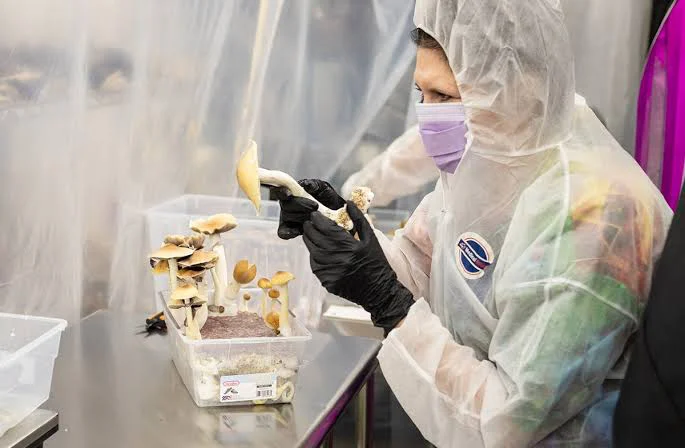
47. Is Psilocybin Therapy Legal in the UK?
Psilocybin therapy is not currently available as a routinely licensed treatment in the UK. Although clinical research is taking place, psilocybin remains a Class A controlled drug under the Misuse of Drugs Act 1971 and is listed in Schedule 1 of the Misuse of Drugs Regulations 2001.
This creates two separate regulatory issues: the control of psilocybin as a drug, and the approval of a medicine for clinical use.
Current medical regulatory framework
Under the Misuse of Drugs Act 1971, psilocybin is a Class A controlled substance. Its Schedule 1 classification under the Misuse of Drugs Regulations 2001 means it is subject to particularly restrictive controls.
Schedule 1 substances are generally considered to have no established medicinal use in the UK. Their possession, production and supply are tightly restricted, and specific Home Office authorisation is normally required for legitimate activities.
Separately, a medicine containing psilocybin would need to satisfy the relevant medicines legislation. The Medicines and Healthcare products Regulatory Agency (MHRA) assesses medicines for quality, safety and efficacy before granting a marketing authorisation.
As of November 2026, no psilocybin-based medicine has received a UK marketing authorisation.
Clinical trials
Psilocybin is being investigated in clinical trials for conditions including treatment-resistant depression and other mental health disorders.
One important development was the PsiDeR trial, a publicly funded UK study involving 60 people with treatment-resistant depression. Results published in August 2026 reported significantly greater improvements in depression scores among participants who received psilocybin alongside psychological support than among those who received a placebo. The difference remained evident at the six-week assessment.
These findings are encouraging, but a clinical trial does not establish that a medicine is suitable for routine use. Larger studies, further safety information and regulatory assessment are needed before a treatment can be approved.
Research authorisation
Clinical research involving psilocybin must comply with controlled-drug legislation as well as the rules governing research involving human participants.
Depending on the study, this can include:
- A Home Office controlled-drug licence or an applicable exemption.
- Approval from the MHRA for a clinical trial of an investigational medicinal product.
- A favourable opinion from a research ethics committee.
- Health Research Authority approval where required for research in the NHS or other relevant settings.
- Appropriate arrangements for storage, handling, security, records and supply of the controlled substance.
These approvals serve different purposes. A clinical trial approval does not automatically replace a controlled-drug licence, and a Home Office licence does not itself authorise a clinical trial.
Experimental treatment versus routine medical availability
There is an important difference between receiving psilocybin as part of an approved research study and obtaining it as an ordinary medical treatment.
In a clinical trial, participants are selected according to the study protocol, receive a specified investigational product and are monitored by the research team. The treatment is being evaluated rather than offered as an established standard of care.
Routine medical availability would require a medicine to receive the relevant marketing authorisation and for the controlled-drug rules to permit its prescribing, possession and supply.
Until those steps have been completed, psilocybin therapy should be regarded as an investigational treatment in the UK, not an established prescription option.
48. Can Psilocybin Be Prescribed?
Psilocybin cannot currently be prescribed as an ordinary medicine in the UK. Its Schedule 1 classification and the absence of a licensed psilocybin medicine prevent routine prescribing.
This does not mean that a medicine containing a controlled substance can never be approved. The UK has a regulatory process through which controlled drugs can be developed, tested and, if the evidence supports it, authorised for medical use.
Medicines licensing
Before a new medicine can ordinarily be marketed in the UK, it must receive a marketing authorisation from the MHRA.
The assessment considers factors including:
- The medicine’s quality and consistency.
- Evidence of safety.
- Evidence that it is effective for the proposed condition.
- The appropriate dose and method of administration.
- Risks, side effects and the information needed for safe use.
A medicine containing psilocybin would need to meet these requirements. Evidence from early research or individual clinical trials is not, by itself, sufficient to grant a marketing authorisation.
Controlled-drug requirements
Even if a psilocybin-based medicine received a marketing authorisation, its controlled-drug status would also need to be addressed.
Psilocybin is currently in Schedule 1 of the Misuse of Drugs Regulations 2001. Drugs in this schedule cannot ordinarily be prescribed in the same way as medicines in schedules that permit routine medical use.
If a medicine were approved, the Government would need to consider the appropriate scheduling and safeguards. This could involve amending the Misuse of Drugs Regulations following advice from the Advisory Council on the Misuse of Drugs (ACMD).
The Government has stated that reconsideration of psilocybin’s scheduling would ordinarily follow an MHRA assessment and marketing authorisation.
Prescribing restrictions
There is currently no general prescribing route through which a UK doctor can issue a routine prescription for psilocybin.
A doctor cannot bypass the controlled-drug framework simply by deciding that psilocybin may benefit an individual patient. The fact that a treatment is being investigated or used in another country does not create a UK prescribing entitlement.
Any future prescribing arrangement would be expected to include safeguards appropriate to the medicine, its risks and the circumstances in which it is administered.
Research access is not ordinary prescribing
Psilocybin can be administered to participants in properly authorised clinical trials. This is a different legal route from ordinary prescribing.
Research participants receive the substance under the study’s approvals and procedures. They do not receive a general prescription that allows them to obtain or use psilocybin independently.
The distinction is important: legal access for an approved research study does not make psilocybin a legally available treatment for the general public.
49. What Licences Are Required for Scientific Research?
Scientific research involving psilocybin in the UK is possible, but it is subject to controlled-drug legislation and, where people are involved, additional research and medicines regulations.
The exact permissions depend on the type of work, the organisation conducting it and the activities being undertaken.
Home Office controlled-drug licences
Psilocybin is a Schedule 1 controlled drug. Under the current licensing framework, a Home Office domestic controlled-drug licence is generally required to produce, possess or supply Schedule 1 substances for research.
The licence is administered by the Home Office’s Drugs and Firearms Licensing Unit.
An application may need to provide details of:
- The organisation and research purpose.
- The controlled drug and quantities involved.
- The premises where the drug will be stored and handled.
- Security arrangements and access controls.
- The people responsible for the controlled substance.
- The activities to be carried out, including possession, supply or production.
The Home Office may also impose conditions relating to storage, records, security and reporting.
A university or hospital is not automatically exempt from all Schedule 1 licensing requirements. The current rules should be checked for the particular organisation and activity.
Proposed changes to research licensing
The licensing system has been recognised as a potential barrier to legitimate research.
In 2023, the ACMD published recommendations on reducing barriers to research involving Schedule 1 drugs. These included proposals to make it easier for universities, hospitals and certain clinical studies to undertake research without the same domestic licensing requirements.
In July 2025, the Government accepted the principle of several recommendations and said it intended to develop a pilot scheme. The proposals included a possible exemption for qualifying research in universities and hospitals, subject to operational feasibility and safeguards.
The Government confirmed in April 2026 that a cross-government working group was developing the policy. These proposals should not be confused with an exemption already in force. Researchers must check the current Home Office requirements before beginning work.
Clinical trials
Where psilocybin is being investigated as an investigational medicinal product in a clinical trial, additional approvals are required.
Under the UK clinical-trial framework, a trial must receive the required clinical trial approval before it can begin. This includes:
- Authorisation from the MHRA.
- A favourable opinion from a research ethics committee.
- Any additional approvals required for the research setting, such as Health Research Authority approval for relevant NHS research.
The sponsor is responsible for ensuring that all necessary approvals are in place and that the trial complies with the applicable regulations.
These requirements are separate from controlled-drug permissions. A research team may need both medicines and ethics approvals and the relevant Home Office authorisation.
Import and export permissions
Research organisations may also need separate permissions to import or export psilocybin.
A domestic Home Office licence does not automatically authorise international movement of a controlled substance. Import and export licences or permits may be required, depending on the substance, the countries involved and the proposed transaction.
The organisation must also comply with the relevant rules in the exporting and importing countries. A research exemption in one country does not automatically apply elsewhere.
Research institutions and commercial organisations
The rules can differ depending on whether research is undertaken by a university, NHS organisation, hospital, pharmaceutical company or independent research organisation.
The Government’s proposed reforms have specifically considered universities, hospitals and certain clinical studies. They should not be interpreted as a general exemption for every business or organisation conducting scientific work.
Any organisation intending to handle psilocybin should establish its licensing requirements before acquiring the substance or starting research.
50. Where Is Psilocybin Being Decriminalised or Legalised?
There is no single international approach to psilocybin reform. Countries and regions have adopted different policies, ranging from reduced penalties for personal possession to tightly regulated therapeutic programmes.
It is useful to distinguish between four broad approaches:
- Decriminalisation: Certain activities, usually personal possession or consumption, are removed from the criminal justice system or made a lower enforcement priority.
- Personal-use protections: Legislation creates specific protections for limited possession, cultivation or sharing, often subject to conditions.
- Regulated therapeutic access: Psilocybin can be used in a supervised medical or therapeutic framework with approved practitioners and licensed facilities.
- Commercial legalisation: A regulated market permits the wider production and sale of products to the public.
These approaches are not interchangeable. A jurisdiction may permit supervised therapy while continuing to prohibit ordinary possession and commercial sales.
Oregon, United States
Oregon has established a regulated psilocybin services framework under Measure 109 and Oregon Revised Statutes Chapter 475A.
Adults aged 21 or over can access psilocybin services through licensed service centres. The system requires preparation, supervised administration and follow-up. Psilocybin products cannot simply be purchased for general use or taken home.
Oregon has therefore created a regulated therapeutic-services model rather than unrestricted legalisation of magic mushrooms.
Colorado, United States
Colorado’s Natural Medicine Health Act, approved through Proposition 122 in 2022, introduced protections for specified personal-use activities involving natural medicines, including psilocybin and psilocin.
The state has also established a regulated natural medicine programme, with licensed healing centres and facilitators. The regulated programme operates separately from the personal-use provisions.
Federal law continues to prohibit psilocybin, so Colorado’s reforms do not remove the possibility of federal enforcement.
Australia
Australia introduced a limited medical access pathway in July 2023.
Authorised psychiatrists can prescribe psilocybin for treatment-resistant depression under the Therapeutic Goods Administration’s Authorised Prescriber Scheme. The psychiatrist must meet specific requirements, including approval from a Human Research Ethics Committee and authorisation from the TGA.
The medicine remains unapproved and is not available as a general prescription. Its use is limited to the specified clinical circumstances and subject to state and territory requirements.
This is a medical access pathway, not recreational legalisation.
Canada
Canada continues to prohibit unauthorised possession and supply of psilocybin under the Controlled Drugs and Substances Act.
However, access may be possible through clinical trials, the Special Access Program or an individual exemption under subsection 56(1) of the Act. These routes are assessed individually and do not create a general legal market.
There has been growing public and commercial interest in psychedelic treatment, but this should not be confused with a general change in the law.
Portugal
Portugal’s drug policy decriminalises the acquisition and possession of controlled drugs for personal use in relevant circumstances. These cases are generally dealt with through an administrative process rather than ordinary criminal prosecution.
This approach can apply to personal possession of psilocybin, but it does not legalise commercial supply, trafficking or cultivation. Portugal is therefore an example of decriminalisation rather than full legalisation.
Other developments
Research, public debate and policy proposals are continuing in several countries. Switzerland, for example, has a tightly controlled system allowing exceptional medical use of certain psychedelics under specific authorisations. This is not a general right to obtain psilocybin.
In other countries, proposals for reform have been discussed by legislators, researchers and advocacy groups, but discussion or a proposed bill does not change the law unless the relevant measures are enacted and brought into force.
What these changes mean
The international trend is not simply towards making magic mushrooms legal. Instead, different jurisdictions are experimenting with different approaches to research, medical access, personal possession and regulated services.
Some have created narrow exemptions while retaining broad prohibitions. Others have reduced penalties for personal possession without allowing commercial sales.
Anyone relying on a particular country’s legal position should check the current legislation and any licensing conditions. A change in one state, city or medical programme does not necessarily apply nationally.
51. Could Magic Mushrooms Become Legal in the UK?
There is growing scientific and public interest in psilocybin, particularly its potential use in mental health treatment. However, there is currently no general legislative proposal to legalise magic mushrooms for recreational use in the UK.
Any significant change would depend on decisions about medical evidence, drug classification, public health and the wider controlled-drug framework.
Current legislative framework
Psilocybin remains a Class A controlled drug under the Misuse of Drugs Act 1971 and is listed in Schedule 1 of the Misuse of Drugs Regulations 2001.
This means that unauthorised possession, production and supply remain prohibited. The law does not provide a general personal-use exemption.
The UK framework could be changed through amendments to the relevant legislation and regulations, but this would require Government action and the appropriate parliamentary and regulatory processes.
Parliamentary and regulatory developments
There have been parliamentary questions about whether psilocybin should be rescheduled to allow medical prescribing and whether the evidence supporting its Schedule 1 classification should be reviewed.
In November 2025, the Government stated that it had no plans to commission an ACMD review of psilocybin’s scheduling at that stage. It also explained that a medicine would first need to receive an MHRA marketing authorisation before rescheduling would ordinarily be reconsidered.
In October 2026, the Government reiterated that position. It confirmed that no psilocybin-based medicine had yet received an MHRA marketing authorisation and that it had no current plans to commission an ACMD assessment of the scheduling of psilocybin in advance of such authorisation.
These statements indicate that the Government’s current approach is to follow the established medicines-development process rather than reschedule psilocybin ahead of a successful regulatory assessment.
Medical research
Research is likely to be an important factor in any future policy change.
The publicly funded PsiDeR trial reported encouraging results in August 2026, finding significant improvements in depression symptoms among participants who received psilocybin compared with those who received a placebo.
Other clinical studies are investigating psilocybin for different conditions. However, regulators need to consider the full body of evidence, including longer-term outcomes, potential adverse effects, appropriate patient selection and how treatment should be delivered.
Positive trial results may support further research and medicine development, but they do not automatically lead to a change in the law.
Potential routes to legal reform
There are several possible ways in which the UK framework could change.
1. Approval of a psilocybin-based medicine
A manufacturer could apply to the MHRA for a marketing authorisation. If a product were approved, the Government could consider whether changes to the controlled-drug schedules were appropriate to permit its medical use.
2. Changes to the Misuse of Drugs Regulations
The Government could amend the scheduling arrangements to create a more appropriate framework for medical prescribing or other authorised activities. This would involve the relevant statutory process and consideration of ACMD advice.
3. Research licensing reforms
The Government has already accepted in principle recommendations to reduce some barriers to Schedule 1 research. If implemented, these changes could make it easier for universities, hospitals and qualifying clinical studies to investigate psilocybin.
Such reforms would facilitate research; they would not amount to recreational legalisation.
4. Wider changes to drug policy
Parliament could consider broader changes to the Misuse of Drugs Act 1971 or the way personal possession and supply are treated. However, this would require a separate political and legislative decision. Medical approval alone would not create a legal recreational market.
Why future changes should not be assumed
The growing interest in psychedelic medicine has led to speculation that magic mushrooms may eventually become legal in the UK. It is important to distinguish scientific progress from a change in the law.
A successful clinical trial does not automatically produce a licensed medicine. A licensed medicine does not necessarily mean that the underlying substance becomes unrestricted. Medical access could be limited to specific conditions, approved products, specialist practitioners and supervised treatment settings.
Similarly, proposals to reduce research licensing requirements do not make possession, cultivation or supply lawful for the general public.
For now, magic mushrooms remain controlled in the UK. Any future change will depend on the evidence, regulatory decisions and legislation actually brought into force.
Part 9 — Frequently Asked Questions
These FAQs provide concise answers to common questions about magic mushroom laws. They summarise the main points covered in the guide, but individual circumstances and product contents can affect the legal position.
1. Are magic mushrooms legal anywhere in the world?
Yes. Some countries have more permissive laws or do not specifically prohibit certain naturally occurring mushroom products. Jamaica is often cited as an example, while the Netherlands permits the sale of certain magic truffles under a different legal interpretation from that applying to magic mushrooms.
Other jurisdictions, including Oregon and Colorado in the United States, have introduced regulated access or personal-use protections. However, these arrangements are subject to specific conditions and do not amount to unrestricted legalisation.
The legal position varies by country, and sometimes by state or region. A product being available for sale somewhere does not mean it can legally be purchased, possessed or imported elsewhere.
2. Are magic mushroom spores legal in the UK?
The legal position depends on what the product actually contains. Isolated spores are biologically different from developed mycelium and mushrooms, and the UK legislation does not expressly create a separate controlled-drug category for every type of spore product.
However, there is no blanket exemption for everything sold as magic mushroom spores. A product’s label does not determine its legal status, and material containing developed fungal tissue or controlled compounds may be treated differently.
3. Are spore syringes legal to buy?
A spore syringe is a container, not a separate legal category. Its status depends on its contents.
A syringe containing only isolated spores raises different legal questions from one containing mycelium or other material that may contain controlled substances. The description on a website or product label is not conclusive.
There is therefore no reliable blanket answer that all magic mushroom spore syringes are either legal or illegal in the UK.
4. Can I buy mushroom spores online?
Buying mushroom spores online does not automatically make the transaction lawful. The relevant questions include what the product contains, where the seller is located, where the buyer is located and whether the transaction involves material controlled under the applicable laws.
Buying from an overseas website does not remove UK legal requirements. Importation is a separate legal question, and the laws of the exporting country, the UK and any transit country may all be relevant.
5. Are magic mushroom grow kits legal?
It depends on the kit’s contents and what it is designed to contain.
An empty growing container or piece of equipment is not automatically a controlled drug. A kit containing isolated spores raises different questions from one containing developed mycelium, colonised substrate or fruiting bodies.
Because cultivating fungi containing controlled substances can amount to production under UK law, it is not safe to assume that a product is lawful simply because it is marketed as a grow kit or sold without visible mushrooms.
6. Is it illegal to grow magic mushrooms for personal use?
In the UK, unauthorised cultivation of magic mushrooms can amount to production of a Class A controlled drug under section 4 of the Misuse of Drugs Act 1971.
There is no general personal-use exemption. Growing mushrooms for private consumption can still result in criminal liability, even if there is no intention to sell or supply them.
7. Are fresh magic mushrooms treated differently from dried ones?
No general exemption applies to fresh magic mushrooms in the UK.
The legal definition introduced by the Drugs Act 2005 covers fungi containing psilocin or an ester of psilocin. It is not restricted to dried or prepared mushrooms.
Drying, processing or otherwise changing the physical form does not automatically remove the relevant controlled compounds or make the material lawful.
8. Are magic truffles legal in the UK?
Magic truffles, commonly known as sclerotia, are compact fungal structures produced by mycelium. Although they are biologically different from the fruiting bodies usually called mushrooms, they can contain psilocybin and psilocin.
The UK legislation covers fungi containing psilocin or an ester of psilocin. The fact that sclerotia are sold legally or openly in another country does not make them lawful in the UK.
They should not be assumed to fall outside UK controlled-drug legislation simply because they are described as truffles rather than mushrooms.
9. Can you legally pick wild magic mushrooms?
Wild mushrooms containing psilocybin or an ester of psilocin are controlled under UK law. Picking them can raise issues under the provisions relating to production, while possessing them can engage the possession offence under section 5 of the Misuse of Drugs Act 1971.
There is a narrow statutory exception concerning certain uncultivated fungi in specific circumstances, but it is not a general exemption allowing people to pick and keep wild magic mushrooms.
10. Can you travel internationally with mushroom spores?
You should not assume that mushroom spores can be carried across international borders without restriction.
The rules depend on the actual material, the countries involved and any applicable customs, biosecurity and controlled-drug legislation. A product treated differently from a controlled mushroom in one country may be subject to different rules elsewhere.
Before travelling, check the import and export requirements of both countries and any transit destinations. Do not rely solely on the seller’s description or the product’s legal status in the country where it was purchased.
11. Is psilocybin legal for medical research?
Yes, under specific authorisations and regulatory controls. In the UK, psilocybin can be used in properly authorised scientific research and clinical trials.
Because it is a Schedule 1 controlled drug, researchers will generally need the relevant Home Office controlled-drug licence, alongside any required clinical trial, medicines and research ethics approvals.
Research access does not create a general exemption for private possession, cultivation or supply.
12. What is the difference between decriminalisation and legalisation?
Decriminalisation means that certain activities, often personal possession or consumption, are no longer treated as criminal offences or are dealt with through administrative measures instead.
Legalisation means that an activity is permitted by law, usually subject to specific conditions and regulations.
For example, Portugal has decriminalised possession of controlled drugs for personal use in relevant circumstances, but it has not legalised the commercial sale of magic mushrooms. Oregon has introduced a regulated psilocybin services system, but this is not unrestricted legalisation.
The distinction is important because reduced criminal penalties do not necessarily mean that cultivation, supply or commercial sales are permitted.