
Mushroom spores are microscopic reproductive cells produced by fungi. They play an essential role in fungal reproduction, allowing fungi to disperse, colonise new environments and continue their life cycles. Although they perform a broadly similar reproductive function to seeds in plants, spores are fundamentally different: they do not contain a plant embryo or the stored food reserves found in seeds.
Spores are produced in a variety of ways across the fungal kingdom, depending on the group of fungi involved. In familiar mushrooms, they are commonly released from specialised structures beneath the cap, while other fungi produce spores within enclosed structures or through different reproductive processes. Their microscopic size and diversity of form make them an important subject in mycology, particularly in the study and identification of fungi.
What do mushroom spores look like?
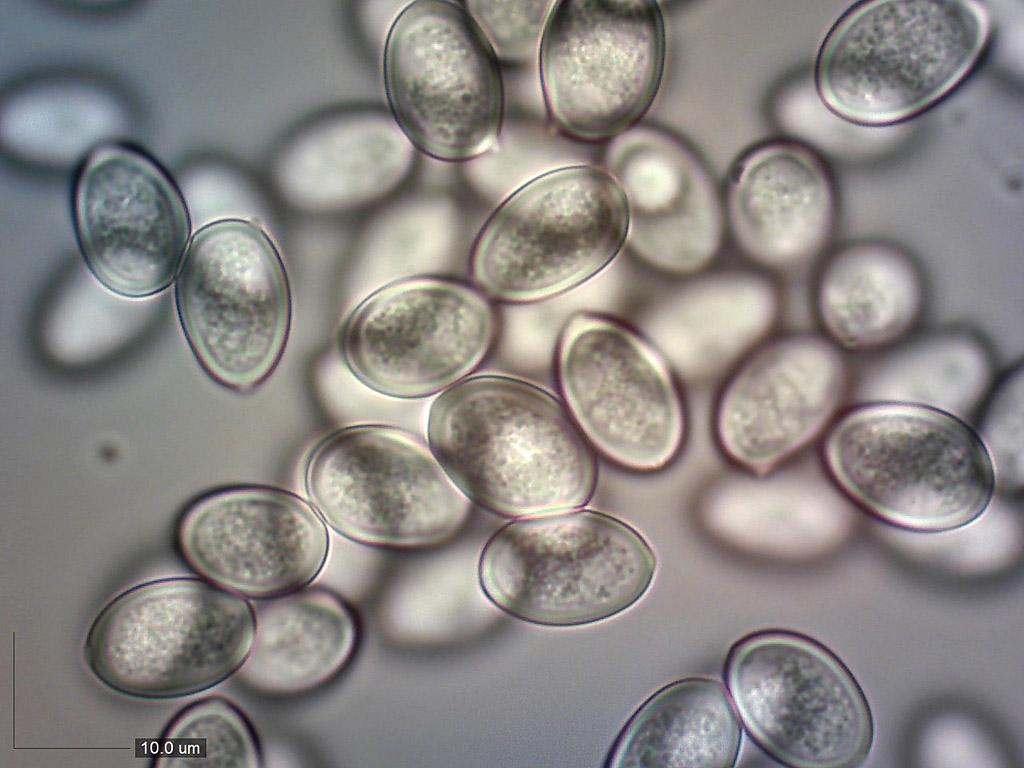
Mushroom spores are generally too small to be seen clearly with the naked eye, typically measuring just a few micrometres across. Their appearance varies considerably between fungal species, with differences in size, shape, colour and surface texture providing useful characteristics for identifying and classifying fungi.
Under a microscope, spores can be seen in a variety of forms. Some are almost spherical, while others are oval, elliptical, elongated or irregularly shaped. Certain species produce spores with relatively smooth surfaces, whereas others have distinctive ornamentation, including ridges, bumps, spines or textured patterns.
Spore colour also varies between species. Depending on the fungus, spores may appear white, cream, yellow, pink, brown, purple-brown or almost black. These differences can sometimes be observed without a microscope by examining a spore print, which is produced when spores fall from the underside of a mushroom onto a surface.
Microscopy allows these characteristics to be examined in much greater detail. Mycologists can study individual spores, measuring their dimensions and observing features such as shape, surface ornamentation and the presence of specialised structures. These characteristics can help distinguish between closely related fungal species and contribute to a broader understanding of fungal diversity.
Although spore appearance can provide valuable clues, identification rarely relies on a single characteristic. Spore morphology is generally considered alongside other features of the mushroom, its microscopic structures, habitat and, where necessary, genetic evidence.
How are mushroom spores produced?
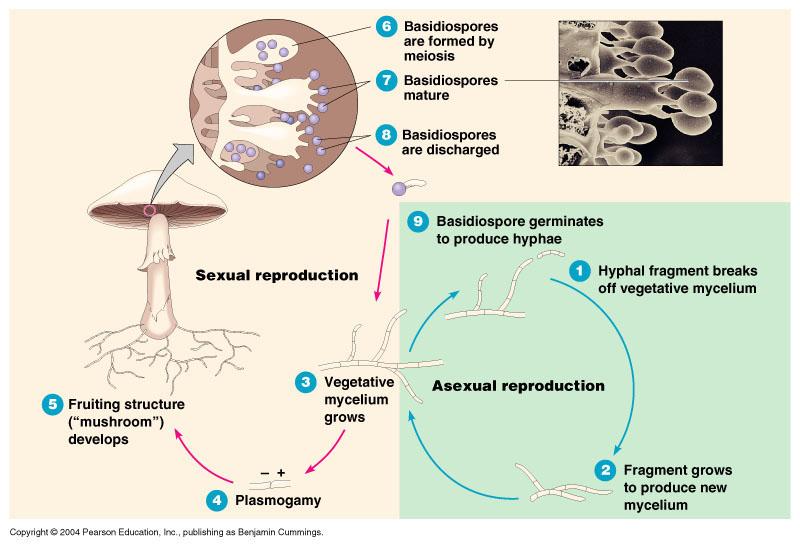
In many familiar mushroom-forming fungi, spores are produced by specialised reproductive structures within the fruiting body. The mushroom itself is the reproductive structure of a much larger organism, with most of the fungus typically existing as an extensive network of microscopic filaments known as mycelium.
In gilled mushrooms, such as many species of Agaricus and Psilocybe, spores develop on the surfaces of the gills beneath the cap. Other mushrooms produce their spores on structures such as pores, teeth or other specialised surfaces.
In basidiomycete fungi, the microscopic cells responsible for producing spores are called basidia. These structures are typically found lining the gills, pores or other spore-bearing surfaces. During the sexual reproductive cycle, compatible fungal nuclei undergo fusion followed by meiosis, a process that reduces the chromosome number by half and produces genetically distinct nuclei. These typically develop into four basidiospores, which form externally on the basidium and are eventually released.
The spores are then dispersed into the surrounding environment, where they may encounter suitable conditions for germination and further fungal growth.
How fungi produce sexual and asexual spores
Not all fungi produce spores in this way. Another major group, the ascomycetes, produces sexual spores known as ascospores inside specialised microscopic structures called asci. These are often contained within larger reproductive structures known as ascocarps. Ascomycetes include a diverse range of fungi, from morels and truffles to numerous microscopic species.
Other fungi can also reproduce asexually, producing spores through processes that do not involve the fusion of compatible nuclei. These spores, commonly referred to as asexual spores or conidia in certain groups, allow fungi to reproduce and spread without following the typical sexual reproductive cycle.
The different mechanisms of spore production reflect the remarkable diversity of the fungal kingdom. Although the structures and processes vary, spores remain central to the reproduction, dispersal and continued survival of many fungi.
How are mushroom spores dispersed?
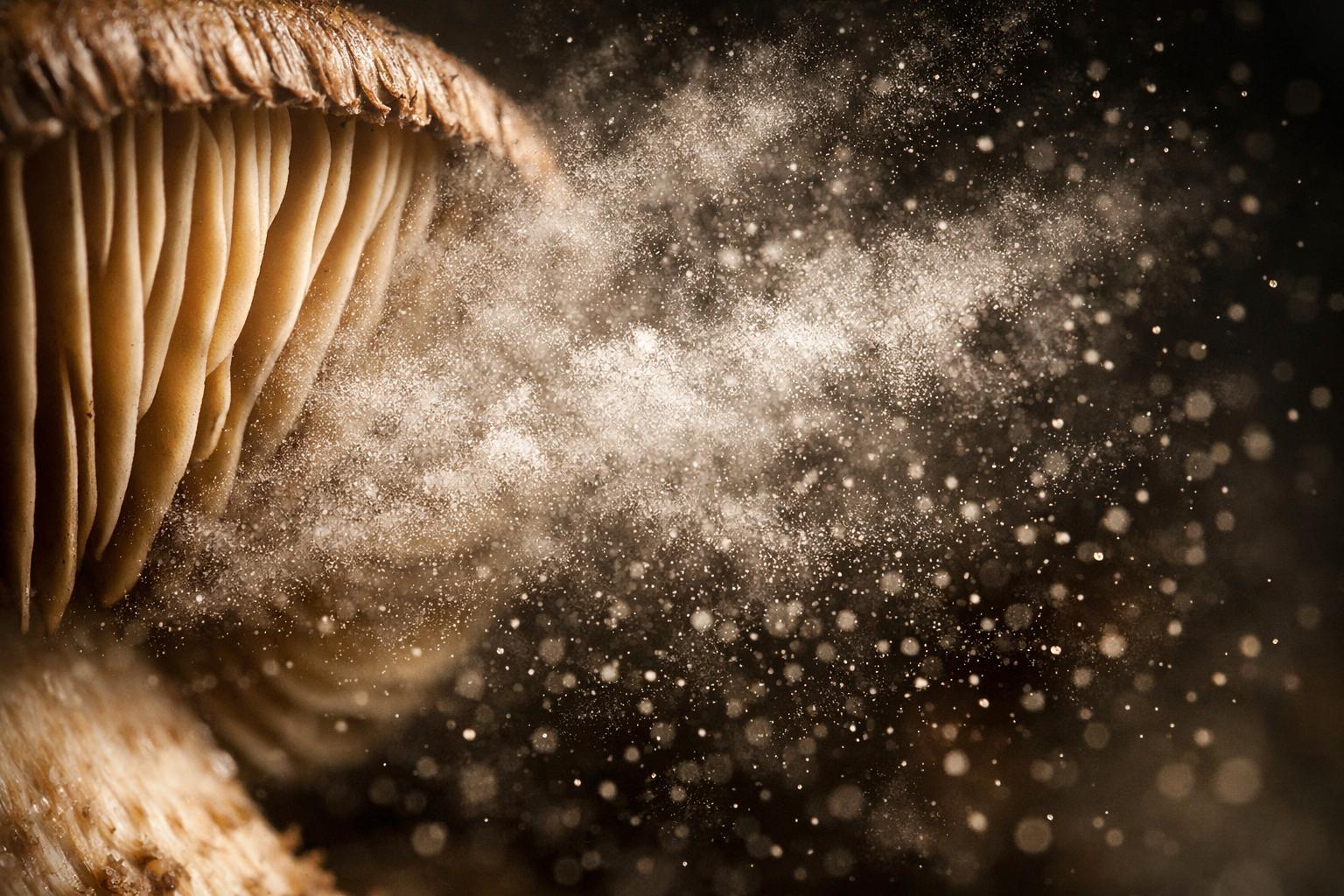
Once mature, mushroom spores need to travel away from the parent fungus to reach new environments where they may be able to germinate and establish new growth. Fungi have evolved a variety of methods to disperse their spores, with different mechanisms suited to their environments and reproductive structures.
The different ways fungal spores are discharged and dispersed
Wind and air currents are among the most widespread methods of spore dispersal. Many mushrooms release enormous numbers of microscopic spores from their gills, pores or other specialised surfaces. Once released, these spores can become suspended in the air and carried by air currents, sometimes travelling considerable distances before settling. Their small size allows them to move easily through the atmosphere, although many will land in places where conditions are unsuitable for further growth.
Gravity and passive release also play an important role. In many mushrooms, mature spores naturally detach from their reproductive structures and fall away from the fruiting body. In gilled mushrooms, spores are released from the surfaces beneath the cap, while other species release them from pores or exposed surfaces. This passive process often works alongside air movement, which can carry falling spores further away from the original mushroom.
Water and rainfall provide another means of dispersal for certain fungi. Rain can dislodge spores from fruiting bodies, wash them across surfaces or carry them through soil and vegetation. Some fungi produce spores that are particularly well adapted to dispersal in wet environments, allowing them to spread through water or damp substrates.
Animals can also help fungi disperse their spores. Spores may attach to the bodies, fur or feet of animals as they move through their surroundings. Other fungi produce fruiting bodies that are eaten by animals, allowing spores to pass through the digestive system and be deposited elsewhere. Truffles, for example, rely heavily on animals such as mammals to locate and consume their underground fruiting bodies, helping spread their spores through the environment.
Some fungi have developed more specialised dispersal mechanisms. Puffball fungi, for example, release clouds of spores when raindrops, passing animals or other disturbances compress their outer surfaces. Certain cup fungi use changes in surface tension to eject spores into the air, while some other fungi actively discharge their spores through specialised reproductive structures.
These different mechanisms allow fungi to spread across a wide range of habitats, from woodland floors and grasslands to aquatic environments. Although only a small proportion of dispersed spores will encounter conditions suitable for germination, producing and distributing large numbers of spores increases the chances that a fungus will successfully colonise new areas.
What happens when a mushroom spore germinates?
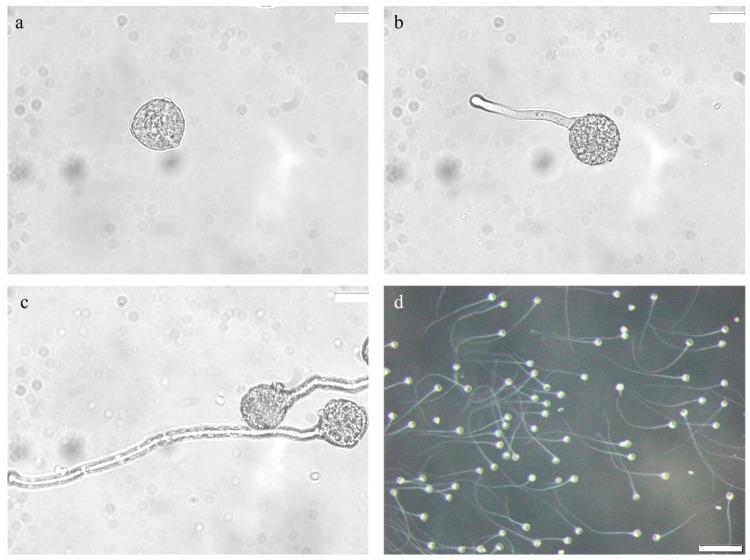
When a mushroom spore lands in a suitable environment, it may begin the process of germination. This marks the beginning of a new phase in the fungal life cycle, in which the dormant or resting spore develops into actively growing fungal tissue.
Germination depends on a combination of environmental conditions, which vary between fungal species. Moisture, suitable temperatures, nutrient availability and other environmental signals can all influence whether a spore begins to grow. Even when conditions appear favourable, not every spore will germinate.
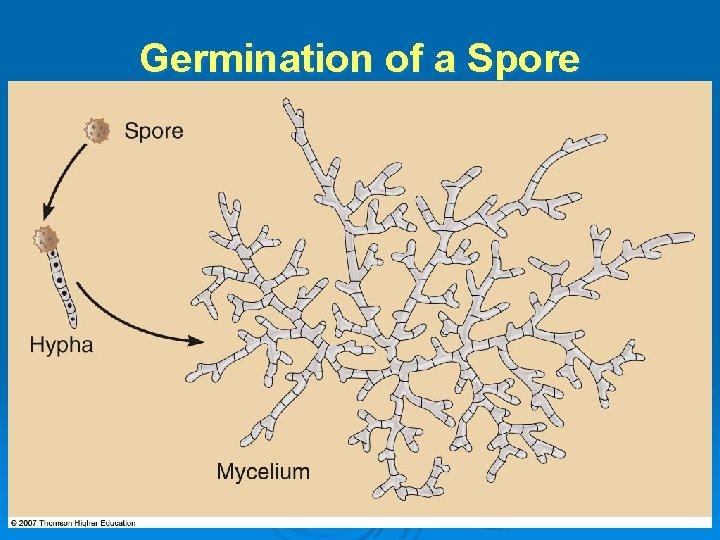
When germination begins, the spore absorbs water and becomes metabolically active. It then develops a small outgrowth known as a germ tube, which extends from the spore and develops into a fungal filament called a hypha.
Hyphae are the basic structural units of most filamentous fungi. They grow by extending at their tips, branching and spreading through the surrounding environment. As these microscopic filaments develop and interconnect, they form a larger network known as mycelium.
The development of mycelium is an important stage in the fungal life cycle. Rather than simply growing upwards like a plant, the fungus spreads through its surrounding environment, absorbing nutrients from organic material or other suitable sources. This network can expand considerably, sometimes extending across large areas of soil, decaying wood or other substrates.
In many mushroom-forming basidiomycete fungi, the development of a sexually reproducing mycelium involves compatible mating types. In certain species, two compatible haploid mycelia can fuse, allowing their nuclei to coexist within the same hyphal cells. This produces a dikaryotic mycelium, in which each cell typically contains two genetically distinct haploid nuclei.
Under suitable environmental conditions, this established mycelium may eventually develop specialised reproductive structures that form a mushroom fruiting body. The fruiting body then produces another generation of spores, continuing the fungal life cycle.
The process is not identical across all fungi. Different groups have different reproductive strategies, and some can reproduce asexually or through alternative life-cycle stages. Nevertheless, the progression from spore germination to hyphal growth and mycelium formation is fundamental to understanding how many familiar mushrooms develop.
It is also worth remembering that spore germination does not guarantee the development of a mature mushroom. Many spores never germinate, and even established mycelium may not produce fruiting bodies unless the necessary environmental and biological conditions are met.
Mushroom spores vs seeds: What’s the difference?
Mushroom spores and plant seeds both play important roles in reproduction and dispersal, but they are fundamentally different biological structures. Although they may appear to serve similar purposes, their development, composition and relationship to the organisms that produce them are quite different.
The most important distinction is that a seed contains a developing plant embryo, whereas a fungal spore does not contain a plant embryo or an equivalent miniature organism. Instead, a spore is a reproductive propagule capable of developing into new fungal growth under suitable conditions.
| Characteristic | Mushroom spores | Plant seeds |
|---|---|---|
| Produced by | Fungi | Seed-producing plants |
| Typical size | Generally microscopic | Highly variable, often larger |
| Biological structure | Reproductive propagule, with features varying between fungal groups | Contains a plant embryo |
| Stored nutrients | Vary between species and spore types; generally limited | Usually contains stored food reserves |
| Germination | Can develop into hyphae and fungal growth | Develops into a seedling |
| Dispersal | Wind, water, animals and specialised mechanisms | Wind, water, animals and other mechanisms |
Mushroom spores are generally single-celled structures that can develop into fungal growth when conditions are suitable. They vary considerably in their size, shape and composition, depending on the species and type of spore. Unlike seeds, they do not contain a multicellular plant embryo.
Plant seeds, on the other hand, develop following fertilisation and contain an embryo that can grow into a new plant. They are generally protected by a seed coat and usually contain stored nutrients that support early development during germination.
There are similarities between the two. Both can remain inactive until suitable conditions are encountered, and both provide a means for organisms to reproduce and spread into new environments. However, their underlying biology is quite different.
Understanding this distinction helps explain why fungal reproduction follows a different process from plant reproduction, despite the superficial similarities between spores and seeds.
What is the difference between mushroom spores and mycelium?
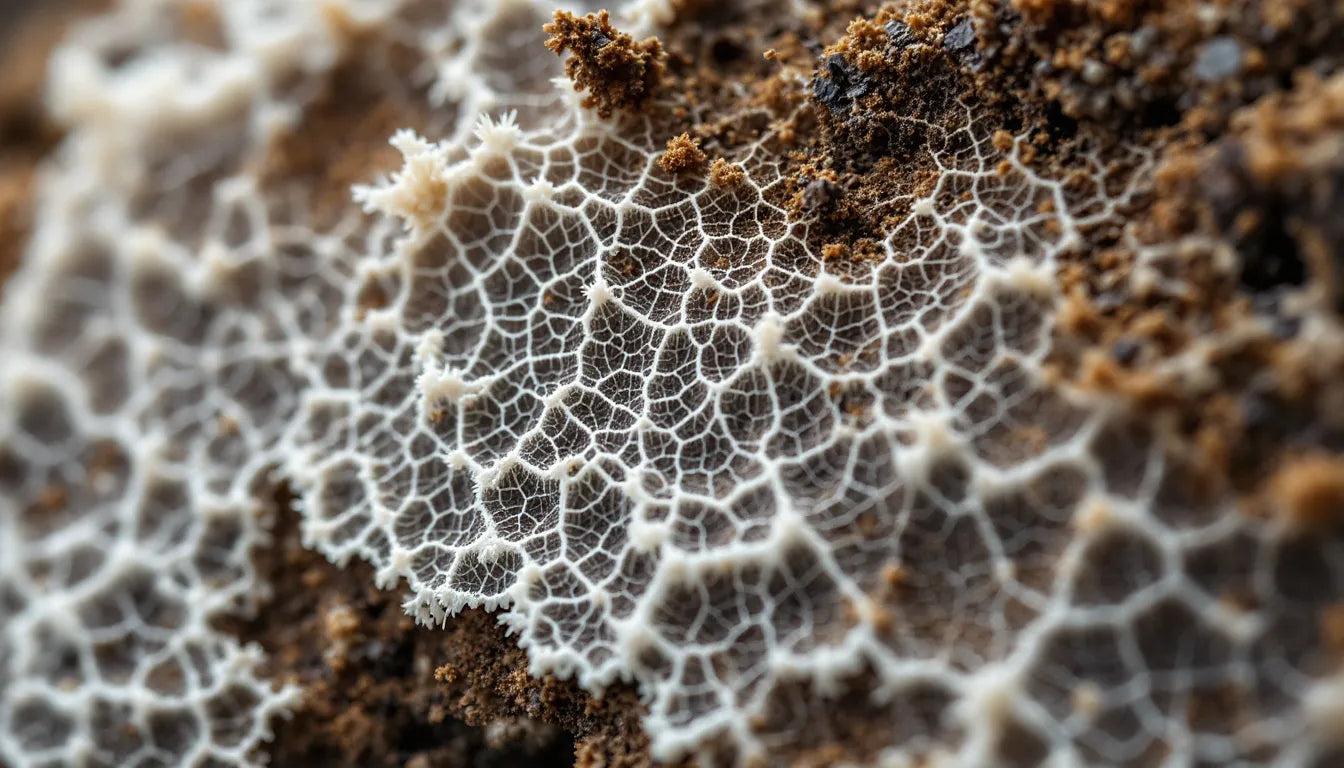
Mushroom spores and mycelium are two very different parts of the fungal life cycle, although they are closely connected. Spores are reproductive propagules that can give rise to new fungal growth, while mycelium is the network of growing fungal filaments that makes up much of the organism itself.
Spores are typically microscopic and are produced by specialised reproductive structures. Their primary role is to help fungi reproduce and disperse. When a compatible spore encounters suitable conditions, it may germinate and begin developing into a new fungal organism.
Mycelium is the network of microscopic filaments known as hyphae. These filaments grow through the surrounding environment, branching and spreading as the fungus develops. Mycelium is responsible for absorbing nutrients and supporting the growth and development of the fungus.
The two are connected through the fungal life cycle. A spore can germinate to produce a hypha, which grows and branches to form mycelium. In many mushroom-forming fungi, established mycelium can eventually develop into a fruiting body, which produces further spores.
| Characteristic | Mushroom spores | Mycelium |
|---|---|---|
| Structure | Typically microscopic reproductive propagules | Network of microscopic hyphae |
| Main function | Reproduction and dispersal | Growth, nutrient absorption and development |
| Appearance | Usually visible only under magnification, although spore prints can be seen | Often appears as fine threads or a cotton-like network |
| Location | Produced and released from reproductive structures | Grows through soil, wood and other suitable environments |
| Role in the life cycle | Can germinate to establish new fungal growth | Can develop and eventually produce fruiting bodies |
An important distinction is that mycelium is not simply a collection of spores. It is an actively growing network of fungal tissue, often forming the largest and most persistent part of the organism.
While spores allow fungi to spread and establish new growth, mycelium enables them to occupy their environment, obtain nutrients and develop the structures needed for further reproduction.
How are mushroom spores studied?
Mushroom spores are studied by mycologists to better understand fungal reproduction, identify different species and examine the remarkable diversity of fungi. Their size, shape, colour and surface characteristics can provide valuable information, particularly when distinguishing between closely related species.
There are several ways to examine mushroom spores, ranging from relatively simple observations of spore prints to detailed microscopic analysis.
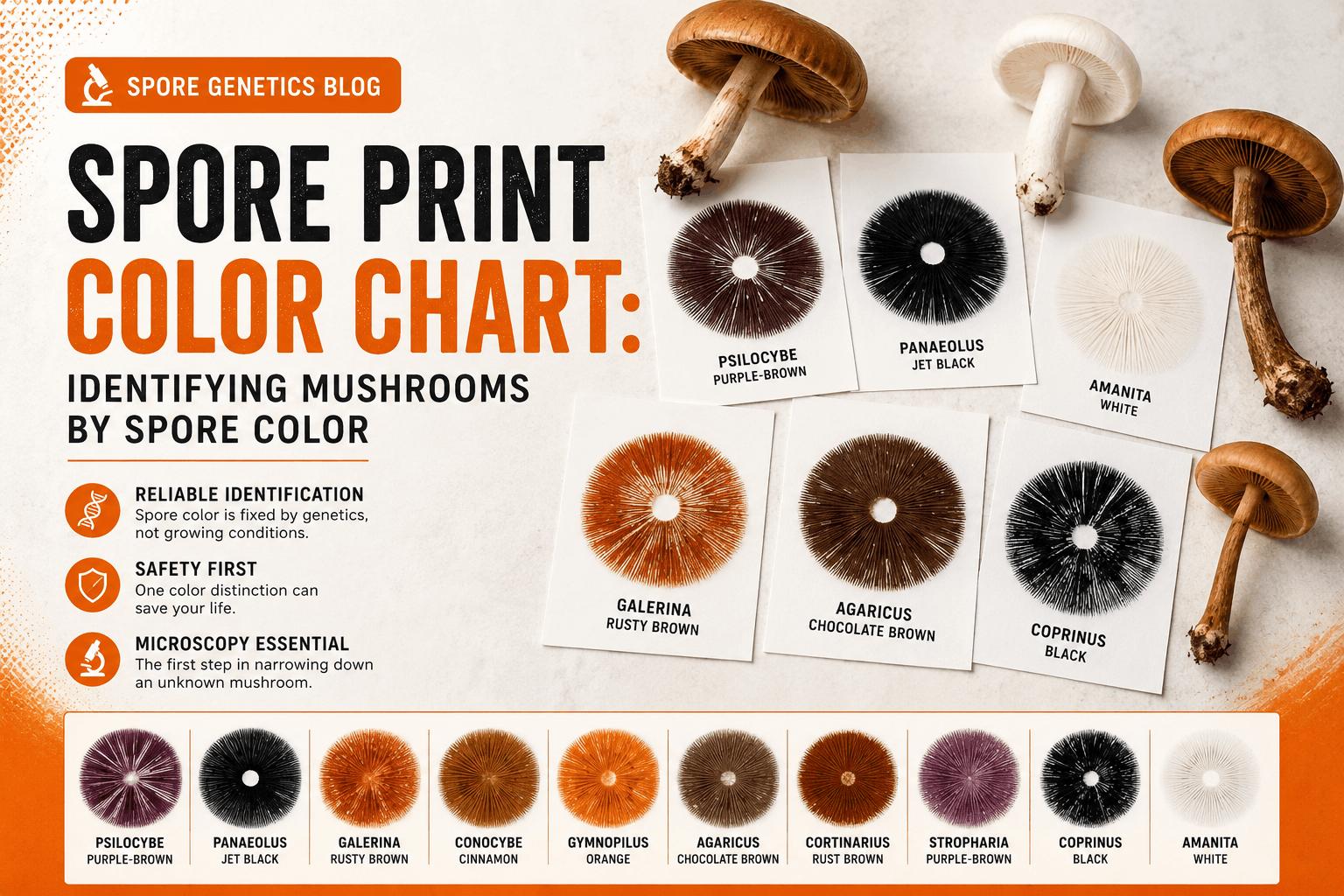
Spore prints are one of the simplest ways to observe the spores produced by a mushroom. As mature spores are released from the underside of a cap, they can accumulate on a surface beneath it, creating a visible pattern known as a spore print. The resulting colour can vary considerably between species, ranging from white and cream to pink, brown, purple-brown and black.
Spore print colour can be a useful identification characteristic, particularly when distinguishing between groups of mushrooms that may otherwise look similar. However, it is not sufficient on its own to establish a species identification, and should be considered alongside other physical and microscopic characteristics.
Microscopy allows individual spores to be examined in much greater detail. Using a compound light microscope, mycologists can observe features that are impossible to distinguish with the naked eye. Depending on the specimen and preparation method, magnifications of around 400 times or higher may be used to examine spore structure and morphology.
One of the main areas of study is spore morphology, which describes the physical characteristics of individual spores. This includes their overall shape, surface texture, colour, dimensions and other distinguishing features. Some spores are smooth and elliptical, while others have more complex shapes or distinctive surface ornamentation.
Spore measurements are also important in fungal identification. Mycologists commonly record spore length and width, sometimes examining a number of individual spores to establish a representative range. The relationship between these measurements can help describe whether spores are relatively spherical, elongated or otherwise distinctive in shape.
Additional features may also be examined, including the presence of a germ pore, the thickness of the spore wall and the appearance of specialised structures. Certain characteristics become particularly useful when comparing closely related fungal species.
Spore characteristics have an important role in fungal taxonomy, the scientific classification and naming of fungi. Historically, microscopic features have helped mycologists distinguish between species that appear very similar to the naked eye. Today, spore morphology is often considered alongside other characteristics, including reproductive structures, habitat, ecological relationships and genetic evidence.
Although spores provide a valuable source of information, no single feature should generally be treated as definitive. Combining macroscopic observations with microscopic examination and, where appropriate, molecular techniques provides a more reliable understanding of fungal identity and diversity.
Do mushroom spores remain viable indefinitely?
Mushroom spores can sometimes remain viable for extended periods, but they do not necessarily retain their ability to germinate indefinitely. Their longevity varies considerably between fungal species and depends on a combination of biological and environmental factors.
Some fungal spores are adapted to withstand periods of unfavourable conditions, allowing them to remain dormant until a suitable environment becomes available. Others are considerably more sensitive to changes in their surroundings and may lose viability relatively quickly.
Several factors can influence how long spores remain viable.
Moisture is an important consideration. Excessive moisture can encourage unwanted microbial growth and, depending on the species, may contribute to deterioration. Conversely, some spores are adapted to particular moisture conditions and do not respond well to inappropriate drying.
Temperature can also affect spore longevity. Exposure to excessive heat or significant temperature fluctuations may damage spores or reduce their ability to germinate. Different fungal species have different tolerances, meaning there is no single temperature range that applies universally.
Storage conditions influence how well spores retain their viability over time. Exposure to environmental contaminants, unsuitable humidity and other unfavourable conditions can affect their stability. The characteristics of the spore itself, including its protective outer layers and natural resistance mechanisms, also play a role.
An important distinction is that the visible appearance of a spore does not necessarily indicate whether it remains viable. Spores may retain their physical structure even after losing the ability to germinate. Conversely, the absence of visible changes does not establish that a sample is viable.
Ultimately, there is no universal shelf life for mushroom spores. Their ability to remain viable depends on the species, the type of spore and the conditions to which it has been exposed. Understanding these differences is important when studying fungal reproduction and the environmental factors that influence spore survival.
Frequently asked questions about mushroom spores
Are mushroom spores microscopic?
Yes. Most mushroom spores are microscopic and cannot be examined individually with the naked eye. They typically measure just a few micrometres across, although their dimensions vary between species. A microscope is needed to study their shape, surface characteristics and other distinguishing features in detail.
Are mushroom spores alive?
Mature spores are generally considered living biological structures, although they may remain dormant and show little metabolic activity until suitable conditions are encountered. Their ability to germinate varies depending on their condition, species and environmental history. A spore can therefore be physically intact without necessarily remaining viable.
Are mushroom spores the same as seeds?
No. Although both play a role in reproduction and dispersal, they are fundamentally different structures. Mushroom spores are fungal reproductive propagules that can develop into fungal growth, whereas plant seeds contain an embryo and usually have stored nutrients to support early development. Their reproductive processes are also biologically different.
Where are mushroom spores found?
In familiar mushroom-forming fungi, spores are produced on specialised structures within the fruiting body. These may include gills, pores, teeth or other spore-bearing surfaces. Once mature, spores are released into the surrounding environment, where they may be carried by air currents, water or animals.
How many spores can a mushroom produce?
The number varies enormously depending on the fungal species, the size of the fruiting body and its reproductive structures. Some mushrooms can release millions or even billions of microscopic spores over their reproductive lifetime. Producing large numbers increases the likelihood that at least some will reach suitable environments for germination.
Can mushroom spores grow into mushrooms?
Mushroom spores can germinate and develop into fungal hyphae, which may form mycelium under suitable conditions. In compatible mushroom-forming fungi, this mycelium can eventually produce fruiting bodies. However, germination alone does not guarantee mushroom formation, as further growth and reproduction depend on the species and a range of biological and environmental conditions.
What is a spore print?
A spore print is the visible accumulation of spores released from a mushroom onto a surface placed beneath its cap. It provides a way of observing the colour of a mushroom’s spores, which can be a useful characteristic in fungal identification. Spore prints are commonly examined alongside other physical and microscopic features.
What is the difference between spores and mycelium?
Spores are reproductive propagules that can give rise to new fungal growth, while mycelium is the network of microscopic filaments called hyphae that forms much of the growing fungus. When a suitable spore germinates, it can produce a hypha that develops into mycelium. The mycelium absorbs nutrients and may eventually produce fruiting bodies.
Do all fungi produce spores?
Spore production is widespread throughout the fungal kingdom, although the structures and processes involved vary considerably. Different fungal groups produce different types of spores through sexual or asexual reproduction. Some fungi also have complex life cycles involving multiple spore types and reproductive stages.
Understanding the role of mushroom spores
Mushroom spores are fundamental to the reproduction, dispersal and diversity of fungi. Although microscopic in size, they play an essential role in allowing fungi to spread into new environments and establish new growth.
From their production within specialised reproductive structures to their dispersal through air, water and animals, spores are part of a complex biological process that connects individual fungal organisms with wider ecosystems.
Studying their characteristics also provides valuable insight into fungal identification and classification. Differences in spore shape, size, colour and structure help mycologists distinguish between species and better understand the diversity of the fungal kingdom.
Whether examined through a simple spore print or detailed microscopic analysis, these tiny structures offer an interesting window into the biology of fungi and the processes that sustain them.
